Heavy equipment trends and selection factors for production jobsites in 2026
Heavy equipment is becoming a production system, not just a machine purchase
Heavy equipment remains essential for moving, lifting, grading, compacting, drilling, loading, hauling, and powering industrial work. In 2026, the buying question is wider than capacity alone. Production managers, contractors, rental fleets, and industrial operators are also weighing uptime, telematics, emissions compliance, operator visibility, maintenance access, energy supply, and long-term resale risk.
The practical approach is to treat heavy equipment as part of a connected production system, not as a standalone asset. The machine has to fit the work cycle, the operator, the site layout, the attachment plan, the fuel or charging setup, and the service support behind it. A technically capable machine can still be the wrong choice if it creates bottlenecks, adds downtime, or cannot meet regulatory and safety requirements.
This guide focuses on practical selection factors for industrial and production environments. For related equipment coverage, visit the production equipment section.
What counts as heavy equipment in industrial and production work
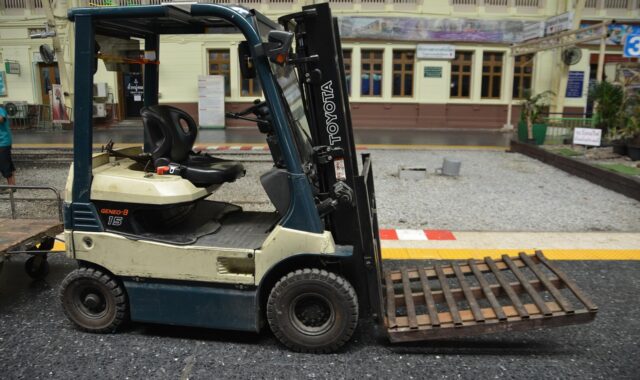
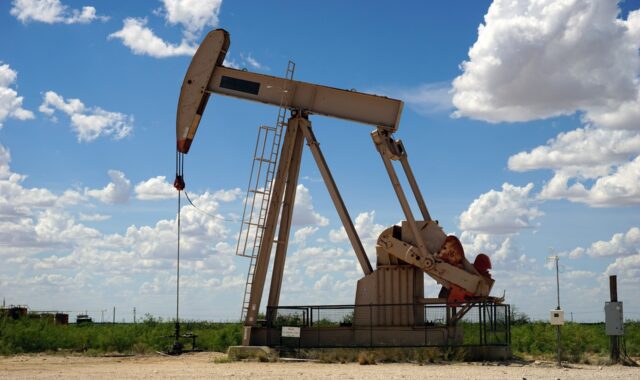
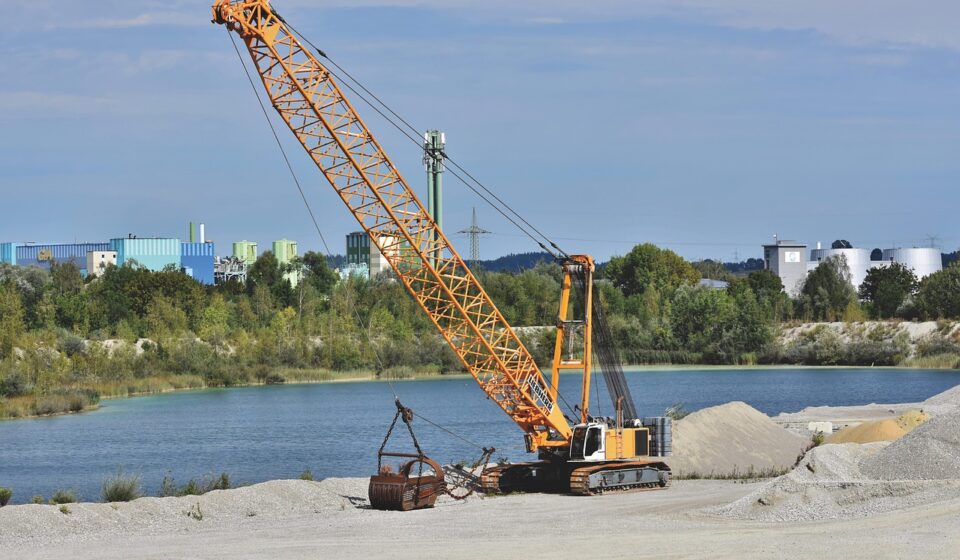
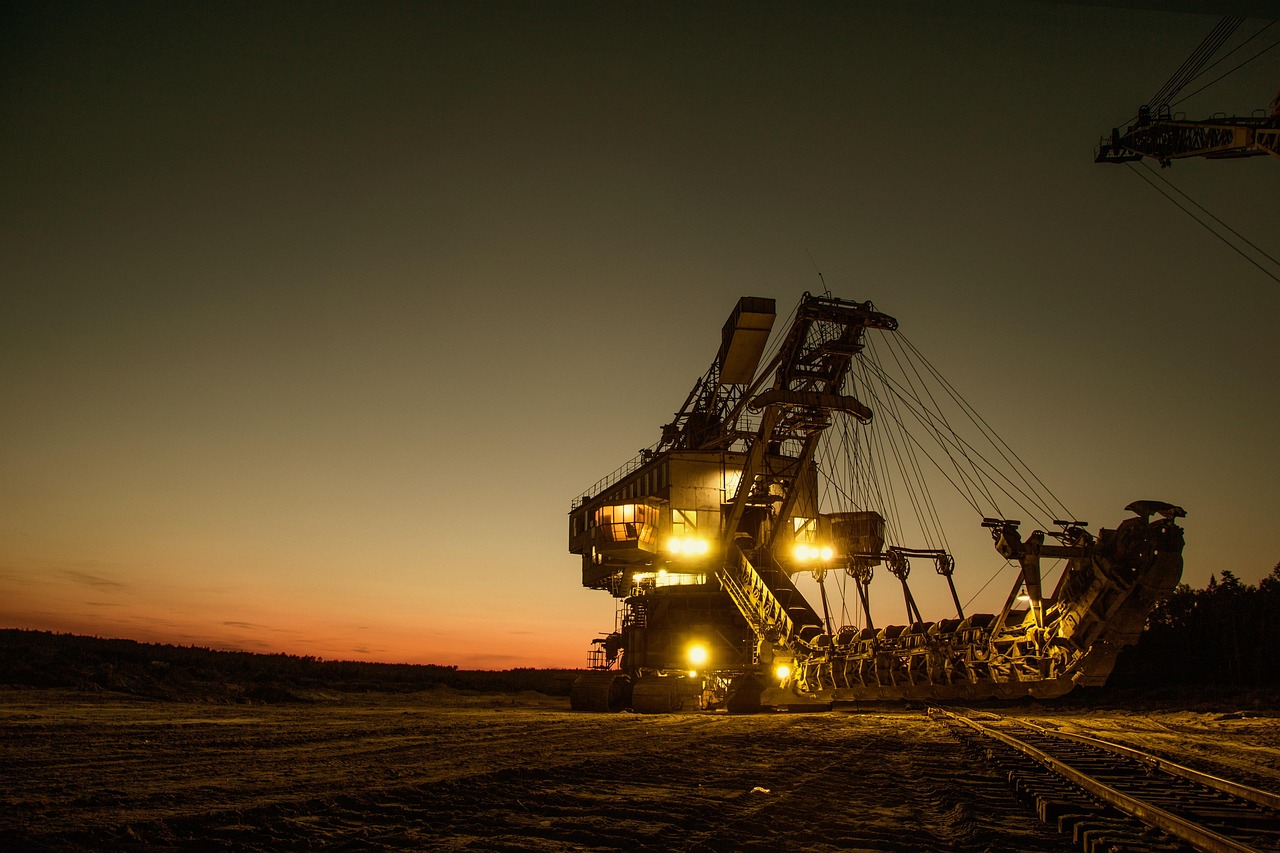
Heavy equipment is a broad category. It usually refers to large, mobile, high-value machines used to change the physical condition of a jobsite or move heavy materials at scale. In construction, mining, quarrying, agriculture, logistics, utilities, and infrastructure work, the category includes excavators, wheel loaders, bulldozers, motor graders, compactors, cranes, telehandlers, haul trucks, forklifts, paving machines, drilling rigs, compressors, pumps, and mobile generators.
The category overlaps with production equipment because many industrial operations depend on mobile machines to feed, move, sort, compact, stockpile, or support fixed production lines. A quarry loader feeding a crusher, a forklift moving heavy fabricated parts, a telehandler serving a precast yard, and a generator supporting a remote production site all influence throughput. If the machine stops, the process around it often slows or stops as well.
For selection work, it is usually more useful to classify heavy equipment by job function than by brand, model size, or familiarity:
- Earthmoving and excavation: excavators, backhoe loaders, dozers, trenchers, and graders.
- Material handling: wheel loaders, skid steers, forklifts, telehandlers, cranes, and yard trucks.
- Hauling and loading: articulated dump trucks, rigid haul trucks, off-road trucks, and high-capacity loaders.
- Compaction and paving: rollers, compactors, pavers, milling machines, and stabilizers.
- Site support: generators, compressors, pumps, lighting towers, and service trucks.
- Specialized production support: drilling machines, crushers, screeners, reclaimers, and mobile conveyors.
This functional view helps prevent a common procurement mistake: choosing a machine because it is powerful, available, or familiar rather than because it addresses the production bottleneck.
Selection starts with the work cycle and operating envelope
The first selection question should be specific: what work must the machine complete per hour, per shift, or per project phase? Heavy equipment specifications often highlight peak power, bucket size, rated load, lift height, travel speed, and breakout force. Those numbers matter, but they do not automatically convert into production. Real output depends on cycle time, operator skill, haul distance, ground condition, attachment choice, traffic flow, and maintenance interruptions.
Before comparing models, define the operating envelope. That includes the heaviest and most common loads, required reach or lift height, slope and underfoot conditions, turning radius, aisle width, travel distance, duty cycle, climate, dust exposure, and hours per shift. A machine that performs well in short bursts may not suit continuous production. Oversizing can also add fuel use, tire wear, transport complexity, and capital cost without improving throughput.
The following table summarizes practical selection factors for common production tasks.
| Production need | Important equipment factors | Risk if ignored |
|---|---|---|
| Feeding a crusher, hopper, or processing line | Bucket capacity, cycle time, visibility, breakout force, tire or track choice, service access | Starved line, uneven feed rate, excess idle time, higher component wear |
| Moving pallets, steel, molds, or heavy assemblies | Rated load, load center, lift height, attachment compatibility, turning radius, floor loading | Unsafe handling, product damage, traffic congestion, stability problems |
| Grading, site preparation, or road maintenance | Blade control, traction, grade technology, operator ergonomics, hydraulic response | Rework, poor surface tolerance, extra passes, fuel waste |
| Remote site power or air support | Load profile, fuel supply, noise limits, emissions tier, maintenance interval, redundancy | Production interruption, regulatory exposure, unnecessary fuel consumption |
Heavy equipment selection should be evidence-based. A short site study, utilization review, or controlled trial often reveals constraints that a specification sheet cannot show.
Emissions and fuel strategy now affect equipment value
Diesel remains central to heavy equipment, especially in high-power and long-shift applications. Even so, emissions rules and energy planning have become major procurement factors. The U.S. Environmental Protection Agency identifies nonroad compression-ignition engines as the engine class used in many machines, including excavators, agricultural equipment, forklifts, airport ground service equipment, generators, pumps, and compressors. EPA materials last updated in March 2026 describe multiple tiers of standards and the Tier 4 program for nonroad diesel engines.
For buyers and fleet managers, emissions status is not only an environmental issue. It can affect where equipment may operate, how it is maintained, what fuel it requires, which aftertreatment systems must be serviced, and how attractive the asset may be in the used market. EPA materials also note that ultra-low sulfur diesel has a maximum sulfur concentration of 15 parts per million because sulfur can damage emission control devices. That fuel detail matters on remote sites and in mixed fleets that include both older and newer engines.
Alternative powertrains are also part of the discussion. Battery-electric compact equipment, hybrid machines, hydrogen-related concepts, renewable diesel, and site-level energy management are being tested or adopted in selected applications. The strongest early fit for electrification is generally where machines are smaller, operate predictable shifts, return to a charging point, face indoor or urban emission constraints, or benefit from lower noise. Very large, long-duty machines remain harder to electrify because battery capacity, charging time, grid access, weight, cost, and utilization patterns are more demanding.
The practical recommendation is not to assume that one power source fits every machine. Segment the fleet by duty cycle. High-utilization diesel machines may need strict fuel, fluid, and aftertreatment discipline. Compact machines in warehouses, tunnels, indoor demolition, municipal work, or noise-sensitive areas may be candidates for electric trials. Backup generators, pumps, and compressors should be evaluated against actual load profiles, not nameplate capacity alone.
Digital control, telematics, and automation are changing the productivity calculation
Heavy equipment productivity is increasingly shaped by software and data. Telematics can show idle time, fuel burn, machine location, fault codes, utilization, service intervals, and operator behavior. Grade control can reduce staking and rework. Payload systems can help avoid underloading and overloading. Site management software can connect machines to dispatch, maintenance planning, and production reporting.
Industry organizations such as the Association of Equipment Manufacturers have described digital construction technology as a driver of efficiency through machine control, grade control, optimized drivetrains, digital interfaces, and telematics. Major manufacturers have also emphasized connected services, uptime, productivity, and total cost of ownership in recent annual reports and investor materials. These are source statements, not guarantees that every fleet will see the same return. The return depends on whether the organization uses the data to change decisions and work habits.
Three questions help separate useful digital capability from expensive features:
- Will the data change a decision? Fuel, idle time, location, and fault-code data are useful only if supervisors act on them.
- Can maintenance teams access the information quickly? A fault alert that never reaches the technician has little operational value.
- Does the technology fit the operator workflow? Grade control and payload systems should reduce cognitive load, not add confusing steps.
Automation is developing more cautiously than marketing headlines sometimes suggest. Assisted steering, automated grade control, collision warning, remote diagnostics, and semi-autonomous haulage in controlled environments are more realistic near-term examples than fully driverless mixed jobsites. In production environments with repetitive routes, controlled access, and strong safety discipline, automation can be easier to test. In crowded, changing, multi-contractor sites, the business case and safety case require more scrutiny. See also: automation systems.
Safety performance depends on visibility, traffic control, and functional safety
Safety is one of the clearest reasons to treat heavy equipment as a system. OSHA construction safety materials state that approximately 75 percent of struck-by fatalities involve heavy equipment such as trucks or cranes. The Bureau of Labor Statistics reported 1,032 fatalities among construction and extraction workers in 2024, in a summary released in 2026. These figures do not mean every heavy equipment operation carries the same level of risk, but they show why traffic separation, visibility, training, and maintenance cannot be secondary considerations.
NIOSH has published construction equipment visibility resources that explain blind areas around vehicles and equipment. Its updated 2024 pages describe diagrams based on ground level, 900 millimeters, and 1500 millimeters above ground, which helps safety teams understand what an operator may not see. For production jobsites, this is directly relevant to yard layout, pedestrian crossings, spotter rules, reversing procedures, camera placement, lighting, and high-visibility zones.
Safety planning should include both administrative controls and equipment design. Administrative controls include traffic routes, one-way systems, exclusion zones, competent signalers, speed limits, pre-shift inspections, seat belt rules, and communication protocols. Equipment design factors include mirrors, cameras, proximity alerts, rollover protection, access steps, handholds, lighting, braking performance, backup alarms, and stability systems.
Functional safety is also becoming more important as heavy equipment relies on electronic and software-controlled systems. ISO 19014 addresses functional safety for earth-moving machinery and provides a methodology for determining safety-related parts of control systems and performance requirements. As of late August 2026, ISO listed a second edition of ISO 19014-1 as under publication. For buyers, that does not replace local legal obligations, but it is a reminder to ask suppliers how safety-related controls are designed, validated, documented, and serviced over the machine life.
Total cost of ownership is more useful than purchase price
Heavy equipment is capital intensive, but purchase price is only one part of the cost. A lower acquisition cost can disappear quickly if the machine has poor uptime, weak parts availability, high fuel consumption, low residual value, or limited attachment compatibility. A more expensive machine can also be a poor investment if it is oversized, underutilized, or too complex for the maintenance team.
Total cost of ownership should include at least the following:
- Acquisition price, financing cost, taxes, and delivery.
- Fuel, electricity, lubricants, filters, fluids, tires, tracks, and wear parts.
- Preventive maintenance labor and planned downtime.
- Repair cost, warranty coverage, technician access, and parts lead time.
- Operator training, certification, and productivity during normal shifts.
- Insurance, compliance, storage, security, and transport.
- Attachment cost, quick-coupler systems, and hydraulic compatibility.
- Expected resale value or redeployment value inside the organization.
Utilization is often the deciding factor between buying, renting, leasing, or outsourcing. A machine used every shift in a core production process may justify ownership and a dedicated maintenance plan. A specialized machine used only for occasional shutdowns or site changes may be better rented. Rental can also be a practical way to test electric compact equipment, advanced grade control, or a new attachment before committing capital.
For production managers, the most useful metric may be cost per useful output unit: cost per ton loaded, cost per meter graded, cost per pallet moved, cost per drilled hole, or cost per operating hour after downtime. That metric links the equipment decision to the production result rather than to machinery preference.
A practical checklist for heavy equipment decisions in 2026
The following checklist can help organize a heavy equipment review before purchase, rental, or fleet renewal.
- Define the production task: Specify output target, cycle time, load range, shift length, route, and environmental conditions.
- Map the bottleneck: Identify whether the constraint is machine capacity, operator availability, haul distance, traffic flow, feed consistency, maintenance, or energy supply.
- Verify compliance needs: Check emissions rules, workplace safety requirements, training obligations, and local site restrictions before selecting a model.
- Review visibility and traffic risk: Use blind-area awareness, jobsite layout, lighting, cameras, spotter rules, and pedestrian separation as part of the specification.
- Compare power options by duty cycle: Evaluate diesel, electric, hybrid, and alternative fuels according to operating hours, load profile, charging or fueling access, and downtime tolerance.
- Evaluate data usefulness: Choose telematics and control systems that support real decisions in dispatch, maintenance, fuel management, and operator coaching.
- Plan service support: Confirm parts availability, technician capability, diagnostic tools, warranty terms, and preventive maintenance intervals.
- Model total cost: Include fuel, energy, tires, tracks, attachments, repair, resale, and downtime, not only the purchase or rental rate.
- Pilot when uncertainty is high: Test unfamiliar technology in a controlled application before scaling across the fleet.
This checklist is deliberately practical. In 2026, the best heavy equipment decision is usually not the newest machine or the largest machine. It is the machine that improves production reliability while fitting the operator, site, regulatory, maintenance, and cost realities around it.
Frequently asked questions
What is the difference between heavy equipment and production equipment?
Heavy equipment usually refers to large mobile machines used for earthmoving, lifting, hauling, grading, compaction, or site support. Production equipment is broader and can include fixed machinery, processing lines, tooling, and mobile assets used to create or move products. The two categories overlap when mobile machines directly support production flow.
Is electric heavy equipment ready for industrial use?
Electric heavy equipment is ready for selected applications, especially compact machines, indoor work, urban jobsites, predictable shift patterns, and locations with charging access. For large, high-duty machines, diesel and other fuel-based systems remain common because energy demand, charging time, and infrastructure needs are more difficult.
Which heavy equipment features improve safety the most?
No single feature is enough. Strong safety performance usually combines visibility aids, traffic separation, operator training, seat belt use, inspection routines, communication rules, lighting, braking systems, alarms, and a jobsite layout that keeps pedestrians away from moving equipment.
Should a business buy or rent heavy equipment?
Buying often makes sense for core machines with high utilization and predictable service support. Renting can be better for short projects, seasonal peaks, specialized attachments, technology trials, or machines that would sit idle between jobs. The decision should be based on cost per useful output unit and downtime risk.
Why is telematics important for heavy equipment?
Telematics can show utilization, location, fuel burn, idle time, fault codes, and service needs. It is valuable when managers use the information to reduce idle time, schedule maintenance, improve dispatch, coach operators, and prevent avoidable downtime.