Welding equipment selection for reliable industrial production
Why welding equipment selection starts with production requirements
For industrial buyers, welding equipment should be specified around the work it has to repeat every day, not around a single machine rating. The right setup depends on the material, joint design, part volume, quality requirements, operator skill, available power, ventilation, fixturing, and inspection expectations. A manual power source may be enough for repair work. Repeatable production may also require wire feeders, positioners, extraction arms, gas controls, fixtures, procedure documentation, and data capture. In that sense, welding equipment is part of a production system. For more industrial equipment context, see our production equipment section.
This article focuses on practical selection logic for manufacturing and fabrication environments. It does not rank brands or claim that one welding process is always better than another. The goal is to match equipment to real production needs and avoid gaps that lead to rework, downtime, or safety risk.
What counts as welding equipment in a production setting
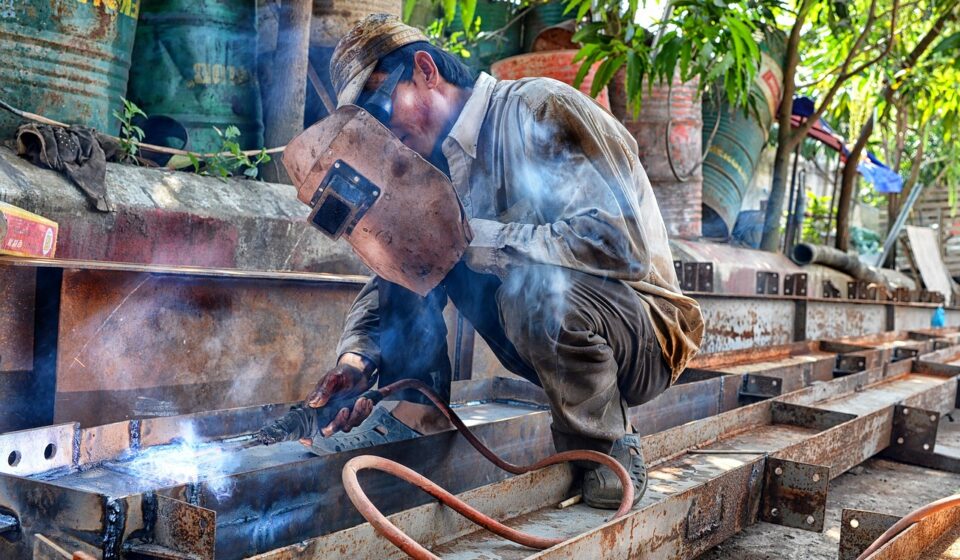
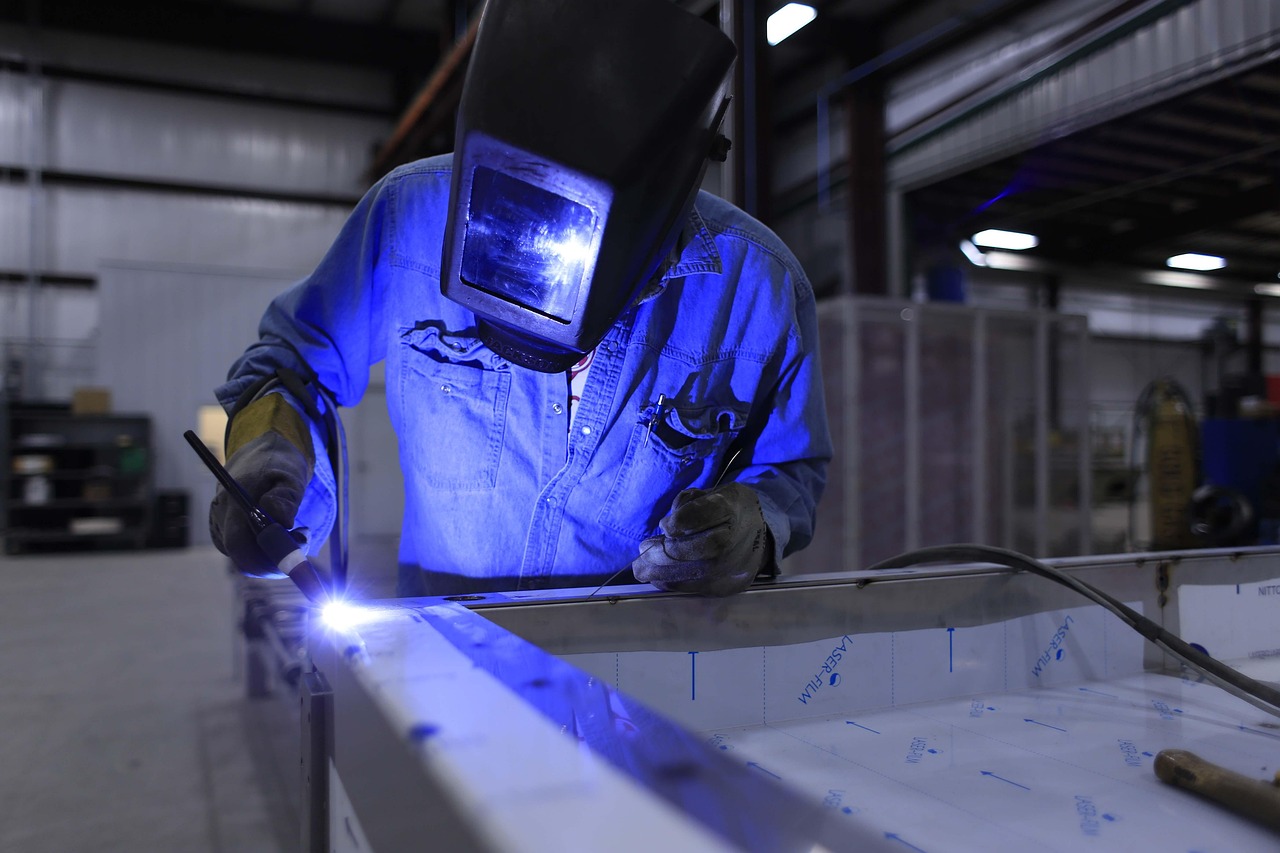
In a shop environment, welding equipment usually means more than the welder itself. A complete station may include a power source, torch or gun, wire feeder, electrode holder, shielding gas system, regulators, cables, cooling unit, work return leads, clamps, fixtures, tables, positioners, curtains, local exhaust ventilation, personal protective equipment, and inspection tools.
This wider definition matters because weld quality is often limited by the weakest part of the cell. A high-quality power source cannot make up for poor fit-up, unstable wire feeding, inadequate gas coverage, weak workholding, or a fume extraction system that operators avoid using. Production managers should therefore evaluate the full welding station, not only the rated output of the machine.
The American Welding Society’s ANSI Z49.1:2021 safety standard addresses the safe setup and use of welding and cutting equipment. OSHA also regulates welding, cutting, and brazing in U.S. general industry under 29 CFR 1910 Subpart Q. These sources reinforce a practical point: welding productivity and welding safety need to be considered together from the start.
Match the welding process to the job before comparing machines
The process decision should come before brand or model comparisons. Material type, thickness, joint access, cosmetic requirements, deposition rate, heat input, and operator availability all affect which equipment category is appropriate.
| Process | Common production fit | Equipment implications | Key limitations |
|---|---|---|---|
| GMAW or MIG | General fabrication, sheet metal, medium-thickness steel, repeatable production | Requires power source, wire feeder, gun, shielding gas, contact tips, liners, and stable workholding | Gas coverage and fit-up quality are important; outdoor use may require extra controls |
| GTAW or TIG | Stainless steel, aluminum, thin materials, visible welds, precision work | Needs precise amperage control, torch cooling for higher duty work, gas management, and skilled operators | Usually slower than wire processes and more dependent on operator technique |
| SMAW or stick | Maintenance, field repair, structural work, outdoor applications | Portable power source and electrodes can be simple and rugged | Lower deposition rate, slag removal, and more operator variability |
| FCAW | Heavy fabrication, structural components, higher deposition applications | Needs compatible feeder, gun, consumables, and fume control planning | Fume generation and slag handling must be considered |
| Resistance spot welding | Sheet metal assemblies and high-volume lap joints | Requires electrode force, current control, cooling, and part access | Limited to suitable joint designs and material stack-ups |
| Laser welding | Precise, high-speed joining where fit-up and safety controls can be tightly managed | Requires beam delivery, guarding, extraction, fixturing, and trained personnel | Higher integration complexity and strict safety requirements |
A useful rule is to choose the least complex process that consistently meets the weld requirement. More complex equipment may be justified when it reduces cycle time, stabilizes quality, or addresses a labor bottleneck. It is harder to justify if upstream parts are too inconsistent to support repeatable welding.
Production requirements that drive equipment specifications
After the process is chosen, the next step is to translate production requirements into equipment specifications. The following factors usually matter more than headline amperage alone.
Material, thickness, and joint design
Base metal, coating, thickness range, joint type, and access determine the practical current range, waveform needs, filler metal, shielding gas, torch geometry, and heat input control. Thin sheet may require stable low-end arc performance and precise fixturing. Heavy plate may require higher duty cycle, preheat planning, multipass consistency, and efficient material handling.
Duty cycle and production rhythm
Duty cycle should reflect the real work pattern. A machine that performs well in a short demonstration may overheat or slow the line if the station runs long beads throughout a shift. Before buying, production managers should estimate arc-on time, part handling time, expected amperage, cooling needs, and shift schedule.
Quality system requirements
For welded products subject to customer, code, or contract requirements, equipment selection may need to support documented welding procedures, qualified operators, calibration records, inspection access, and traceability. ISO 3834-1:2021 provides criteria for selecting the appropriate level of quality requirements for fusion welding of metallic materials. Even when a shop is not formally certified, the standard’s logic is useful: control the welding process, not only the final inspection.
Fixtures, positioners, and part handling
Fixtures and positioners are often undervalued in welding equipment selection. A stable fixture can reduce tack time, distortion, and operator fatigue. A positioner can move the weld into a more favorable orientation, improving access and consistency. In many production cells, these supporting devices create more repeatability than a larger power source would.
Safety, ventilation, and compliance are part of the equipment plan
Welding equipment selection should include the systems needed to control hazards. OSHA’s general industry welding rules cover topics such as fire prevention, ventilation, confined spaces, oxygen-fuel systems, and electrical safety. OSHA’s construction rule at 29 CFR 1926.353 also addresses ventilation and protection in welding, cutting, and heating.
Fume control deserves specific attention. The CDC’s NIOSH welding guidance, updated July 16, 2026, notes concerns about manganese in welding fumes and potential neurological effects. OSHA also identifies hot work on stainless steel and other chromium-containing alloys as a major source of potential hexavalent chromium exposure. OSHA’s permissible exposure limit for hexavalent chromium is 5 micrograms per cubic meter as an 8-hour time-weighted average.
These facts do not mean every weld station needs the same controls. They do mean that ventilation, local exhaust capture, respirator programs when required, welding curtains, fire-resistant clothing, eye and face protection, cylinder handling, electrical grounding, and hot-work procedures should be planned along with the machine purchase. Retrofitting safety controls after production starts is usually more expensive and less effective.
Automation, cobots, and data-connected welding equipment
Automation is becoming more visible in welding, especially where shops are dealing with repeatability problems or labor constraints. The U.S. Bureau of Labor Statistics’ Occupational Outlook Handbook update published in August 2026 lists 437,700 welders, cutters, solderers, and brazers in 2025 and projects about 40,300 openings per year from 2025 to 2035. That replacement-driven labor demand helps explain why many manufacturers are reviewing robotic and collaborative welding options. See also: automation systems.
Robotic welding is strongest when parts are repeatable, fixtures are reliable, joint access is predictable, and the weld path can be programmed efficiently. Collaborative welding systems can lower the barrier for some shops, but they still require procedure control, operator training, risk assessment, consumable management, and consistent upstream fabrication.
Data-connected welding equipment can help production teams monitor parameters, record procedure compliance, track arc time, and identify rework patterns. However, data is only useful when it supports decisions. A shop should define what it wants to measure before paying for advanced connectivity. Useful metrics may include actual welding current and voltage ranges, wire consumption, gas usage, downtime causes, weld repair rates, and operator qualification records.
A practical checklist for evaluating welding equipment
Before purchasing welding equipment, a production team should create a short written requirement. The document does not need to be complicated, but it should prevent vague comparisons and under-specified quotes.
- Define the parts. List material grades, thickness range, coatings, joint types, and annual or monthly volume.
- Define the weld requirement. Note appearance needs, strength expectations, inspection method, procedure requirements, and customer specifications.
- Estimate the production rhythm. Include shift length, expected arc-on time, part handling time, and peak demand.
- Check utilities. Confirm input power, compressed air, shielding gas supply, cooling water if required, and floor space.
- Plan safety controls. Include local exhaust ventilation, curtains, PPE, fire prevention, gas storage, and electrical safety.
- Review consumables. Consider wire, electrodes, contact tips, nozzles, liners, gas, filters, and spare torches.
- Test with real parts. Demonstration welds should use representative material, joint gaps, fixtures, and operator conditions.
- Confirm support. Evaluate documentation, training, spare parts availability, repair response, and software support if applicable.
A trial should not only show that the equipment can make one acceptable weld. It should show whether it can make the same weld repeatedly under realistic production conditions.
Lifecycle cost is broader than purchase price
The lowest purchase price may not deliver the lowest cost per welded part. Lifecycle cost includes power consumption, gas usage, wire efficiency, tip and liner wear, downtime, repair response, training time, fixture maintenance, extraction filters, inspection time, and rework. In high-volume environments, small differences in cycle time or rework rate can outweigh the original machine price.
Maintenance planning should be practical and tied to the way the station runs. Wire feeders need clean paths and correct drive rolls. Torches need consumable replacement before defects appear. Gas systems should be checked for leaks and flow consistency. Cooling systems need proper coolant and inspection. Extraction equipment needs filter monitoring. Calibration or verification may be needed where welding parameters are part of a controlled quality system.
Training also belongs in lifecycle cost. A sophisticated power source with advanced modes can improve results only if operators, supervisors, and maintenance staff understand how to use and maintain it. In some shops, a simpler system may be the better fit because it supports fast onboarding and rugged field service.
Frequently asked questions
What welding equipment is needed for an industrial welding station?
A basic station normally needs a suitable power source, torch or electrode holder, work leads, shielding gas or electrodes, workholding, PPE, ventilation or fume extraction, fire protection, and inspection tools. Production stations may also need fixtures, positioners, wire feeders, cooling units, procedure documentation, and data logging.
Is MIG or TIG better for production welding?
MIG is often preferred for higher deposition and faster production on many steel and aluminum applications. TIG is often preferred for precision, thin materials, stainless steel work, and visible welds. The better choice depends on the weld requirement, material, appearance standard, and available operator skill.
When should a shop consider robotic or cobot welding?
Automation is worth evaluating when parts are repeatable, weld paths are consistent, fixtures are reliable, and labor or quality variation limits output. It is less suitable when every part is different, fit-up is poor, or weld access changes constantly.
What safety equipment should be planned with welding equipment?
Common safety-related equipment includes welding helmets, eye protection, gloves, flame-resistant clothing, screens or curtains, local exhaust ventilation, respiratory protection where required, fire extinguishers, gas cylinder restraints, and electrical safety controls. The exact requirements depend on the process, material, environment, and applicable regulations.
Final selection principle
Reliable welding production comes from matching the process, equipment, people, fixtures, safety controls, and quality system. A welder is important, but it is only one part of the cell. The best purchasing decision is usually the one that produces repeatable welds, protects operators, supports inspection requirements, and keeps the line running at a predictable cost per part.