Production equipment selection guide for flexible, safe, and connected factories
Production equipment is now a lifecycle decision
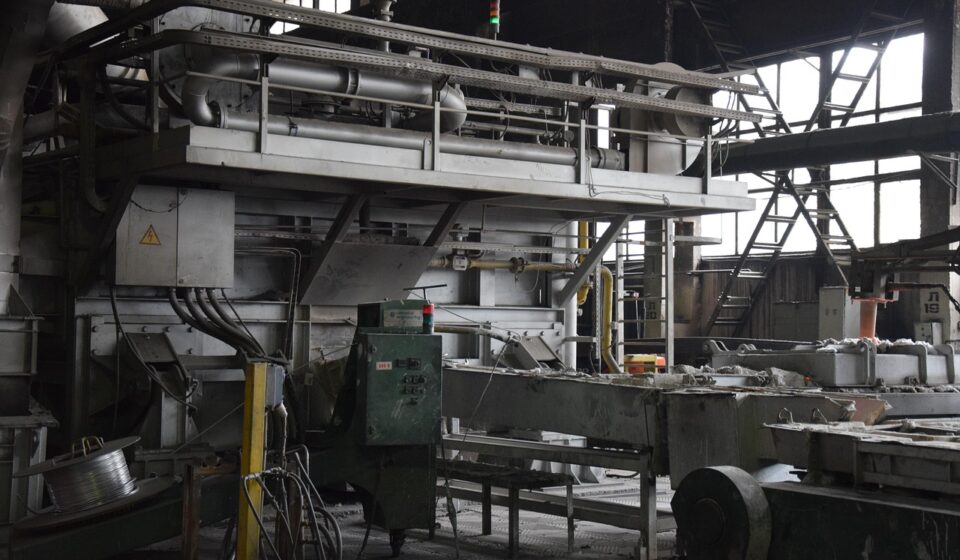
Production equipment is no longer just a set of machines placed on the shop floor. For manufacturers, it defines capacity, product quality, worker safety, data visibility, and long-term operating cost. A press, robot cell, packaging line, CNC machine, conveyor, furnace, mixer, inspection station, or automated storage system should be assessed as part of the full production system, not as a stand-alone purchase.
Good equipment decisions usually start with product and process requirements, then move toward measurable outcomes: throughput, uptime, scrap reduction, energy performance, maintainability, and integration with planning systems. The lowest quoted price is rarely enough. A lifecycle view also accounts for installation, guarding, maintenance, software, training, utilities, spare parts, cybersecurity, and the possibility that the process will change later.
What counts as production equipment in manufacturing?
Production equipment includes the machines, tooling, auxiliary systems, controls, fixtures, inspection devices, and material-handling assets used to turn raw materials or components into finished or semi-finished goods. The exact mix differs by industry, but most factories depend on several common categories.
- Processing and forming equipment: CNC machines, presses, injection molding machines, extrusion lines, mixers, ovens, reactors, coating systems, welding stations, and heat-treatment equipment.
- Assembly and joining equipment: manual assembly benches, torque tools, robotic welding cells, fastening systems, bonding equipment, pick-and-place systems, and collaborative workstations.
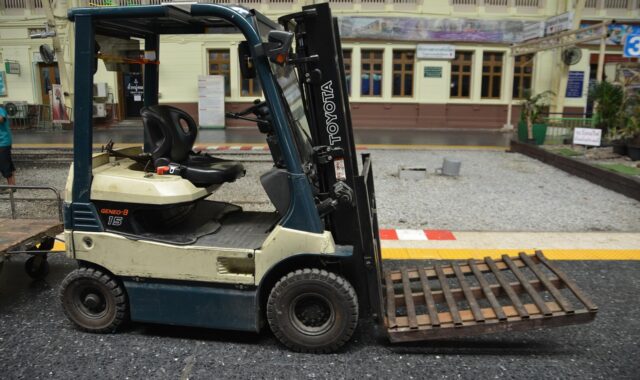
- Material handling equipment: conveyors, hoists, automated guided vehicles, autonomous mobile robots, palletizers, feeders, silos, racks, and automated storage systems.
- Inspection and quality equipment: gauges, vision systems, coordinate measuring machines, checkweighers, leak testers, sensors, and in-line process monitoring devices.
- Utilities and support equipment: compressed air systems, chillers, pumps, dust collection, extraction, power distribution, water treatment, and environmental controls.
- Control and data systems: PLCs, HMIs, drives, industrial networks, machine software, data historians, MES interfaces, and condition-monitoring sensors.
A production line succeeds or fails as a system. A high-speed machine may not increase output if feeding, inspection, cooling, packaging, or maintenance capacity cannot keep pace. For that reason, equipment planning should compare the complete value stream rather than only the headline speed of a single asset.
Start with production requirements before comparing machines
Before requesting supplier quotations, manufacturers should define what the equipment must do under real plant conditions. A clear requirement document reduces the risk of buying a machine that performs well in a demonstration but does not fit the factory’s product mix, utilities, staffing, or quality expectations.
Translate demand into capacity
The first step is to convert sales or production plans into operating requirements. This includes expected annual volume, shift pattern, takt time, batch size, changeover frequency, product mix, and acceptable buffer levels. A machine designed around a single high-volume product may be inefficient in a high-mix plant. Conversely, a highly flexible machine may be unnecessarily expensive when the process is stable and demand is predictable.
Define quality and process capability
Equipment selection should cover tolerance requirements, repeatability, inspection points, traceability needs, and process-control methods. In regulated or high-precision manufacturing, measuring devices and inspection stations should be treated as production-critical equipment, not as accessories.
ISO 9001 quality management guidance emphasizes control of monitoring and measuring resources, including calibration or verification where measurement traceability is required. In practice, the equipment plan should include gauges, software, calibration records, and measurement uncertainty, not only the main production machine.
Map constraints on the shop floor
Every machine competes for floor space, power, compressed air, extraction, drainage, operator access, maintenance access, and safe material flow. Layout should be reviewed before purchase, especially when the equipment introduces new guarding zones, robot reach envelopes, forklift traffic, heat, noise, dust, or cleanroom requirements. A compact machine can still become expensive if it requires facility changes that were not included in the original estimate.
Compare total cost of ownership, not just purchase price
Purchase price is easy to see, but it is only one part of the economic decision. A more useful comparison is total cost of ownership, which estimates the cost and value of the equipment over its working life. NIST’s manufacturing economics work highlights the importance of investment analysis when evaluating manufacturing technology and industrial competitiveness. For equipment buyers, this means looking at both capital spending and operating impact.
| Cost or value factor | Questions to ask before purchase |
|---|---|
| Installation and commissioning | What foundations, utilities, rigging, validation, software setup, and acceptance testing are required? |
| Labor and skills | Will the machine reduce manual work, require higher-skilled technicians, or create a new training burden? |
| Cycle time and yield | What is the verified output rate under realistic material, operator, and changeover conditions? |
| Maintenance | What preventive tasks, wear parts, diagnostic tools, and supplier support are needed? |
| Energy and utilities | How much electricity, compressed air, gas, water, cooling, or extraction will the asset use during normal production and standby? |
| Downtime risk | Are critical spare parts available, and how quickly can faults be diagnosed and recovered? |
| Data and integration | Can the equipment exchange production, quality, and maintenance data with existing systems? |
| End-of-life value | Can the machine be redeployed, upgraded, resold, or safely decommissioned? |
The strongest comparison is based on realistic scenarios. A supplier’s maximum rated output may assume ideal material, uninterrupted feeding, and no changeovers. Buyers should ask for evidence from factory acceptance tests, site acceptance tests, sample runs, or comparable installations, while recognizing that supplier data cannot perfectly predict performance in a different plant.
Safety and compliance must be designed into the equipment plan
Safety should be evaluated before equipment is ordered, not corrected after installation. In the United States, OSHA’s general machine guarding rule at 29 CFR 1910.212 requires one or more guarding methods to protect operators and nearby employees from hazards such as point of operation, ingoing nip points, rotating parts, flying chips, and sparks. OSHA’s lockout/tagout standard at 29 CFR 1910.147 addresses hazardous energy during servicing and maintenance when unexpected energization, startup, or stored energy release could cause injury.
Those requirements affect equipment selection in practical ways. Buyers should confirm whether the machine includes fixed guards, interlocked doors, emergency stops, safe-speed functions, safe torque off, trapped-key systems, clear energy-isolation points, and documented procedures for cleaning, jam clearing, tool change, and maintenance. If operators must frequently bypass guarding to keep production running, the design is likely incomplete.
Industrial robot cells need additional attention. The ANSI/A3 R15.06-2025 robot safety standard adopts the 2025 editions of ISO 10218 Parts 1 and 2 and replaces the older ANSI/RIA R15.06-2012 framework. For factories adding robots or updating robotic workcells, that 2025 revision is a reason to review risk assessments, integration responsibilities, safeguarding, validation, and user documentation rather than relying on legacy assumptions.
Safety decisions also affect productivity. Well-designed guarding, clear access, and maintainable layouts reduce the pressure to create unsafe shortcuts. Safety engineering is therefore not separate from equipment performance; it is part of reliable production.
Connectivity is becoming a core equipment requirement
Connected production equipment can support scheduling, downtime analysis, quality traceability, energy monitoring, and predictive maintenance. Connectivity should still be specified with a clear purpose. Adding sensors and dashboards without a data model can create complexity without improving decisions.
ISA-95 provides a useful reference for the connection between enterprise systems and manufacturing operations. The standard’s equipment hierarchy and manufacturing operations models help teams describe sites, areas, work centers, work units, and the information exchanged between business and control systems. For an equipment project, this matters because the machine should fit the plant’s operational language rather than create isolated data that no one can use. See also: automation systems.
OPC UA is another important industrial interoperability reference. The OPC Foundation describes OPC UA as infrastructure for interoperability from machine-to-machine and machine-to-enterprise communication. In practical terms, buyers should ask suppliers what data can be made available, which protocols are supported, how alarms and states are structured, and whether data access requires proprietary middleware.
Specify useful data points
A practical equipment data specification often includes machine state, part count, cycle time, fault codes, recipe or program number, energy consumption, quality results, tool usage, temperature, vibration, pressure, and maintenance counters. The goal is not to collect everything. The goal is to collect data that supports decisions about uptime, quality, cost, and scheduling.
Include cybersecurity and access control
Connected machinery also introduces cybersecurity and change-control issues. Equipment that can be remotely accessed, updated, or connected to plant networks should be reviewed with engineering, IT, operations, and maintenance teams before commissioning. User roles, backup procedures, software version control, network segmentation, and remote support permissions should be part of the acceptance checklist.
Energy, maintenance, and asset management shape long-term value
Energy use and maintenance needs can change the economics of production equipment. The U.S. Environmental Protection Agency’s ENERGY STAR guidance for small and medium manufacturers recommends identifying motor systems, documenting motor specifications, assessing whether motors are properly sized, and considering adjustable-speed or variable-speed drives where equipment runs at different speeds. The same guidance notes that compressed air is one of the least energy-efficient systems in many industrial plants, making leakage, pressure variability, and maintenance important cost factors.
Support equipment should therefore be included in the purchase review. A new machine may require more compressed air, chilled water, extraction, or process heat than the existing utility system can reliably supply. If utilities are undersized, the plant may face unstable quality, nuisance faults, higher energy cost, and extra downtime. If utilities are oversized or poorly controlled, the plant may pay for capacity it does not need.
Maintenance strategy should also be defined at the time of purchase. ISO 55001:2024, the international asset management system standard, emphasizes lifecycle management and balancing asset performance, risk, and expenditure. For production equipment, this means spare parts, lubrication, inspection intervals, software backups, calibration, obsolescence planning, and replacement strategy should be included in the equipment file from the beginning.
Condition monitoring can be valuable, but it should start from failure modes. Vibration sensors, thermal monitoring, oil analysis, motor current signatures, pressure trends, and cycle-count alarms are most useful when the team knows which failures matter and what action will follow an alert. A predictive maintenance project that does not change maintenance decisions is only a reporting exercise.
A practical roadmap for selecting production equipment
Manufacturers can reduce risk by using a structured selection process. The following roadmap works for a single machine purchase as well as a larger line modernization project.
- Define the production problem. Clarify whether the goal is more capacity, lower scrap, safer operation, less manual handling, better traceability, lower energy use, or replacement of aging assets.
- Map the current process. Record cycle times, downtime causes, quality losses, changeovers, staffing, maintenance issues, and utility limits before proposing equipment.
- Write the requirement specification. Include products, materials, tolerances, throughput, safety needs, layout, cleaning, utilities, data, documentation, and acceptance criteria.
- Compare multiple technical routes. Consider manual improvement, tooling changes, semi-automation, full automation, retrofit, or new line investment. The most advanced option is not always the most suitable.
- Review lifecycle economics. Estimate installation, training, energy, maintenance, spare parts, software, downtime, and end-of-life costs alongside the purchase price.
- Run a risk assessment. Include safety, quality, supply chain, workforce skills, integration, cybersecurity, and supplier support risks.
- Use acceptance testing. Define factory and site acceptance tests with real parts, realistic cycle conditions, data checks, safety validation, and documentation review.
- Plan ramp-up. Schedule operator training, maintenance training, spare parts stocking, process qualification, and early-life support after installation.
A common mistake is to treat equipment selection as a procurement event. In practice, it is an engineering and operations decision supported by procurement. The people who run, maintain, clean, program, inspect, and improve the equipment should be involved before the purchase order is released.
Frequently asked questions
What is the difference between production equipment and manufacturing equipment?
The terms are often used interchangeably. Production equipment usually refers to assets directly involved in making, assembling, moving, inspecting, or packaging products. Manufacturing equipment can be broader and may include facilities, utilities, tooling, test systems, and support assets used across the manufacturing operation.
How should a factory choose between manual, semi-automatic, and fully automatic equipment?
The decision should be based on volume, product stability, labor availability, quality risk, safety exposure, changeover needs, and lifecycle cost. Manual or semi-automatic equipment may be better for low-volume, high-mix production. Full automation is easier to justify when demand is stable, tasks are repetitive, safety risk is high, or traceability requirements are strict.
Why is total cost of ownership important for production equipment?
Total cost of ownership shows costs that are not visible in the purchase price, including installation, utilities, maintenance, spare parts, training, downtime, software, and eventual disposal. It helps manufacturers avoid low-price choices that become expensive once the machine is running.
What data should new production equipment provide?
Useful data usually includes machine state, cycle time, production count, downtime reason, alarms, recipe or program number, quality results, energy use, and maintenance counters. The exact list should match the plant’s improvement goals rather than follow a generic dashboard template.
When should aging production equipment be replaced instead of repaired?
Replacement becomes more reasonable when the equipment creates recurring safety risks, cannot meet quality requirements, lacks spare parts support, consumes excessive energy, limits capacity, or cannot integrate with required data and control systems. A repair may still be appropriate when the asset is reliable, maintainable, safe, and economically aligned with future production needs.