How to choose mining equipment for surface and underground operations
Start with the mine plan, not the machine list
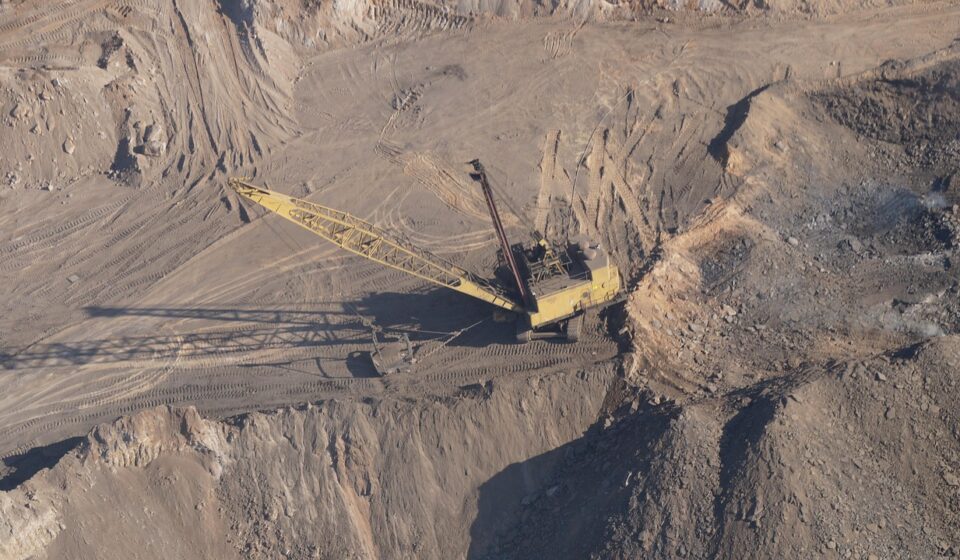
Choosing mining equipment should begin with the orebody, production method, haul profile, safety obligations, and maintenance capacity—not with a catalogue of available machines. The right excavator, drill, loader, truck, crusher, conveyor, or support vehicle is the one that can meet the mine plan at an acceptable cost per ton while staying within the site’s safety, ventilation, power, access, and service limits. A machine with higher headline capacity can still be the wrong purchase if it creates downstream bottlenecks, exceeds road or drift limits, lacks local parts support, or requires operators and technicians the site cannot yet provide.
For buyers, the practical question is not “Which model is largest?” but “Which equipment package can move the required material safely, predictably, and maintainably over the expected life of the asset?” The answer depends on whether the operation is surface or underground, hard rock or soft rock, selective or bulk, owner-operated or contractor-run, and mature or still ramping up.
For more industrial purchasing topics, visit the Hulumiao buying guides.
Define the operating environment before comparing equipment
The first filter is the mine environment. Surface mines usually focus on high-volume drilling, loading, hauling, road maintenance, and primary crushing. Underground mines add tighter constraints around drift size, turning radius, ventilation, heat, emissions, ground support, battery charging or fuel handling, and emergency access. The same nominal payload can perform very differently when grade, rolling resistance, cycle distance, altitude, temperature, fragmentation, and operator visibility change.
A useful buying brief should define the following conditions before any supplier is asked for a quote:
- Material characteristics: density, abrasiveness, moisture, fragmentation, compressive strength, and contamination risk.
- Production target: required tons per hour, tons per shift, utilization target, surge capacity, and ramp-up schedule.
- Mine layout: bench height, haul road width, grade, pit depth, drift dimensions, drawpoint spacing, dumping locations, and crusher position.
- Operating hours: number of shifts, seasonal constraints, blasting windows, maintenance windows, and expected standby time.
- Infrastructure: workshop size, fuel or charging facilities, ventilation capacity, communications coverage, road quality, and power availability.
- People and skills: operator experience, technician capability, digital system support, training time, and local labor availability.
This step helps avoid a common buying mistake: selecting equipment for theoretical peak output while ignoring the site factors that reduce effective production. In mining, availability, utilization, and cycle consistency often matter more than the highest nameplate capacity.
Match equipment class to the job it must perform
Mining equipment is usually bought as a system. A high-capacity shovel does not create value if the truck fleet cannot absorb its output. A fast drill does not improve production if blasting, loading, or crushing remains the constraint. The table below summarizes the main equipment categories and the buying questions that connect each class to the mine plan.
| Equipment class | Typical role | Key buying questions |
|---|---|---|
| Drilling rigs | Blast hole, production, exploration, or ground support drilling | Does the rig match hole diameter, depth, rock strength, bench or drift access, automation needs, and consumable cost? |
| Excavators and shovels | Loading blasted material into trucks or feeding crushers | Is bucket size matched to truck body size, material density, diggability, and required pass count? |
| Wheel loaders and LHDs | Short-cycle loading, underground mucking, stockpile work, and support tasks | Can the loader operate safely in the available space while meeting tramming distance, breakout force, and visibility needs? |
| Haul trucks | Moving ore, waste, or development material | Does payload match road design, grade, braking requirements, loading tool capacity, tire strategy, and maintenance capability? |
| Crushers and screens | Size reduction and material classification | Will the system handle feed size, abrasiveness, moisture, tramp metal risk, and downstream conveyor or plant capacity? |
| Conveyors | Continuous material transport | Is the route stable enough for fixed equipment, and do power, transfer points, dust control, and maintenance access fit the layout? |
| Support equipment | Road maintenance, water, scaling, lifting, personnel transport, and utilities | Has the budget included the machines that keep the production fleet safe, accessible, and compliant? |
Buyers should also check fleet balance. For example, a truck loading target of four to six passes per truck is often used as a practical starting point, but the right number depends on material density, bucket fill factor, haul cycle, spotting time, and site preference. The goal is not to follow a universal rule. It is to reduce waiting, underloading, overloading, and unnecessary tire or component stress.
Compare power, automation, and safety as part of the same decision
The mining equipment market is no longer divided only by size and horsepower. Powertrain choice, digital controls, collision warning, fleet management, and autonomous functions now affect capital cost, infrastructure design, workforce planning, and long-term operating risk. These technologies should be evaluated early because they can change both the layout and the economics of the mine.
Diesel, battery-electric, trolley, and hybrid options
Diesel remains widely used because it is familiar, energy dense, and supported by established refueling and service networks. Underground operations, however, must account for diesel particulate matter, heat, and ventilation demand. Battery-electric loaders and trucks can reduce underground exhaust emissions and heat at the point of use, but they also introduce questions around charging strategy, battery change-out, duty cycle, grid capacity, fire safety procedures, and technician training.
OEM activity shows that electrification is moving beyond concept discussions. Caterpillar has demonstrated battery-electric underground load-and-haul equipment, and Epiroc markets battery-electric underground trucks and loaders. These developments do not mean every mine should switch immediately. They do mean buyers should compare total system cost, including ventilation, energy infrastructure, maintenance, charging time, and production flexibility, rather than looking only at the purchase price of the machine.
Automation and collision avoidance
Autonomous haulage is becoming more established in large surface mining. Komatsu reported more than 750 autonomous haul trucks commissioned worldwide in July 2024 and later reported reaching its 1,000th ultra-class autonomous haul truck milestone in April 2026. These are vendor-reported milestones, so they should be treated as evidence of market adoption rather than as a guarantee that autonomy is suitable for every site.
Automation can help stabilize haul cycles and reduce some human exposure around mobile equipment, but it depends on disciplined road rules, communications coverage, change management, maintenance integration, and emergency procedures. Smaller sites may gain more immediate value from fleet management, operator assist features, proximity detection, camera systems, fatigue management, and improved dispatching before moving to full autonomy.
Safety systems should be specified with recognized frameworks in mind. ISO 21815-1:2022 provides general requirements for collision warning and avoidance systems for earth-moving machinery and mobile underground mining machinery, including detection, warnings, and automatic intervention by speed reduction or motion inhibit. It also makes clear that such systems assist the operator and do not remove responsibility for safe operation. For U.S. mines, the Mine Safety and Health Administration’s surface mobile equipment rule published in December 2023 requires written safety programs for surface mobile equipment at surface mines and surface areas of underground mines, excluding belt conveyors. That rule makes equipment selection, task training, traffic controls, and safety program updates part of the buying conversation, not just operating procedures after delivery.
Evaluate lifecycle cost instead of purchase price alone
The lowest bid can become expensive if the machine has poor availability, long parts lead times, excessive fuel or tire consumption, weak resale value, or limited diagnostic support. A stronger buying comparison estimates cost per operating hour and cost per ton across the planned ownership period. See also: production equipment.
Important lifecycle cost categories include:
- Capital cost: base machine, attachments, technology packages, freight, taxes, commissioning, and site modifications.
- Energy cost: diesel, electricity, charging losses, fuel logistics, idle time, and ventilation impact for underground equipment.
- Ground engaging tools: teeth, edges, liners, drill bits, rods, hammers, crusher wear parts, and screen media.
- Consumables: tires, filters, lubricants, hydraulic hoses, batteries, fire suppression service, and wear plates.
- Maintenance labor: planned servicing, component rebuilds, troubleshooting, software updates, and emergency repairs.
- Downtime risk: lost production, standby labor, rental substitution, missed shipments, and downstream plant interruptions.
- Residual value: resale market depth, rebuildability, documentation, hours, condition monitoring history, and brand support.
Buyers should request enough information to model at least three scenarios: expected production, high-utilization production, and constrained production. This helps show whether a machine remains economical when haul distances grow, grades increase, material becomes more abrasive, or maintenance windows shrink. Sensitivity analysis is especially useful for tires, energy, major components, and wear parts because these costs can change quickly with ground conditions and operator practice.
Check supplier support, compliance, and documentation before signing
Mining equipment is only as dependable as the support system behind it. Before purchase, buyers should verify the supplier’s parts availability, field service coverage, technician training, warranty process, remote diagnostics, rebuild capability, and ability to support software-based systems. For remote mines, the practical value of a nearby service branch, consignment parts stock, or trained site technician can outweigh a small difference in purchase price.
Documentation should be treated as part of the asset. A complete handover package may include operation and maintenance manuals, electrical and hydraulic schematics, parts books, safety documentation, inspection checklists, commissioning records, warranty terms, emissions information, software license terms, and recommended spare parts lists. For used mining equipment, buyers should ask for maintenance history, component hours, oil analysis records, accident or rollover history, rebuild invoices, and evidence that safety-critical systems are functional.
Compliance requirements vary by country, mineral, and mine type, so legal review should be local. Still, several checks are broadly useful. Confirm guarding, emergency stops, braking systems, fire suppression, seat belts, access systems, visibility aids, lighting, alarms, and lockout provisions. Where collision warning, proximity detection, or autonomous functions are included, confirm the operating design domain: where the system can be used, what it detects, what it does not detect, how it fails safely, and what training is required.
Use a structured buying workflow
A disciplined workflow reduces the chance of buying a machine that looks attractive in isolation but weakens the whole mining system. The following process works for both new and used equipment purchases:
- Define the production case. Set target tons, operating hours, mine layout, material properties, and bottlenecks.
- Build a duty-cycle model. Estimate loading time, travel loaded, dumping, return empty, spotting, queuing, and delays.
- Shortlist equipment classes. Select machine types that physically and operationally fit the mine.
- Request comparable proposals. Ask suppliers to quote the same assumptions, payload, warranty basis, delivery point, and support scope.
- Model lifecycle cost. Compare cost per hour and cost per ton, not just capital price.
- Run a safety and compliance review. Check traffic rules, mobile equipment programs, visibility, braking, access, and emergency procedures.
- Validate support capability. Confirm spare parts, service response, technician training, tooling, and digital support.
- Plan commissioning. Include operator training, maintenance setup, acceptance testing, production ramp-up, and performance review dates.
For high-value fleets, buyers should consider a trial, staged deployment, or performance-based acceptance test. The acceptance test should be realistic enough to include actual grades, loading tools, shift patterns, material conditions, and maintenance routines. A short demonstration on ideal ground is useful, but it is not the same as proof that the machine can meet production targets in daily mine conditions.
Frequently asked questions
What is the most important factor when buying mining equipment?
The most important factor is fit with the mine plan. Capacity, price, and brand matter, but the equipment must match the material, production target, layout, safety controls, infrastructure, maintenance capability, and expected ownership period. A well-matched mid-size machine can outperform a larger machine that causes queuing, excessive wear, or support problems.
Is new or used mining equipment better?
New equipment offers warranty coverage, the latest safety options, cleaner documentation, and easier financing in many cases. Used equipment can reduce upfront cost and delivery time, but it requires deeper inspection of component hours, structural condition, maintenance history, emissions compliance, and parts support. Used machines are most attractive when condition is verifiable and the site has strong maintenance capability.
Should underground mines prioritize battery-electric equipment?
Battery-electric equipment can be attractive underground because it can reduce exhaust emissions and heat at the point of use. It is not automatically the right answer for every mine. Buyers must evaluate charging infrastructure, duty cycle, electrical capacity, emergency procedures, battery support, fire risk management, and whether reduced ventilation demand offsets the added capital and infrastructure cost.
When does autonomous haulage make sense?
Autonomous haulage is most suitable where routes, traffic rules, communications, maintenance practices, and production schedules can be tightly controlled. Large surface mines with repetitive haul cycles are often better candidates than small or highly variable operations. Sites that are not ready for full autonomy may still benefit from fleet management, operator assist tools, collision warning, and better dispatch discipline.
How should buyers compare supplier quotations?
Quotations should be normalized before comparison. Use the same payload assumptions, attachments, technology packages, warranty terms, freight basis, commissioning scope, spare parts package, training requirements, and service response expectations. Then compare lifecycle cost, support risk, and production impact alongside purchase price.