Cat construction equipment in 2026, product lines, technology and buying factors
What Cat construction equipment means in 2026
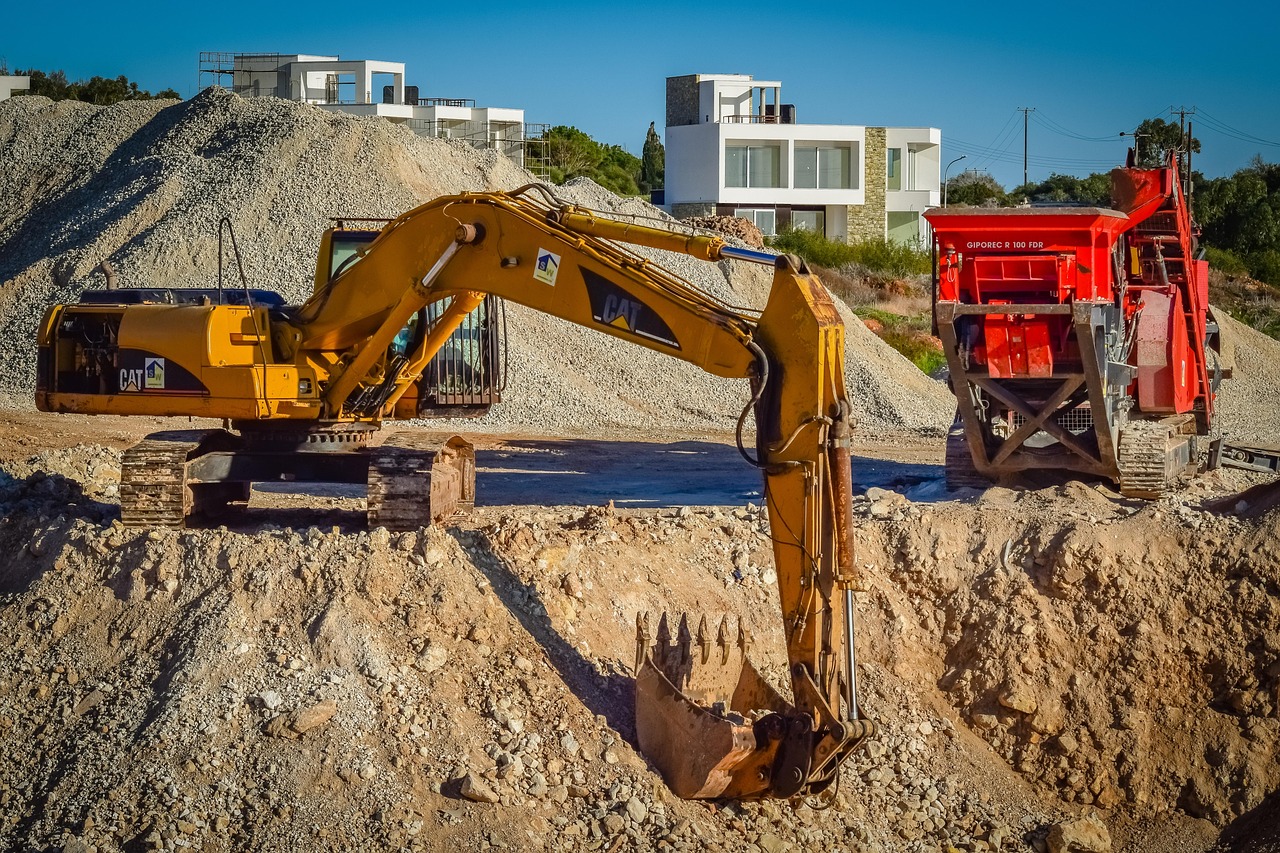
Cat construction equipment refers to the construction machine families sold under the Cat brand by Caterpillar. For contractors, rental fleets and industrial buyers, the question is usually practical: which Cat machines fit excavation, grading, loading, compact work or roadbuilding, and what has changed enough to affect buying decisions in 2026?
The short answer is that Cat remains a broad construction equipment line, but the specification discussion is changing. Buyers are still comparing horsepower, bucket size, operating weight and lift capacity. Increasingly, they are also looking at telematics, grade control, payload measurement, remote operation, attachment flexibility, emissions compliance and, in selected applications, electric power.
Caterpillar reported 2025 sales and revenues of $67.6 billion in its annual reporting, giving the Cat construction equipment ecosystem unusual scale across machines, parts, finance, software and dealer support. That scale does not make every Cat model the right choice for every job. It does help explain why many buyers treat a Cat equipment decision as a lifecycle choice rather than a one-time machine purchase.
Main Cat construction equipment families
The official Cat construction lineup covers both compact and heavy machines. The exact model range varies by country and dealer territory, but the core families can still be grouped by jobsite function.
| Machine family | Typical use | Buyer focus |
|---|---|---|
| Excavators and mini excavators | Digging, trenching, demolition, utilities and site preparation | Dig depth, hydraulic flow, attachment compatibility and transport weight |
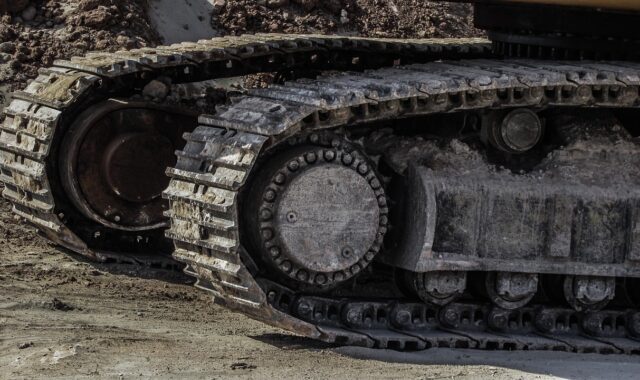
| Dozers | Rough grading, pushing, ripping and site development | Blade control, traction, undercarriage life and grade technology |
| Wheel loaders | Material handling, stockpiling, truck loading and yard work | Bucket capacity, cycle time, payload tools and tire strategy |
| Skid steer and compact track loaders | Compact construction, landscaping, utilities and attachment-driven work | Rated operating capacity, hydraulic flow, visibility and ground pressure |
| Backhoe loaders and telehandlers | Mixed-duty jobsites, lifting, loading and trenching | Versatility, reach, stabilizer setup and attachment range |
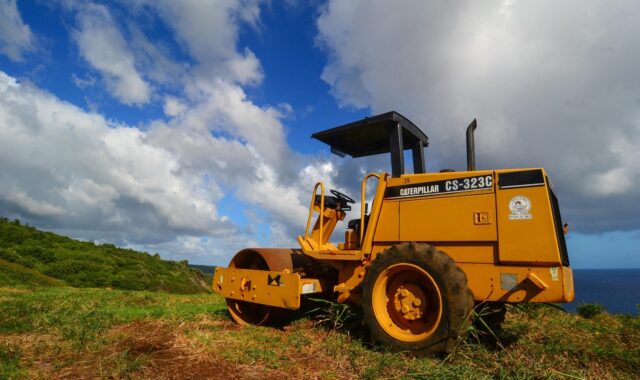
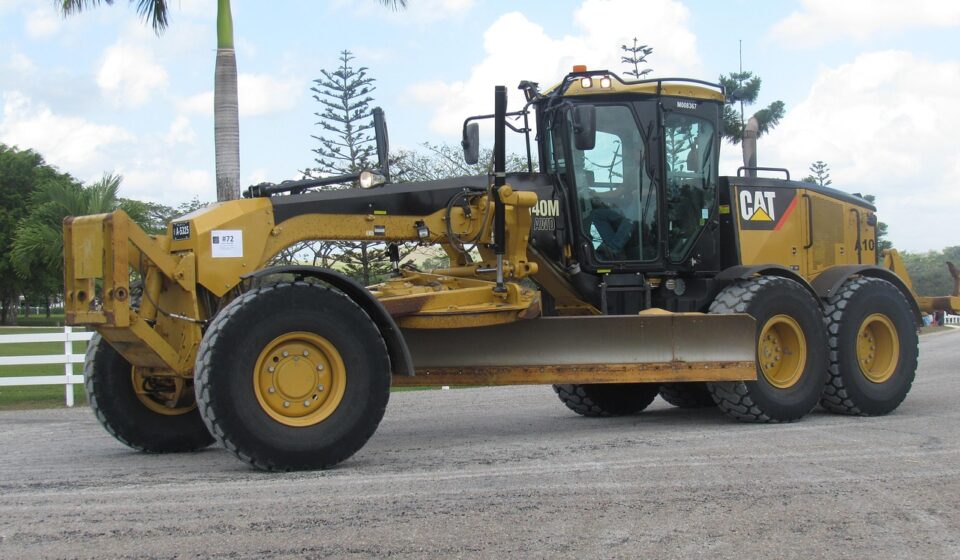
| Articulated trucks, motor graders and compactors | Hauling, roadwork, finishing and soil or asphalt compaction | Productivity per pass, operator aids, fuel use and fleet coordination |
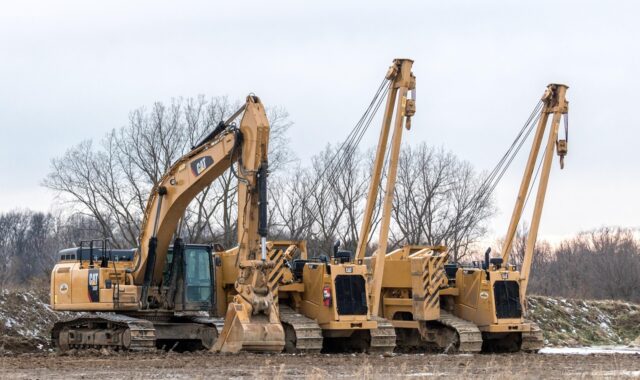
This breadth matters because contractors rarely plan machines in isolation. A grading contractor may pair dozers with excavators and compactors. A site contractor may need excavators, CTLs, wheel loaders and articulated trucks on the same project. As fleet connections become more important, common dealer support, shared telematics and compatible work tools can carry real operational value.
What changed around 2026
Two 2026 developments stand out for readers tracking Cat construction equipment. First, Caterpillar used CONEXPO-CON/AGG 2026 to preview compact equipment additions. In a March 1, 2026 trade press release, Caterpillar said the Cat TUL100 compact utility loader would mark its first entry into the stand-on compact utility loader segment, with planned commercial availability in North America in early 2027. The same release described the Cat 253 compact track loader, with a planned North American availability window in the second half of 2026, and the Cat 301 CR micro mini excavator, planned for early 2027.
Second, Caterpillar highlighted a broader jobsite technology direction at the same 2026 show. Its trade materials described VisionLink as built on data from approximately 1.6 million connected assets, while also presenting expanded remote and semi-autonomous capabilities for selected construction machines. The practical implication is not that every jobsite is about to become autonomous. It is that data visibility, operator assistance and remote operation are moving from premium talking points into mainstream fleet planning.
For buyers, that timing matters. A machine purchased in 2026 may remain in a fleet for many years. If it performs mechanically but does not integrate well with fleet reporting, payload targets or operator-assist workflows, it may become less attractive over its ownership life.
Technology is becoming part of the equipment specification
Cat construction equipment technology now includes onboard guidance, production measurement, remote control and connected fleet management. On excavators, Caterpillar announced 2025 hydraulic excavator updates that included Cat Grade improvements, a factory-installed option path for Grade with 3D on certain track and wheeled excavators, a newer user interface and expanded Advanced Payload capability for track excavators.
These are not cosmetic changes. Grade control can reduce rework when crews must hit a target slope or depth. Payload measurement helps operators load trucks closer to target, reducing the risk of underloading or overloading. The value depends on the work, the operator process and whether the data is actually used in daily production decisions.
Cat Command is another area to watch. Caterpillar describes Cat Command for construction as a remote control system intended to move operators away from hazardous areas while maintaining machine control. The listed construction families include dozers, excavators, skid steer and compact track loaders, and wheel loaders, although availability varies by region and model. For demolition, quarry, steep slope or unstable surface applications, remote operation can be a safety and continuity tool. For ordinary earthmoving, the business case depends on the site, operator training, communications setup and dealer support.
The useful way to compare technology is by work problem, not by feature name. If a crew struggles with over-excavation, grade guidance may matter. If truck loading is inconsistent, payload tools may matter. If a site exposes operators to falling material or unstable ground, remote control may be more important than a small increase in engine output.
Electric and lower-emission options are application specific
Electrification is part of the Cat construction equipment conversation, but it needs careful qualification. Caterpillar lists battery electric machines in development, including the 301.9 electric mini excavator, 906 electric compact wheel loader, 320 electric medium excavator, 950 GC electric medium wheel loader and 395 tethered electric large excavator. Published figures include up to eight hours of run time for some battery models under stated utilization assumptions, while the 395 tethered electric excavator is described as offering unlimited operation while connected to grid power through supporting equipment.
Those details show both opportunity and limitation. Electric machines may suit indoor work, low-noise sites, emissions-sensitive projects or operations with predictable duty cycles. They may be harder to justify on remote sites, on jobs with long travel distances, in heavy continuous loading or for contractors without charging capacity. The 395 tethered configuration, for example, requires a suitable high-voltage power supply. For diesel compact equipment, emissions compliance also remains important; Caterpillar stated that the 2026-previewed Cat 253 CTL uses a Cat 3.3B turbo diesel engine meeting U.S. EPA Tier 4 Final and Stage V emission standards. See also: automation systems.
How to match the machine to the job
A useful Cat equipment shortlist starts with the work, not with the badge. Buyers should define production targets, site constraints, transport limits and attachment needs before comparing model numbers.
- Excavation and utilities: prioritize reach, dig depth, hydraulic performance, attachment circuits and whether grade guidance will reduce staking or rework.
- Grading and site development: compare dozer size, blade type, undercarriage configuration, traction conditions and compatibility with 2D or 3D grade systems.
- Material handling: compare wheel loaders by bucket size, cycle time, tipping load, payload measurement and tire or ground-engagement costs.
- Compact construction: evaluate skid steers, CTLs, mini excavators and compact utility loaders by access width, ground disturbance, trailer weight and attachment hydraulics.
- Road and infrastructure work: look closely at motor graders, compactors, articulated trucks and fleet reporting because production depends on machine coordination, not only single-machine output.
Attachments deserve special attention. Cat promotes a broad work tool range for construction and paving, and this is often where one carrier becomes economical across multiple jobs. A CTL with the right hydraulic package and attachments can move between grading, trenching, broom work and material handling. A mini excavator with suitable buckets, hammer, auger or coupler can serve utilities, landscaping and demolition support. The wrong attachment interface, however, can limit utilization and reduce resale appeal.
Buying, renting and lifecycle considerations
The Cat brand is closely tied to dealer support, parts availability, financing, rental options and service agreements. That can be valuable, but it should still be checked locally. Dealer response time, technician availability, rental substitution options and parts inventory can differ by region. Before purchasing, buyers should ask how preventive maintenance, telematics setup, software subscriptions, operator training and warranty support are handled in their territory.
Total cost of ownership should include fuel or charging energy, undercarriage or tire wear, attachments, transport, insurance, financing, maintenance, downtime risk and expected resale value. New machines may offer the latest controls and warranty coverage. Used machines can reduce upfront cost but require more inspection discipline. Rental can be the better choice for seasonal work, uncertain utilization or testing a new machine class before purchase.
For more equipment selection and industrial machinery coverage, visit the production equipment section.
Limits buyers should not overlook
Several cautions apply to Cat construction equipment in 2026. Model availability can vary by country, dealer territory and production schedule. Previewed machines are not the same as commercially available inventory. Published electric run times depend on utilization, application, temperature and charging strategy. Remote-control and semi-autonomous functions require training, jobsite procedures and compatible machine configurations. Emissions standards differ by market, so engine specifications should be confirmed for the region where the machine will operate.
In short, Cat construction equipment offers a wide platform, but the best choice is still job-specific. The strongest buying decisions connect the machine family, attachments, technology package and support plan to measurable work on the site.
Frequently asked questions
Is Cat construction equipment the same as Caterpillar equipment?
Cat is the equipment brand used by Caterpillar for machines, engines, work tools and related technologies. Caterpillar is the company, while Cat is the brand most buyers see on construction equipment.
Which Cat machine is best for small construction sites?
Small sites often favor mini excavators, skid steer loaders, compact track loaders, compact wheel loaders and, where available, compact utility loaders. The right choice depends on access width, ground conditions, lifting needs and attachments.
Are Cat electric construction machines widely available?
Caterpillar lists several battery electric construction machines as in development, so buyers should not assume broad availability in every market. Electric equipment should be evaluated by duty cycle, charging access, site rules and local dealer support.
Does Cat Command make construction equipment fully autonomous?
Not necessarily. Cat Command includes remote-control and selected semi-autonomous capabilities depending on machine and application. It can remove the operator from hazardous areas, but availability and function vary by model, region and configuration.