Construction safety net requirements for safer work at height
What a construction safety net is designed to do
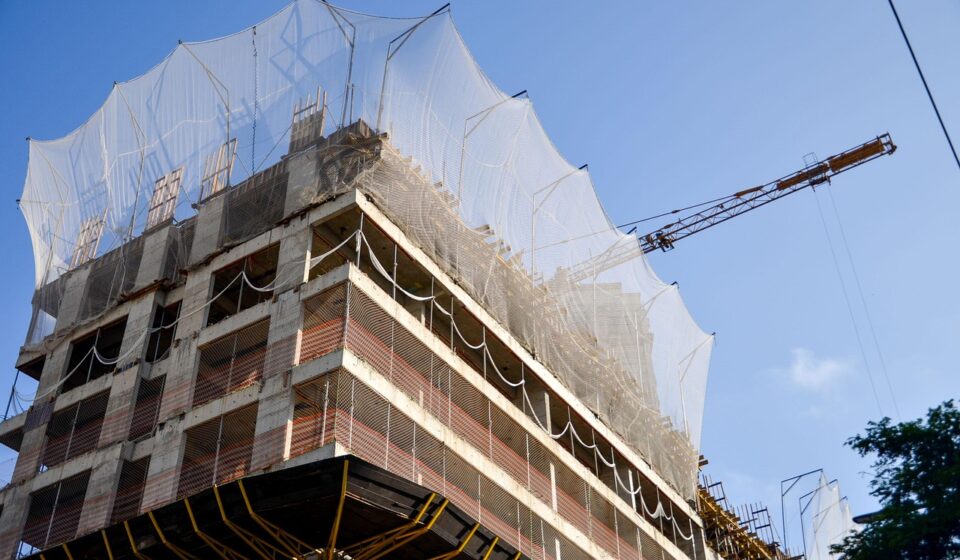
A construction safety net is a passive fall-arrest system installed below or beside elevated work areas to catch a worker if a fall occurs. It is not the same as lightweight debris mesh, shade cloth or visual barrier netting. On a jobsite, the practical question is whether the net can be used for the specific work, how it must be installed, and what records should be in place before people work above it. A safety net system should be planned as a complete assembly: certified net, border rope, panel connections, anchorage, clearance, access control, inspection, rescue method and documentation. For related industrial protection topics, see our safety systems section.
Falls remain one of the most serious construction hazards. The U.S. Bureau of Labor Statistics reported in its 2024 Census of Fatal Occupational Injuries, released on February 19, 2026, that the construction industry recorded 1,034 fatal work injuries in 2024, including 389 classified as falls, slips and trips. A safety net does not remove the hazard at an edge, opening or roof surface. It can, however, reduce the consequences when higher-level prevention is not practicable or when it is used as part of a layered fall-protection plan.
Where safety nets fit in a fall protection plan
Fall protection planning normally starts with eliminating the exposure. If workers can assemble components at ground level, use permanent guardrails, install covers over openings, or work from a properly designed platform, those controls are usually more reliable because they prevent the fall from starting. A construction safety net works differently: it assumes a fall may occur and is intended to arrest the fall before the worker contacts a lower level or obstruction.
This distinction matters because a net should not become a convenient substitute for poor sequencing. International guidance from the UK Health and Safety Executive describes safety nets and soft landing systems as measures that can mitigate the consequences and distance of a fall, not as replacements for fall-prevention measures where those measures can be used. That principle is relevant on industrial sites, bridge work, steel erection interfaces, roof structures, atriums, shaft edges and renovation projects where guardrails or personal fall-arrest anchorage may be difficult during short phases of work.
In the United States, OSHA’s construction rules treat safety net systems as one of several conventional fall-protection options in many situations. Depending on the task, guardrail systems, personal fall-arrest systems, safety net systems, warning-line combinations, controlled access zones or a written fall-protection plan may be involved. The exact requirement depends on the work activity, height, surface, edge condition and applicable subpart. State-plan OSHA programs, contract specifications and owner safety rules can also impose stricter requirements.
Key U.S. requirements to check before work starts
Several OSHA provisions are commonly referenced when construction safety nets are discussed. They should be read with the full standard and the job-specific scope, because one project may involve general construction work, steel erection, bridge work, roofing or other specialized activities.
| Requirement area | Common reference point | What it means for planning |
|---|---|---|
| General fall-protection criteria | 29 CFR 1926.502(c) | Safety nets should be installed as close as practicable under the walking or working surface, with OSHA Subpart M stating no more than 30 feet below that level. |
| Outer extension from work edge | 29 CFR 1926.502(c) | The outer edge of the net must extend at least 8, 10 or 13 feet from the work surface edge, depending on the vertical distance from the working level to the net. |
| Drop testing or certification | 29 CFR 1926.502(c) | The net installation must be drop-tested after initial installation, relocation, major repair and at six-month intervals if left in one place, unless a competent-person certification is used where the drop test is unreasonable. |
| Inspection and service condition | 29 CFR 1926.502(c) | Defective nets must not be used, and safety nets must be inspected at least weekly and after events that could affect system integrity. |
| Safety-net provision for certain high workplaces | 29 CFR 1926.105 | This older OSHA provision refers to safety nets where workplaces are more than 25 feet above lower surfaces and other listed protective methods are impractical. It also includes requirements for testing, extension, mesh size, impact resistance and fastening hardware. |
| Consensus standard | ANSI/ASSP A10.11-2025 | As of 2026, ANSI lists ANSI/ASSP A10.11-2025 as the current personnel-net standard, covering selection, installation and use of personnel nets during construction, repair and demolition operations. |
One practical issue is that OSHA Subpart M and OSHA 1926.105 are not worded identically. For example, Subpart M includes a 30-foot maximum distance below the walking or working level for safety net systems, while 1926.105 includes wording that nets should be no more than 25 feet below the work surface in that provision. A competent person or safety professional should identify which rule applies to the specific operation instead of assuming that one number covers every scenario.
How to specify the net system, not only the net
Choose a net rated for personnel fall arrest
The word “net” covers many products. A personnel safety net must be suitable for absorbing fall energy and should be supported by manufacturer or supplier documentation. OSHA 1926.105 refers to new nets meeting accepted performance standards of 17,500 foot-pounds minimum impact resistance as determined and certified by manufacturers, with proof-test labeling. OSHA Subpart M also requires safety nets and installations to absorb an impact force equivalent to the specified drop test.
Debris netting, by contrast, may be intended only to catch tools, fragments or light materials. Some systems combine personnel and debris functions, but that must be verified through the rating, system design and installation method. A green perimeter mesh attached to scaffold guardrails should never be treated as a worker-catching system unless it is specifically designed, tested and installed for that purpose.
Check mesh, border rope and panel connections
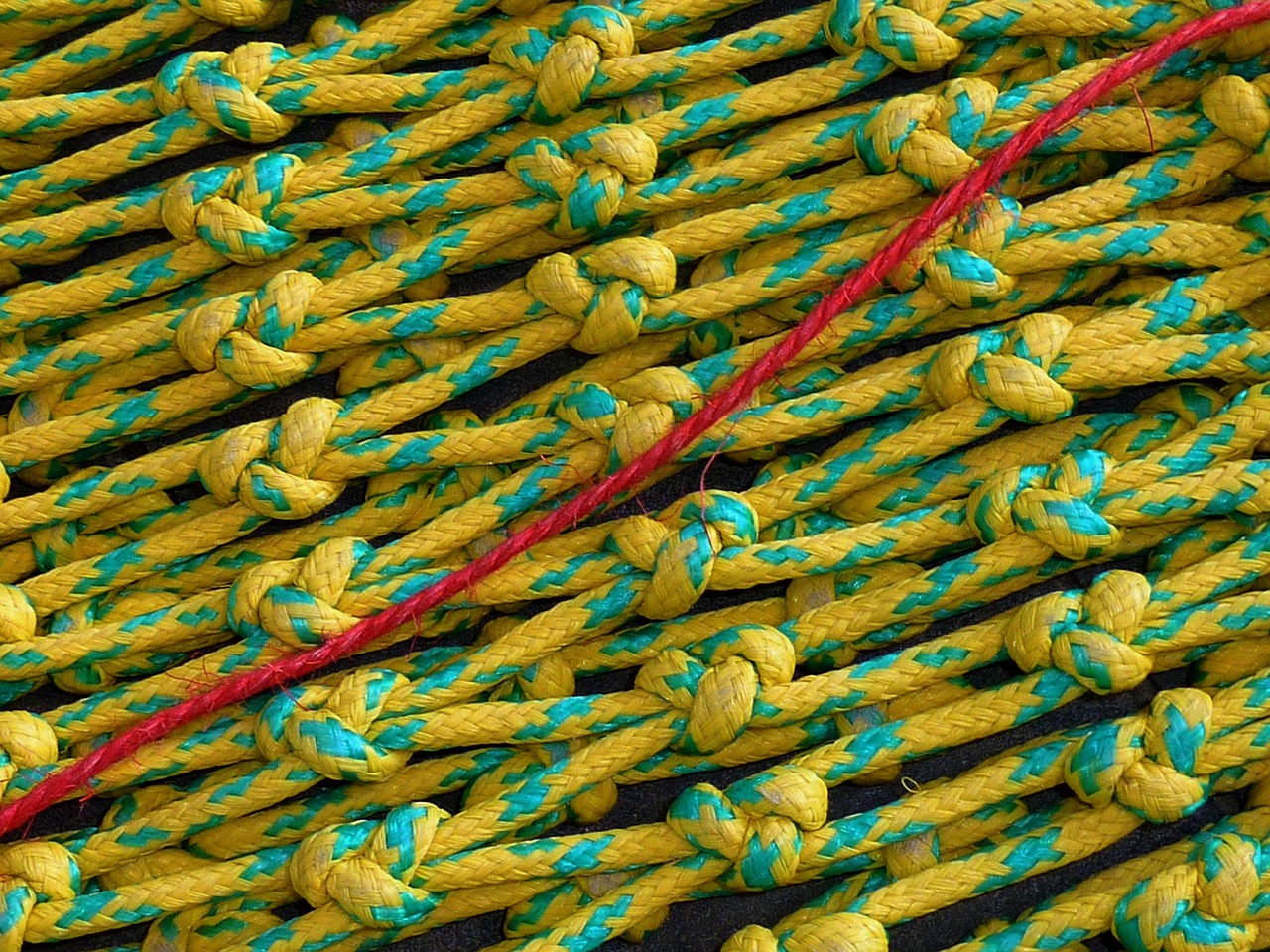
Under OSHA Subpart M, the maximum size of each safety net mesh opening must not exceed 36 square inches and must not be longer than 6 inches on any side. Mesh crossings must be secured to prevent enlargement. Each safety net, or each section of it, must have a border rope or webbing with a minimum breaking strength of 5,000 pounds. Connections between safety net panels must be as strong as integral net components and spaced not more than 6 inches apart.
These details are easy to miss during procurement. A site team may ask for a “construction safety net” and receive a product that looks strong but lacks the right label, border-rope rating, compatible panel lacing or proof documentation. The specification should state the intended use, applicable regulation or standard, required documentation, net size, mesh size, border rope, compatible connectors, repair limits and inspection expectations.
Plan extension and clearance before the crew mobilizes
Safety net geometry is not a cosmetic issue. The net must be wide enough to intercept the potential fall path, and it must have enough clearance below it to deform under impact without allowing the worker to strike the floor, equipment, rebar, temporary works, stored materials or structural members below.
| Vertical distance from working level to net | Minimum outward distance of net edge from working-surface edge under OSHA Subpart M |
|---|---|
| Up to 5 feet | 8 feet |
| More than 5 feet up to 10 feet | 10 feet |
| More than 10 feet | 13 feet |
The clearance calculation should consider net sag, fall trajectory, worker weight with tools, possible swing direction, wind, temporary bracing, mechanical equipment and changes in work elevation. If the net is moved as floors rise or sections are completed, the same checks should be repeated rather than copied from the first installation.
Inspection, testing, rescue and housekeeping controls
Testing and certification should be available on site
OSHA Subpart M describes a jobsite drop test using a 400-pound sandbag, 30 inches plus or minus 2 inches in diameter, dropped into the net from the highest walking or working surface where employees are exposed to fall hazards, but not from less than 42 inches above that level. Where the employer can demonstrate that the drop test is unreasonable, a competent person may certify that the net and installation comply with the applicable strength and clearance requirements. The most recent certification record must be available at the jobsite for inspection. See also: production equipment.
For site control, the record should identify the net, location, installation date, installer or competent person, test or certification method, inspection findings and any repair or relocation history. If panels are swapped, repaired or relocated, the record should follow the actual system in use.
Weekly checks are only the minimum routine
OSHA requires safety nets to be inspected at least once a week for wear, damage and deterioration, and after any occurrence that could affect the integrity of the system. A practical inspection should look for damaged mesh, cuts, burns, chemical contamination, UV degradation, loose lacing, overloaded sections, displaced supports, corrosion, altered anchors, sharp contact points, unapproved repairs and changes in the structure that reduce clearance.
Housekeeping is also part of the system. Materials, scrap, equipment and tools that fall into a safety net must be removed as soon as possible and at least before the next work shift. Leaving debris in the net can damage fibers, add load, create secondary falling-object hazards and interfere with rescue if a person falls.
A fall into the net is a stop-work event
If a worker falls into a safety net, work above that net should stop until the system has been inspected by a competent person and the rescue and incident procedures have been completed. UK HSE guidance takes a cautious view, noting that a net that has arrested a fall will almost certainly require replacement or manufacturer-level assessment before further use. Even where local rules use different wording, the operating principle is the same: a net that has absorbed a real fall is impact-loaded safety equipment requiring formal review.
Rescue planning is often less developed than installation planning. A person suspended or lying in a net may be injured, hard to reach, or positioned above an area where access equipment cannot be set up quickly. The rescue plan should define who stops work, who calls emergency services, how first aid is provided, which access method is used, how the net is unloaded, and how the area below is controlled.
Common mistakes that reduce protection
- Confusing debris netting with personnel safety nets. A debris-control product may not be designed to arrest a falling worker.
- Installing the net too low. A lower net increases fall distance and may allow contact with structures below during net deflection.
- Ignoring outward extension. A net that does not project far enough from the work edge may miss the actual fall path.
- Using unverified anchors. The net, border rope and lacing can be strong while the supporting structure or attachment device is inadequate.
- Letting debris accumulate. Scrap and tools in the net can damage fibers and create additional hazards.
- Moving a net without retesting or recertifying. A relocated system is a new installation condition, not a continuation of the old one.
- Failing to update the fall-protection plan. Work height, edges, temporary structures and access methods change as a project progresses.
The safest approach is to treat the construction safety net as temporary engineered protection. Procurement, installation, inspection and rescue should be assigned, recorded and reviewed in the same disciplined way as scaffolding, lifting equipment or temporary works. That level of management is especially important on fast-moving jobs where different subcontractors may work above the same protected zone.
Frequently asked questions
Is a construction safety net required on every elevated job?
No. A safety net is one possible fall-protection method, not a universal requirement. Many elevated tasks can be protected by guardrails, covers, scaffolds, aerial lifts or personal fall-arrest systems. OSHA 1926.501 and related construction standards define the required protection based on the work activity and height. OSHA 1926.105 also addresses situations where workplaces are more than 25 feet above lower surfaces and other listed protective methods are impractical.
Can debris netting be used as a personnel safety net?
Only if the product and complete installation are rated, documented and installed for personnel fall arrest. Standard debris netting is usually intended to control falling objects, not to absorb the energy of a falling person. The rating, proof documentation, mesh, border rope, lacing, anchorage and clearance must match the intended use.
How often should a safety net be inspected?
Under OSHA Subpart M, safety nets must be inspected at least weekly and after any occurrence that could affect system integrity. Many sites add daily visual checks by supervisors because temporary works, trades, weather and material storage can change quickly.
What records should be kept for a net system?
Useful records include manufacturer documentation, proof-test labels or certificates, installation drawings or layout notes, competent-person inspection reports, drop-test or certification records, repair history, relocation records, debris-removal checks and rescue-plan review. The record should identify the actual net system and its location, not just a generic product model.
Does ANSI/ASSP A10.11-2025 replace OSHA requirements?
No. OSHA regulations remain the enforceable federal baseline in the United States, subject to state-plan requirements and contract rules. ANSI/ASSP A10.11-2025 is a consensus standard for personnel nets and can help specifiers, contractors and safety teams define good practice, but it does not remove the need to comply with applicable OSHA provisions.