What sets construction equipment companies apart in 2026?
The market signal behind construction equipment companies in 2026
Construction equipment companies are no longer judged by catalog size alone. Contractors are looking at how well suppliers help control uptime, cost, labor constraints, emissions requirements, and equipment data. The largest manufacturers still have clear advantages: scale can support parts availability, financing options, product breadth, and global service networks. But the competitive field is wider now. Rental fleets, dealers, attachment specialists, telematics providers, charging partners, and software platforms all influence how equipment performs over its working life.
For readers following industrial and production equipment, the practical question is not simply which company is the largest. It is which type of company can match a jobsite’s duty cycle, service requirements, compliance needs, and capital strategy.
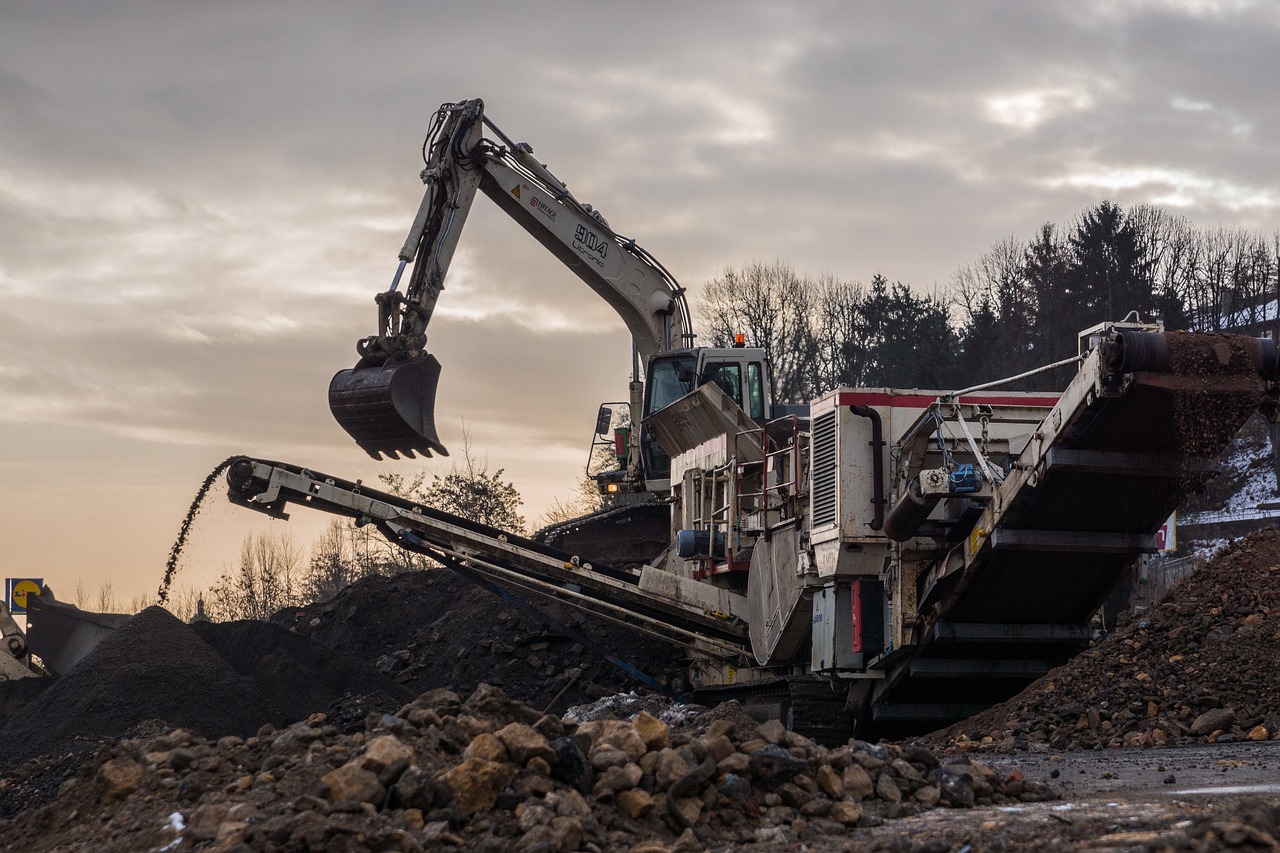
Public industry reporting in 2026 shows a market that is resilient but uneven. KHL’s Yellow Table reported record 2025 global construction equipment sales among major manufacturers, while Off-Highway Research described the broader market outlook as mixed rather than uniformly strong. That combination explains why contractors are paying closer attention to the full equipment ecosystem, not just the machine badge on the counterweight.
How the construction equipment company landscape is organized
The phrase “construction equipment companies” can refer to several business models. Searchers often expect a list of manufacturers, but most purchasing decisions involve a chain of companies that manufacture, distribute, rent, finance, maintain, and connect equipment. Separating those roles makes comparisons more useful.
| Company type | Typical role | What buyers should compare |
|---|---|---|
| Global OEMs | Design and manufacture excavators, loaders, dozers, haulers, cranes, compact machines, and related systems | Product range, dealer coverage, parts support, resale value, technology roadmap |
| Specialized manufacturers | Focus on cranes, compact equipment, attachments, concrete equipment, drilling, mining, or access machines | Application fit, engineering depth, attachment compatibility, niche support |
| Dealers and distributors | Sell, service, finance, and support equipment locally | Technician availability, parts inventory, response time, warranty handling |
| Rental companies | Provide short-term and long-term access to machines without full ownership | Fleet age, delivery speed, rental terms, maintenance responsibility, branch coverage |
| Technology and service partners | Provide telematics, fleet management, charging, autonomy support, machine control, and data integration | Interoperability, cybersecurity, usability, data access, training requirements |
This broader view matters because equipment performance now depends heavily on service logistics and data flow. A high-spec excavator can become a poor investment if parts are slow to arrive, technicians are scarce, attachments are incompatible, or fleet data cannot be used by the contractor’s maintenance team.
Scale still matters, but rankings tell only part of the story
Large manufacturers remain influential because they can invest across product development, manufacturing capacity, dealer networks, financing, and aftermarket support. KHL’s 2026 Yellow Table, which ranks companies by 2025 construction equipment sales, placed Caterpillar first, Komatsu second, XCMG third, John Deere fourth, and Liebherr fifth. Equipment World’s June 2026 summary of that ranking reported that global construction equipment sales rose 3.8% to $246.6 billion in 2025, with Caterpillar at $37.5 billion in construction equipment sales and a 15.2% share of the ranked total.
The top 10 list is useful, but it should not be treated as a universal buying guide. It measures construction equipment sales in U.S. dollars, not local support quality, machine suitability, lifecycle cost, or availability in a specific region. Currency movement, segment definitions, mining exposure, and acquisition activity can also affect a company’s position.
| Company | 2025 Yellow Table position | Why it matters in comparisons |
|---|---|---|
| Caterpillar | 1 | Broad product range, major dealer network, strong presence in earthmoving, power, mining, and construction support |
| Komatsu | 2 | Global construction and mining portfolio, recognized strength in excavators, dozers, haulage, and automation-related systems |
| XCMG | 3 | China-based scale and international expansion; moved ahead of John Deere in the 2025 sales ranking |
| John Deere | 4 | Strong North American brand position and compact equipment presence, with construction equipment tied to a wider machinery business |
| Liebherr | 5 | Depth in cranes, earthmoving, mining, concrete, and specialized heavy equipment applications |
| Sany, Volvo CE, Hitachi Construction Machinery, JCB, Sandvik | 6-10 | Important global or specialist competitors across earthmoving, compact equipment, quarrying, mining, roadbuilding, and handling applications |
The takeaway is simple: use rankings to understand market scale, then use jobsite criteria to narrow the field. A contractor choosing compact loaders for urban utility work will weigh different factors from a quarry operator buying haulage and crushing support.
Demand is changing by region, project type, and ownership model
Recent market signals show why construction equipment companies cannot rely on one growth story. Off-Highway Research’s 2026 Global Annual Review said global construction equipment market growth returned in 2025 after three years of declining sales, but the increase was modest and supported unevenly by emerging markets, China, South America, and other regions. The same source described the current-year picture as mixed, with limited prospects for strong near-term construction output growth.
In the United States, the broader off-highway equipment manufacturing industry remains economically significant. A 2026 Association of Equipment Manufacturers report, prepared with S&P Global Market Intelligence, estimated that the U.S. off-highway equipment manufacturing industry generated $902 billion in total sales activity in 2025, supported 2.2 million jobs, and contributed roughly $415 billion in total value added to U.S. GDP. The report also noted that construction equipment manufacturers were comparatively resilient inside the broader equipment manufacturing sector.
At the customer level, ownership is no longer the default answer for every machine. The American Rental Association’s 2026 quarterly forecasts pointed to continued U.S. rental growth, with the combined construction and industrial equipment and general tool rental market projected at about $83.5 billion for 2026. Updated reports in August 2026 put the expected U.S. growth rate near 3.4% for the year. This matters because rental companies now influence fleet composition, OEM order patterns, machine standardization, and how quickly contractors can access specialized equipment without adding debt or idle assets.
For equipment manufacturers, a stronger rental channel changes product priorities. Rental fleets need machines that are durable, easy to inspect, simple to train on, and efficient to turn around between users. For contractors, rental can reduce ownership risk when project schedules, interest rates, and local demand are uncertain.
Technology is becoming a competitive divider
Technology in construction equipment is no longer limited to premium machines. Telematics, machine control, digital service manuals, remote diagnostics, over-the-air updates, operator-assist features, grade control, payload systems, and fleet dashboards are becoming part of everyday equipment comparisons. The value is not just that a machine can collect data. The value is whether that data helps owners reduce idle time, prevent failures, improve fuel use, document utilization, or schedule service before downtime becomes expensive.
Telematics and data governance
AEM has emphasized that equipment data should be understood in layers, from on-board sensors and controllers to data transfer and off-board systems. This distinction matters because machine data now affects maintenance, warranty support, fleet optimization, cybersecurity, and software updates. A contractor comparing construction equipment companies should ask who can access the data, how permissions work, whether data can be exported, and whether the platform supports mixed fleets.
Telematics can also change the relationship among OEMs, dealers, and contractors. A dealer that receives fault codes early may schedule parts and technicians more efficiently. A fleet manager that sees low utilization may rent rather than buy the next machine. A contractor that tracks idling and load cycles may reduce fuel cost without changing project scope. See also: automation systems.
Electrification is real, but application-specific
Electrification is an important trend, but it should not be oversimplified. Interact Analysis reported in August 2026 that the broader off-highway vehicle market is emerging from a 2024-2025 trough and forecast to reach 7.8 million units by 2030. The same report said battery-electric off-highway units are still heavily concentrated in material handling, with compact urban construction and some large machines in China representing more meaningful growth frontiers.
For construction applications, this means electric compact excavators, loaders, dumpers, and indoor or low-noise machines may make sense where duty cycles are predictable and charging can be planned. Heavy roadbuilding, large earthmoving, remote quarrying, and high-utilization diesel applications face harder energy-density, charging, and uptime challenges. The strongest construction equipment companies will not present one powertrain as a universal answer. They will match diesel, hybrid, electric, hydrogen-related pilots, or alternative fuels to actual operating conditions.
What buyers should evaluate before choosing a company
A practical evaluation should combine machine specifications with business risk. The following checklist is more useful than relying only on a logo or ranking:
- Application fit: Match machine size, breakout force, lift capacity, ground pressure, attachments, and transport limits to the jobsite.
- Dealer and parts support: Confirm local technician capacity, parts stocking, emergency response, and warranty process before purchase.
- Total cost of ownership: Compare acquisition price, fuel or energy cost, maintenance intervals, wear parts, financing, insurance, resale value, and downtime risk.
- Rental versus ownership: Rent machines for uncertain demand, seasonal needs, pilot projects, or specialized tasks; own machines with high predictable utilization.
- Technology usability: Check whether telematics dashboards are actionable, whether data is exportable, and whether operators and mechanics can use the tools without excessive complexity.
- Emissions and site restrictions: Consider urban noise limits, indoor operation, government project requirements, low-emission zones, and charging or fueling logistics.
- Operator environment: Evaluate visibility, controls, safety aids, cab comfort, training time, and compatibility with existing operator habits.
- Attachment ecosystem: Review couplers, hydraulic flow, control systems, bucket and tool availability, and compatibility with current assets.
This approach also helps smaller or regional companies compete. A niche manufacturer or strong local dealer may outperform a larger brand in a specific application if it provides faster service, better attachments, or lower lifecycle cost.
Risks and limitations in comparing construction equipment companies
Company comparisons can be misleading when they mix different definitions. Some rankings measure only construction equipment sales, while corporate financial reports may include engines, mining systems, agriculture, energy, finance, parts, or industrial products. A company with lower construction equipment sales may still be a leader in a specific niche such as cranes, compact loaders, underground equipment, or quarry systems.
Geography is another limitation. A global OEM can be highly competitive in one country and less competitive in another if the local dealer network is thin. Conversely, a smaller regional distributor may provide excellent uptime because it knows local contractors, keeps common parts nearby, and can dispatch technicians quickly.
Forecasts also require caution. Market research released in 2026 reflects assumptions about GDP, infrastructure spending, interest rates, trade policy, commodity demand, and construction output. These assumptions can change. Contractors should treat forecasts as planning context, not as guarantees that equipment values, lead times, or rental rates will move in one direction.
Frequently asked questions
What are construction equipment companies?
They are businesses that manufacture, sell, rent, service, finance, or support machinery used in construction. The category includes global OEMs, specialized manufacturers, dealers, rental fleets, attachment suppliers, and technology providers.
Which construction equipment companies are the largest?
Based on KHL’s Yellow Table ranking for 2025 construction equipment sales, the leading manufacturers included Caterpillar, Komatsu, XCMG, John Deere, Liebherr, Sany, Volvo Construction Equipment, Hitachi Construction Machinery, JCB, and Sandvik. Rankings are useful for understanding scale, but they do not replace local service and application-specific evaluation.
Are electric machines replacing diesel construction equipment?
Electric machines are gaining traction in compact, indoor, urban, and predictable-duty applications. Diesel remains important for many heavy, remote, high-utilization, and roadbuilding applications because of energy density, refueling speed, and infrastructure needs. The transition is application-specific rather than uniform.
Why are rental companies important to the equipment market?
Rental companies give contractors access to machines without full ownership, which is valuable when utilization is uncertain or project needs change. Large rental fleets also influence OEM demand, machine design, maintenance expectations, and the speed at which newer technologies reach jobsites.
How should a contractor choose between two equipment companies?
Start with the job requirement, then compare lifecycle cost, dealer support, parts availability, machine utilization, operator training, attachment compatibility, telematics value, financing terms, and resale outlook. The better choice is the company that reduces total project risk, not necessarily the one with the largest global ranking.