What conveyor systems manufacturers should provide for safer installations
Safety starts before the conveyor is ordered
For plant teams comparing suppliers, conveyor safety is not a bolt-on accessory. It is a design requirement that should be reviewed alongside throughput, layout, maintenance access, and operator training from the first specification meeting. Conveyor systems manufacturers that support safer installations provide more than frames, belts, motors, and controls. They help define hazard zones, guard moving parts, specify emergency stop devices, coordinate lockout points, document residual risks, and ensure the installed equipment can be inspected and maintained without creating routine exposure to nip points or stored energy. This article in our safety systems section explains what to ask for, which standards commonly influence decisions, and where buyer responsibility remains after an OEM or integrator delivers the system.
The safety baseline a manufacturer should help define
Conveyor projects vary widely. A short gravity roller section in a packing area does not create the same risk profile as a powered belt conveyor crossing multiple production zones, a pallet conveyor with automated transfers, or a bulk material conveyor in a mining environment. Even so, buyers should expect any qualified manufacturer or integrator to address a core safety baseline during design review.
Guarding and access control
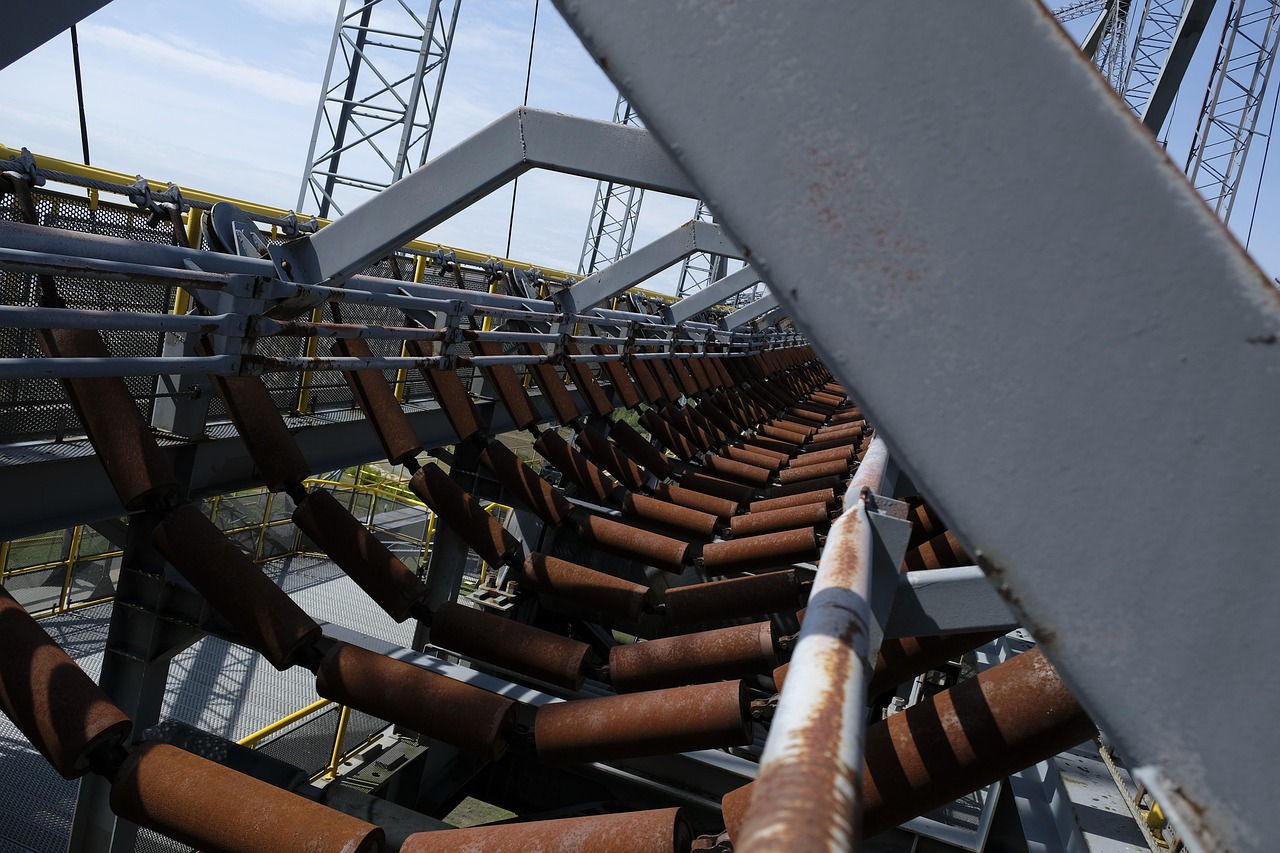
The first discussion should focus on where people can contact moving parts. U.S. OSHA machine guarding requirements address hazards such as ingoing nip points, rotating parts, and other machine motions that can injure employees. On conveyors, those hazards commonly appear at drive pulleys, tail pulleys, take-up assemblies, chains, sprockets, transfer points, rollers, and areas where products can trap hands or clothing.
A useful manufacturer will not simply ask whether the buyer wants guards. It should identify foreseeable access points, cleaning areas, jam-clearing locations, adjustment points, and routine inspection tasks. Guard design should then account for visibility, tool access, fastener choice, removable panel weight, interlocked doors where appropriate, and whether maintenance staff can complete common work without bypassing protection.
Emergency stops, pull cords, and restart logic
Emergency stops are closely associated with conveyors, but their design has to match the layout. A stop button near a control panel may be insufficient where employees work along a long conveyor run, at transfer points, or around zones that are not visible from the operator station. Pull-cord systems, local stop stations, emergency stop buttons, and zone-based controls need to be placed where workers can actually reach them under realistic operating conditions.
Restart logic is just as important. OSHA construction conveyor provisions require emergency stop switches to be arranged so the conveyor cannot restart until the actuated stop switch is reset to the running position. That principle is worth carrying into industrial specifications: a stopped conveyor should not restart unexpectedly because a central start command is issued after a fault, jam, or emergency stop event.
Lockout, stored energy, and maintainability
Emergency stops are not a substitute for lockout/tagout. OSHA’s lockout/tagout standard focuses on servicing and maintenance where unexpected energization, startup, or release of stored energy could cause injury. Conveyors can involve electrical, pneumatic, hydraulic, gravitational, and mechanical stored energy. Inclined sections, lift gates, gravity rollers, counterweights, tensioning devices, and raised loads can all create exposure even when the motor is off.
Manufacturers should help buyers identify isolation points, provide lockable disconnect provisions where applicable, document stored energy hazards, and clarify which tasks require zero-energy control. Good design reduces the temptation to use an emergency stop as a maintenance control because the system is easier to isolate, verify, access, and return to service.
Standards and sources that shape conveyor specifications
Conveyor safety requirements depend on country, state, industry, application, and the employer’s own risk assessment. A manufacturer should not imply that one generic certificate makes every installation compliant. Instead, the specification should name the standards and regulatory references used for the project, explain their scope, and identify gaps that must be resolved by the owner, engineer, or authority having jurisdiction.
| Reference | How it affects conveyor projects | Buyer takeaway |
|---|---|---|
| OSHA 29 CFR 1910.212 | Sets general machine guarding expectations for hazards such as ingoing nip points and rotating parts in U.S. general industry. | Ask the manufacturer to show how foreseeable contact points are guarded or otherwise safeguarded. |
| OSHA conveyor provisions | OSHA standards for construction and marine terminal conveyor use include requirements around emergency stops, employee warning before startup, crossings, and guarding in specific contexts. | Do not rely on a generic stop button; review restart behavior, warning signals, crossings, and access routes. |
| ASME B20.1-2024 | The ANSI webstore lists ASME B20.1-2024 as the most recent Safety Standard for Conveyors and Related Equipment. It covers design, construction, installation, maintenance, inspection, and operation in relation to conveyor hazards, while excluding conveyors used primarily to move people. | Use the current edition as a specification reference when appropriate, and verify any project-specific exceptions. |
| CEMA resources | The Conveyor Equipment Manufacturers Association develops ANSI/CEMA standards and provides safety labels, label placement guidance, training materials, and technical guidance for manufacturers and users. | Ask whether labels, warning locations, and manuals follow recognized industry guidance rather than being treated as an afterthought. |
| MSHA rules for mining | Mining conveyors may be subject to MSHA requirements on guarding moving machine parts and protecting travelways adjacent to conveyors. | Mining and aggregate projects need application-specific review; ordinary warehouse assumptions may not be enough. |
The practical point is not to turn every purchasing manager into a standards specialist. It is to make the supplier’s design basis visible. If the proposal does not identify the safety standards considered, the buyer has no clear way to compare risk, scope, exclusions, or handover obligations between competing suppliers.
How to evaluate conveyor systems manufacturers without relying on slogans
Marketing language around robust, reliable, or safe systems is common. A better comparison starts with evidence of the manufacturer’s safety process. Strong suppliers make risk discussions part of layout design, controls engineering, installation planning, and commissioning instead of leaving them to a final checklist.
| Question to ask | What a strong answer should include |
|---|---|
| Which hazards were identified for this layout? | A marked-up drawing or risk register showing nip points, access zones, transfer points, elevated sections, stored energy sources, and routine maintenance locations. |
| What guarding is included in the base scope? | Clear drawings, materials, fastening methods, removable panel locations, interlocks if used, and exclusions for owner-supplied barriers or building modifications. |
| How are emergency stops and pull cords placed? | Device locations based on access routes, workstations, visibility, conveyor length, and the ability to reset without creating a new hazard. |
| What happens after a fault or emergency stop? | Documented reset and restart sequence, including whether audible or visual warning is provided before motion resumes. |
| How is lockout supported? | Isolation points, disconnect locations, stored energy notes, maintenance instructions, and coordination with the owner’s energy control procedures. |
| What documentation is delivered? | Manuals, electrical drawings, safety device list, inspection points, spare parts, labeling plan, as-built drawings, and commissioning records. |
The buyer should also separate the roles of manufacturer, integrator, installer, and employer. A component manufacturer may supply a conveyor module, while an integrator decides how it connects to robots, packaging machinery, scanners, mezzanines, gates, and building traffic. The employer then owns training, operating procedures, inspection frequency, and lockout implementation. Many safety failures occur in the gaps between those roles, especially when a system is modified after commissioning.
Design details that change the safety scope
A conveyor that appears simple on a quotation can become complex once the surrounding process is considered. Before accepting a proposal, buyers should review the following details with the supplier and any responsible safety personnel:
- Conveyor type: belt, roller, chain, screw, bucket, overhead, pallet, and sortation conveyors create different entanglement, pinch, shear, and falling-object hazards.
- Elevation and crossings: elevated conveyors may need guarded crossings, access platforms, fall protection interfaces, and protection from falling material.
- Visibility: if the full conveyor path is not visible from the start station, startup warning devices and zone logic may be needed.
- Product behavior: unstable, sharp, hot, dusty, wet, or heavy products can change guarding, containment, cleaning, and emergency response requirements.
- Cleaning and sanitation: food, beverage, and pharmaceutical environments often require washdown access, hygienic design, and guards that can be removed and replaced without defeating the safety intent.
- Automation: sensors, diverters, lifts, robots, automatic guided vehicles, and palletizers can create hazards that are not solved by conveyor guarding alone.
- Maintenance frequency: belts that need regular tensioning, lubrication, or cleaning should be designed so routine tasks do not require workers to reach into hazardous motion zones.
These details affect cost, footprint, schedule, and production flow. Addressing them early is usually less disruptive than retrofitting guards, relocating pull cords, or rewriting control logic after a safety review near startup. See also: production equipment.
Documentation and handover matter as much as hardware
Safety hardware loses value when the owner cannot inspect, test, or maintain it correctly. A manufacturer’s handover package should therefore be treated as part of the safety system, not as paperwork to file away. At minimum, buyers should request an operating manual, maintenance instructions, electrical schematics, pneumatic or hydraulic diagrams where applicable, a safety device list, recommended inspection intervals, replacement part information, and an explanation of reset and restart sequences.
Commissioning records are also valuable. They can show that emergency stops were tested, interlocks functioned as intended, guards were installed, warning devices operated, and operators received basic system orientation. If the conveyor connects to other machinery, the handover should clarify which party validated the integrated line and which changes would require a new risk review.
Labeling deserves attention too. CEMA safety resources emphasize standardized hazard communication and label placement as part of a broader material handling safety program. Labels do not replace guarding, training, or procedures, but they help communicate residual hazards and safe work practices when used consistently and maintained over the life of the equipment.
Common gaps that appear after installation
Several problems tend to emerge only after the conveyor is in daily use. Guards may be removed because they slow maintenance. Pull cords may be blocked by stored materials. Operators may clear jams while relying on a stop button instead of following energy control procedures. New workstations may be added beside moving conveyors without reconsidering access, reach, or warning devices. Production changes may increase product weight or speed beyond the assumptions used in the original design.
These gaps are not always the manufacturer’s fault, but good design can reduce their likelihood. Guards that are too heavy, inspection points that are hard to reach, poorly placed reset buttons, vague manuals, and undocumented control changes all encourage unsafe workarounds. Buyers should therefore evaluate manufacturers partly on how well their designs support real work, not only on technical capacity or delivery time.
A practical post-installation plan should include routine inspections, scheduled testing of safety devices, review of near misses and jams, control of modifications, and refresher training when staffing or process conditions change. Conveyor safety is a lifecycle activity. The safest specification is the one that can still be followed six months after startup.
Frequently asked questions
Are conveyor systems manufacturers responsible for OSHA compliance?
Manufacturers can design and supply equipment that supports compliance, but the employer generally remains responsible for providing a safe workplace, training employees, maintaining guards, controlling hazardous energy, and using the equipment as installed. The purchase contract should clearly define what the manufacturer, integrator, installer, and owner each provide.
Is an emergency stop enough to make a conveyor safe?
No. Emergency stops help stop motion in urgent situations, but they do not replace fixed guarding, interlocked access control, safe restart logic, lockout/tagout, warning devices, training, or routine inspection. They are one layer in a broader safety system.
Should ASME B20.1-2024 be included in a conveyor specification?
For many U.S. industrial conveyor projects, ASME B20.1-2024 is a relevant reference because it addresses conveyor hazards across design, construction, installation, maintenance, inspection, and operation. Whether it applies to a specific project depends on the conveyor type, jurisdiction, contract, and industry. Buyers should ask suppliers to state which edition and related standards they used.
What is the biggest mistake when comparing conveyor suppliers?
A common mistake is comparing only price, speed, and capacity while leaving safety scope unclear. Two proposals may look similar, but one may include guarding, pull cords, documented restart logic, labeling, and commissioning support while the other leaves those items as exclusions. Safety scope should be compared line by line.
When should a conveyor safety review happen?
The first review should happen during layout and specification, before purchase. Additional reviews should occur before commissioning, after integration with other machines, after significant process changes, and whenever guards, controls, access points, or operating conditions are modified.