Industrial automation and control systems explained for modern plants
What industrial automation and control systems include
Industrial automation and control systems are the hardware, software, networks and operating practices used to monitor and control physical processes in factories, utilities, logistics sites and process plants. A working system normally combines field instruments, controllers, operator interfaces, supervisory platforms, historians and links to business or maintenance software. The purpose is not simply to replace manual work. It is to make production more repeatable, safer, easier to observe and easier to adjust when demand, materials or operating conditions change.
In plant discussions, the terms IACS, ICS and OT are often used together. NIST describes operational technology as programmable systems and devices that interact with the physical environment, including systems that detect or cause direct changes through monitoring or control. Its examples include industrial control systems, building automation systems and transportation systems. That scope is why IACS planning has to account for safety, reliability and security, not only software features. (csrc.nist.gov)
| Layer | Typical elements | Primary role |
|---|---|---|
| Field level | Sensors, transmitters, actuators, drives, valves, meters | Measure and change the physical process |
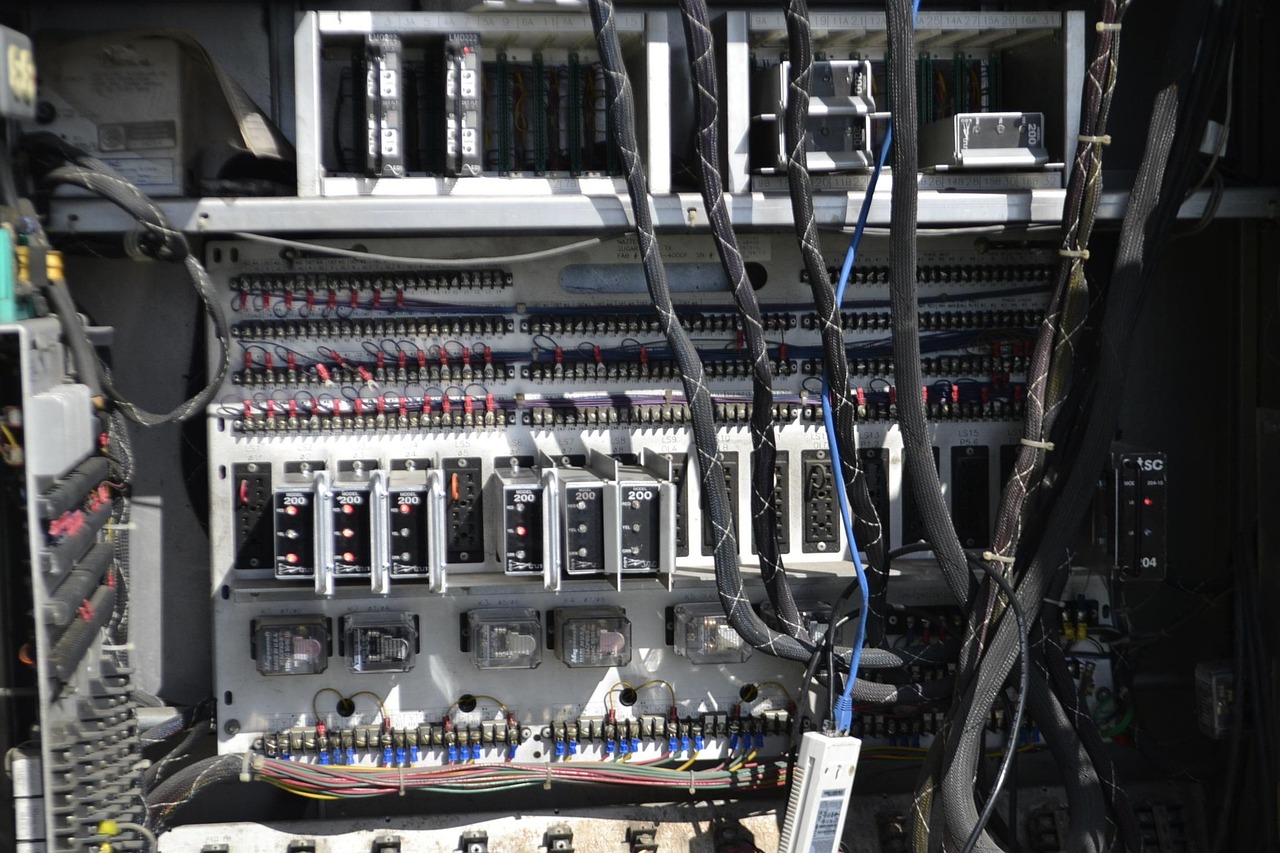
| Control level | PLCs, PACs, remote I/O, safety controllers, DCS controllers | Execute deterministic logic and interlocks |
| Supervisory level | HMI, SCADA, alarm systems, engineering workstations | Give operators visibility and command functions |
| Operations data level | Historians, batch records, reporting tools, edge gateways | Store production data and support analysis |
| Enterprise integration | MES, CMMS, ERP connectors, analytics platforms | Connect production context to planning and maintenance |
For more coverage of plant technology and automation systems, the key point is that a control system should be treated as an engineered lifecycle, not as a single device purchase.
How the architecture fits together
A reliable automation architecture starts with clear separation of responsibilities. Field devices collect values such as pressure, temperature, speed, position, flow or vibration. Controllers process those values in milliseconds or seconds and send commands to actuators. Supervisory software gives operators trends, alarms and status. Data services preserve the operating record so engineers can analyze downtime, quality variation and asset health.
This layered structure matters because each layer has a different tolerance for delay and disruption. A controller running a packaging line or boiler sequence cannot depend on an unstable cloud service for basic logic. A historian, by contrast, can often buffer data and forward it later. Experienced designers therefore keep critical control local, use networks to coordinate and report, and treat remote access as a managed support function rather than a default route into the process.
The same principle applies to plant networks. Ethernet-based industrial networks are now common, but their requirements differ from office IT. Control traffic may need predictable latency, clear segmentation and careful change management. Wireless sensors, edge gateways and remote support tools can add value, but they also expand the asset inventory and increase the number of trust relationships that must be managed.
Key design choices for reliability and performance
The right automation design depends on the process, risk level and maintenance capability of the site. A high-speed discrete manufacturing cell may prioritize deterministic motion, short scan times and close integration between drives, vision and safety devices. A chemical or water treatment facility may put more emphasis on redundancy, alarm management, change control and long equipment lifecycles.
- Controller strategy: PLCs are widely used for machine and line control, while DCS platforms remain common in continuous process environments where integrated control, alarming and redundancy are central requirements.
- Safety separation: Safety instrumented functions, emergency stops, guarding and interlocks should be engineered according to the hazard and regulatory environment. They should not be treated as ordinary production logic.
- Data quality: Analytics and optimization depend on good tag naming, time synchronization, calibration practices and context. Poorly structured data can make advanced dashboards look useful while hiding weak process understanding.
- Interoperability: Open protocols and well-documented interfaces reduce dependence on a single vendor, but they still need governance. Every interface creates a maintenance and security responsibility.
- Lifecycle support: Spare parts, firmware support, engineering software access and vendor patch practices can matter as much as the initial technical specification.
Project teams often focus on visible technologies such as robots, dashboards or machine learning. In practice, less visible decisions around alarm philosophy, network segmentation, backup discipline and documentation often determine whether the system remains manageable five years after commissioning.
Cybersecurity standards now shape automation projects
Cybersecurity is now part of mainstream automation design because control systems are more connected, more software-defined and more exposed to supply chain risk than earlier generations. That does not mean every plant needs the same security stack. It means every project needs a defensible risk model, clear ownership and a way to maintain security controls without disrupting production.
The ISA/IEC 62443 series defines requirements and processes for implementing and maintaining electronically secure industrial automation and control systems. ISA describes the standards as covering cybersecurity robustness and resilience across the IACS lifecycle, including responsibilities for asset owners, suppliers, integrators and service providers. The ISA page also lists recent documents such as ANSI/ISA-62443-2-1-2024 and ISA-TR62443-2-2-2025, reflecting continued development of the series. (isa.org)
NIST’s Cybersecurity Framework 2.0, released on February 26, 2024, added stronger emphasis on governance and supply chains and expanded the framework beyond its original critical infrastructure focus to organizations of all types. For automation teams, the practical lesson is that cybersecurity is not only a technical control list. It also involves accountability, risk decisions, procurement, incident response and recovery planning. (nist.gov)
| Reference body | Useful emphasis for IACS projects | How to apply it |
|---|---|---|
| NIST SP 800-82 Rev. 3 | OT security guidance with attention to performance, reliability and safety needs | Use when building a baseline security program for industrial and cyber-physical environments |
| ISA/IEC 62443 | Lifecycle-based requirements for asset owners, integrators, suppliers and components | Use when defining zones, conduits, security levels and stakeholder responsibilities |
| NIST CSF 2.0 | Governance, supply chain and enterprise risk framing | Use to communicate OT risk to leadership and align security work with business risk |
| CISA guidance | Prioritized actions, procurement questions and baseline practices for critical infrastructure | Use to ask vendors better questions and focus limited resources on high-impact controls |
CISA’s January 13, 2025 Secure by Demand guidance addresses procurement of OT products, including industrial automation and control system products, with secure-by-design elements in mind. CISA also announced Cross-Sector Cybersecurity Performance Goals 2.0 on December 10, 2025, describing them as measurable actions for critical infrastructure owners and operators and noting a governance component aligned with recent NIST CSF revisions. (dejavu.org) (content.govdelivery.com)
A practical roadmap for upgrades
Modernization projects often run into trouble when teams treat automation as a simple replacement exercise. A stronger roadmap starts with an accurate picture of the installed base, then prioritizes changes according to operational risk and business value.
- Build the asset inventory. Document controllers, I/O, drives, HMIs, servers, engineering workstations, network switches, remote access methods, firmware versions and support status.
- Map the process dependency. Identify which assets stop production, affect safety, create quality risk or support compliance records.
- Define target architecture. Decide where control logic runs, how networks are segmented, where data is stored and which systems require redundancy.
- Standardize naming and documentation. Agree on tag structures, alarm priorities, drawings, backup procedures and change records before adding analytics layers.
- Plan migration windows. Industrial downtime is expensive. Stage work, test offline where possible and keep rollback options available.
- Validate security and operations together. Security controls should be tested with operations staff so they do not unintentionally block maintenance, emergency response or vendor support.
- Train maintainers and operators. New systems often underperform when only the engineering team understands them. Training should cover normal operation, abnormal conditions and recovery steps.
This roadmap is deliberately practical. It does not assume every site can replace legacy control assets quickly. Many plants have to run mixed environments for years. The priority is to reduce unmanaged risk while improving visibility, maintainability and process performance step by step. See also: production equipment.
Selection questions before buying a system
Vendors often present automation platforms through product features: controller families, dashboards, protocol support, cloud connectors or analytics modules. Those details matter, but selection should begin with operating constraints.
- What failure mode is acceptable? Some processes can pause safely; others require redundant control, controlled shutdown or independent safety protection.
- Who will maintain the system? A technically elegant system can become fragile if the plant lacks trained staff, spare parts or engineering software access.
- How will changes be governed? Logic changes, recipe changes, network changes and security exceptions need approval and records.
- What data is truly needed? Collecting every tag is not the same as creating useful operating intelligence. Start with the decisions the data must support.
- How will remote access be controlled? Vendor access should be time-bound, authenticated, monitored and approved by the asset owner.
- Can the supplier explain secure development and vulnerability handling? Procurement should ask how the vendor communicates advisories, provides patches and supports hardening.
The strongest business case usually combines reduced downtime, better quality, safer operation, lower troubleshooting effort and improved energy or material efficiency. Still, not every benefit can be promised in advance. A responsible proposal should separate proven functions from expected improvements and state the assumptions behind any payback estimate.
Common pitfalls to avoid
One common mistake is connecting legacy equipment to modern networks before understanding exposure. Another is adding dashboards while leaving alarms, naming conventions and maintenance records inconsistent. A third is relying on a single specialist who understands the system but leaves little documentation for the plant team.
Cybersecurity can also be misunderstood. Blocking every connection may be unrealistic, while allowing unmanaged remote access is risky. The better approach is controlled connectivity: asset inventory, segmentation, least privilege, monitored remote sessions, tested backups and an incident response plan that includes production leadership.
Finally, avoid treating standards as paperwork. Standards and guidance are useful only when they are translated into engineering decisions: which assets belong in each zone, which conduits are allowed, who approves changes, how backups are restored and how operators respond when the system behaves abnormally.
Frequently asked questions
What is the difference between PLC, SCADA and DCS?
A PLC is a controller that executes logic for machines or processes. SCADA is a supervisory system used to monitor and control distributed assets. A DCS is an integrated control platform often used in continuous process industries. Many facilities use more than one of these technologies.
Are industrial automation and control systems the same as OT?
They overlap, but they are not always identical. OT is the broader category of technologies that interact with physical processes. Industrial automation and control systems are a major subset focused on monitoring and controlling industrial operations.
Should a plant replace legacy control systems immediately?
Not always. Replacement depends on safety risk, vendor support, spare parts, cybersecurity exposure, downtime history and integration needs. Many sites reduce risk through segmentation, backups and phased migration before full replacement.
Why is cybersecurity part of automation design?
Modern automation uses networked controllers, remote support, software updates and data integration. These connections improve operations but create risk if access, patching, backups and vendor relationships are not managed.
What is the first step in an automation upgrade?
The first step is usually a verified asset and dependency inventory. Without knowing what is installed, what it controls and how it is connected, teams cannot accurately prioritize reliability, safety, cybersecurity or modernization work.