PPE equipment for production facilities, from hazard assessment to maintenance

What PPE equipment means in a production setting
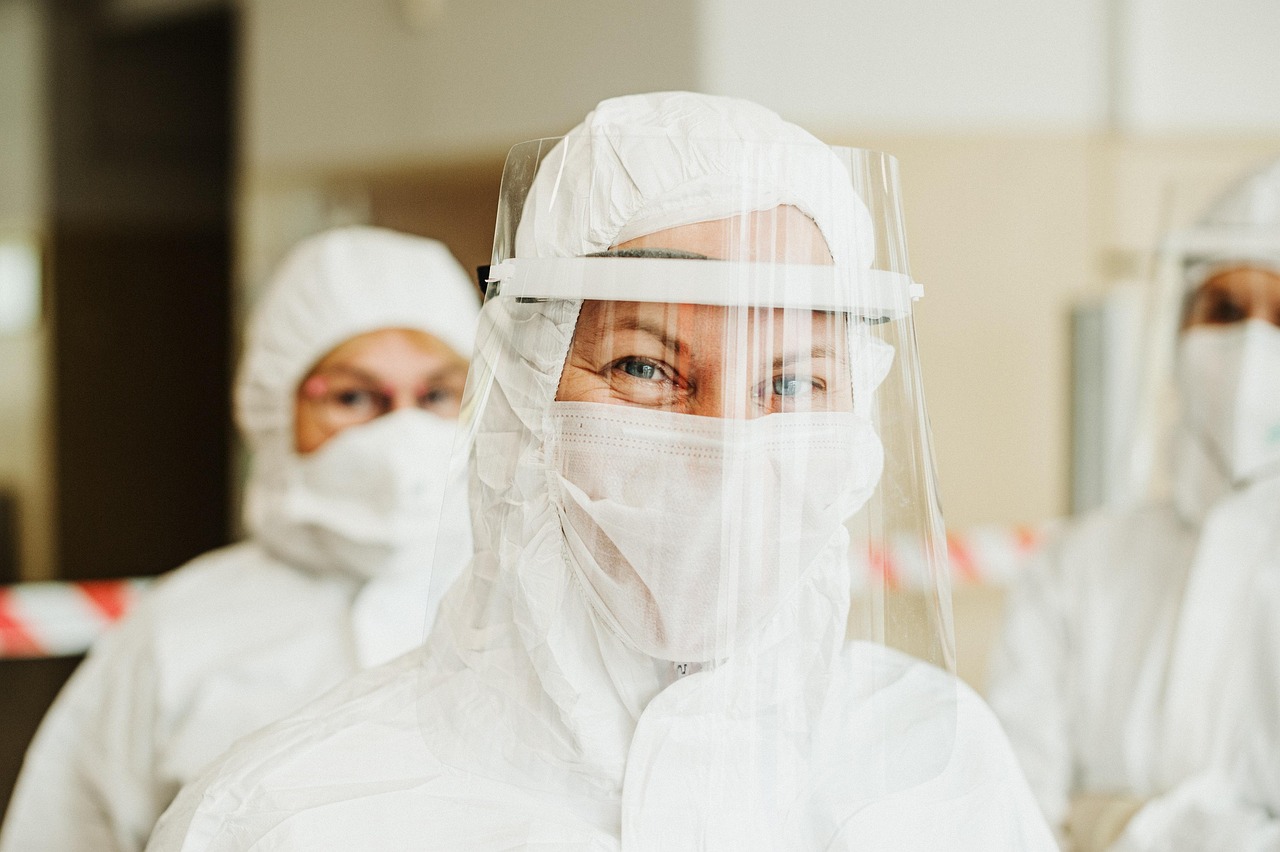
PPE equipment is the protective gear workers wear when production hazards cannot be fully removed, isolated, or controlled through safer process design. In a manufacturing or processing facility, it may include eye and face protection, gloves, hard hats, protective footwear, hearing protection, respirators, protective clothing, and fall protection.
The sequence matters. PPE should not be treated as the first or only safety measure. NIOSH describes personal protective equipment as the final level in the hierarchy of controls, after elimination, substitution, engineering controls, and administrative controls. For production managers, safety coordinators, and equipment buyers, the decision is not simply what to buy. It is how to match PPE to specific tasks, train workers to use it correctly, and keep it reliable throughout its service life.
This article focuses on industrial and production environments where machinery, materials, energy sources, chemicals, noise, dust, heat, and moving traffic may exist in the same workplace. It is an editorial overview, not legal advice. Facilities should verify applicable federal, state, local, and sector-specific requirements before changing a safety program. For related industrial operations content, visit the production equipment section.
Start with hazards, not catalog lists
The most useful PPE decision starts with the work, not the product catalog. OSHA’s general industry PPE rule, 29 CFR 1910.132, requires employers to assess the workplace to determine whether hazards are present, or are likely to be present, that require PPE. Where those hazards exist, the employer must select PPE that protects affected employees, communicate selection decisions, and select PPE that properly fits each affected employee. OSHA also requires written certification that the hazard assessment has been performed.
For production equipment, that assessment should be task-based. One machine may create different hazards during normal operation, setup, cleaning, jam clearing, tool change, maintenance, and troubleshooting. A packaging line may need cut-resistant gloves during blade changes, hearing protection near compressed-air equipment, eye protection during clearing operations, and different controls during sanitation. A welding station may require filter lenses, face protection, flame-resistant clothing, hand protection, and ventilation before respiratory protection is considered.
A practical assessment should record four items: the task, the hazard, the existing higher-level controls, and the residual risk that PPE is intended to reduce. This avoids a common mistake: assigning one generic PPE kit to an entire department even though exposure changes by job step. It also helps purchasing teams avoid overbuying equipment that workers cannot comfortably use, or underbuying equipment that does not match the hazard.
Fit and compatibility affect real protection
OSHA’s general PPE requirements specifically include proper fit. Fit is not only a comfort issue. Loose safety glasses may leave gaps against flying particles; oversized gloves can catch on rotating parts; tight gloves may reduce circulation or dexterity; and poorly fitting footwear can increase slip and fatigue risk.
PPE items also have to work together. A face shield that interferes with a respirator seal, earmuffs that do not seal around eyewear temples, or a hard hat that cannot accommodate required face protection may reduce the effectiveness of otherwise compliant items.
Core PPE categories around production equipment
Production facilities usually need a layered approach because hazards differ by area, task, and operating condition. The table below summarizes common PPE categories, the hazard questions to ask, and the rule or standard area that usually needs verification. It is not a substitute for a site-specific assessment, but it gives safety and purchasing teams a structured starting point.
| PPE category | Production hazard to evaluate | Program point to verify |
|---|---|---|
| Eye and face protection | Flying particles, molten metal, liquid chemicals, acids, caustics, chemical vapors, and injurious light radiation | OSHA 29 CFR 1910.133 and applicable ANSI/ISEA Z87.1 criteria |
| Hand and arm protection | Cuts, lacerations, abrasion, puncture, chemical exposure, heat, cold, and skin absorption | OSHA 29 CFR 1910.138 and performance classifications such as ANSI/ISEA 105-2024 |
| Head protection | Falling objects and contact with exposed electrical conductors | OSHA 29 CFR 1910.135 and industrial head protection criteria such as ANSI Z89.1 |
| Foot protection | Falling or rolling objects, sole puncture, static discharge, and electrical shock hazards that remain after other controls | OSHA 29 CFR 1910.136 and protective footwear criteria such as ASTM F2412 and ASTM F2413 |
| Hearing protection | Continuous or intermittent noise from machinery, compressed air, grinders, conveyors, stamping, cutting, or impact tools | OSHA occupational noise requirements, exposure monitoring, audiometric testing, training, and hearing protector selection |
| Respiratory protection | Dust, fumes, mists, vapors, gases, oxygen deficiency, or emergency atmospheres | OSHA 29 CFR 1910.134, NIOSH-certified respirator selection, medical evaluation, fit testing, maintenance, and program evaluation |
The main takeaway is that not all PPE categories carry the same program burden. Safety glasses and gloves still require assessment, selection, training, and replacement. Respirators, when required, trigger a more detailed respiratory protection program. Hearing protection also depends on exposure measurement, not simply on whether an area sounds loud.
Respiratory and hearing protection need extra discipline
Respiratory PPE is often misunderstood because a respirator is not just a mask kept on a shelf. OSHA’s respiratory protection standard requires a written program with worksite-specific procedures whenever respirators are necessary to protect employee health or are required by the employer. Required elements include respirator selection, medical evaluations, fit testing for tight-fitting respirators, proper use, cleaning, storage, inspection, maintenance, training, and regular program evaluation. OSHA also requires selection of NIOSH-certified respirators used according to the conditions of their certification.
This is important in production areas where airborne hazards can change with materials, throughput, ventilation, cleaning agents, temperature, and maintenance work. A disposable filtering facepiece may be appropriate for one particulate exposure but not for a solvent vapor, oxygen-deficient atmosphere, or emergency release. Before relying on respiratory PPE, facilities should identify the contaminant, estimate or measure exposure, review exposure limits, evaluate ventilation or enclosure options, and then select respirators based on the hazard and user factors.
Hearing protection has a similar measurement issue. OSHA states that general industry, maritime, and longshoring employers must implement a hearing conservation program when employee noise exposures equal or exceed 85 dBA as an 8-hour time-weighted average. OSHA also states that engineering or administrative controls are required when noise exposure is above 90 dBA as an 8-hour time-weighted average. In practical terms, production teams should not rely on guesswork alone. Sound level screening can identify likely problem areas, but personal noise dosimetry is often needed to determine worker exposure across a shift.
Hearing protectors also need fit and compatibility checks. Earplugs inserted too shallowly, earmuffs worn over caps, or glasses that break the earmuff seal can lower real-world attenuation. Training should include hands-on fitting practice, not only distribution of plugs at the tool crib.
How to manage PPE through its service life
PPE management does not end at purchase. OSHA’s general PPE rule says protective equipment must be provided, used, and maintained in a sanitary and reliable condition when required by process or environmental hazards. It also states that defective or damaged PPE shall not be used. NIOSH describes a PPE program as including hazard assessment, selection and use, inspection and replacement of damaged or worn equipment, employee training, and program monitoring for continued effectiveness. See also: automation systems.
A production facility can turn those principles into a practical service-life system:
- Issue control: Record what is issued for each task or role, including size, rating, and replacement interval when known.
- Pre-use inspection: Teach workers to check lenses, straps, shells, filters, seams, soles, gloves, and closure systems before starting work.
- Cleaning and storage: Store PPE away from contamination, sunlight, excessive moisture, extreme temperatures, and chemicals when those conditions can degrade materials.
- Replacement triggers: Replace PPE after visible damage, contamination that cannot be removed, loss of fit, expired service life, failed inspection, or a process change that makes the previous selection unsuitable.
- Feedback loop: Track near misses, first-aid cases, worker complaints, fit issues, and maintenance work orders to identify where PPE is not matching the task.
Respirators require particularly detailed care. OSHA’s respiratory protection rule includes cleaning, disinfecting, storage, inspection, repair, and discard procedures. Routine-use respirators must be inspected before each use and during cleaning, while emergency respirators have additional inspection and accessibility requirements. Those details should be controlled by a designated program administrator, not left to informal habits.
Training should prove use, not just attendance
Training is where many PPE programs become practical, or become paperwork. OSHA’s 29 CFR 1910.132 training requirements include when PPE is necessary, what PPE is necessary, how to don, doff, adjust, and wear it, the limitations of PPE, and the proper care, maintenance, useful life, and disposal of the equipment. Employees must demonstrate understanding and ability before performing work that requires PPE.
In production environments, demonstration is more useful than a slide deck alone. A worker should be able to select the correct glove for a blade change, adjust eye protection with side shields, inspect a face shield, perform a respirator user seal check when applicable, insert earplugs correctly, and explain when a damaged item must be removed from service. Supervisors also need to understand the limits. PPE can reduce exposure, but it does not remove the hazard from the process, does not protect bystanders who are not wearing it, and can fail when worn incorrectly.
Retraining should occur when the workplace changes, when the type of PPE changes, or when observation shows that workers no longer have the needed understanding or skill. Examples include a new chemical, a different abrasive wheel, a redesigned guard, a new coating process, a change from safety glasses to goggles, or repeated misuse of hearing protection in a high-noise area.
Common selection mistakes to avoid
The most expensive PPE errors are often not the purchase price. They are mismatches between the hazard, the equipment, and the way work is actually performed. Common mistakes include:
- Using PPE as a substitute for machine safeguarding: Gloves and face shields do not replace guarding, lockout procedures, ventilation, enclosure, or safer tooling where those controls are feasible and required.
- Choosing gloves by cut level alone: ANSI/ISEA 105-2024 addresses several hand and arm protection properties, and OSHA requires selection based on task, conditions, duration, and hazards. Cut resistance does not automatically mean chemical, heat, puncture, or abrasion protection.
- Ignoring chemical compatibility: A glove or apron material that works for one liquid may degrade or allow permeation with another. Safety data sheets and manufacturer permeation data should be checked for the actual chemical and exposure time.
- Relying on area rules without task review: A sign requiring safety glasses in a department may be appropriate, but it does not answer whether a specific job also needs goggles, a face shield, welding shade, or side protection.
- Overlooking heat stress and fatigue: Protective clothing, respirators, and gloves can add thermal burden or reduce dexterity. That does not make PPE optional when required, but it does mean work-rest practices, hydration, ventilation, and task design may need review.
- Not planning replacements: Scratched lenses, stretched straps, worn soles, cracked shells, contaminated clothing, and expired cartridges can turn a compliant purchase into unreliable field protection.
A stronger approach is to treat PPE equipment as part of a controlled production system. The same discipline used for preventive maintenance, spare parts, calibration, and quality checks should apply to protective equipment that workers depend on every shift.
Frequently asked questions
Is PPE equipment the same as personal protective equipment?
Yes. PPE already stands for personal protective equipment, so the phrase PPE equipment is technically repetitive. However, it is commonly used in workplace searches and purchasing discussions to refer to the protective gear workers wear to reduce exposure to hazards.
What is the first step in choosing PPE for a production line?
The first step is a task-based hazard assessment. Identify the job step, the hazard, existing engineering or administrative controls, and the residual exposure that PPE must address. Then select equipment that fits the worker, matches the hazard, and is compatible with other required PPE.
Does PPE replace engineering controls?
No. NIOSH places PPE at the bottom of the hierarchy of controls, after elimination, substitution, engineering controls, and administrative controls. PPE is important when hazards remain, while controls are being developed, or when PPE is the only feasible protective option, but it should not be used to avoid feasible higher-level controls.
When does hearing protection become a program issue?
Under OSHA’s general industry noise framework, a hearing conservation program is required when employee noise exposure equals or exceeds 85 dBA as an 8-hour time-weighted average. Above 90 dBA as an 8-hour time-weighted average, OSHA identifies engineering or administrative controls as required. Facilities should use exposure monitoring rather than informal judgment alone.
Why are respirators managed differently from many other PPE items?
Required respirator use triggers a detailed OSHA respiratory protection program. That program includes selection, medical evaluation, fit testing for tight-fitting respirators, proper use, cleaning, storage, inspection, training, and periodic evaluation. Respirators must also be selected for the actual airborne hazard and used according to their certification and limitations.