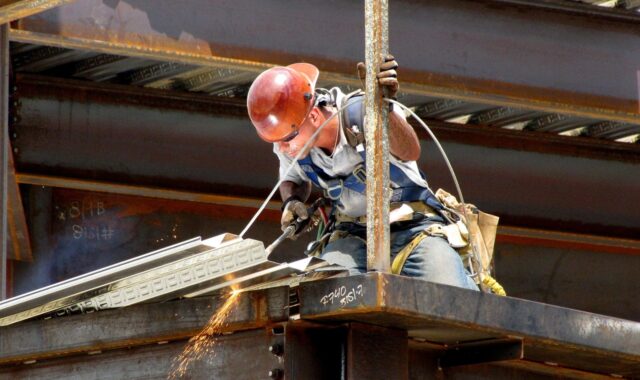
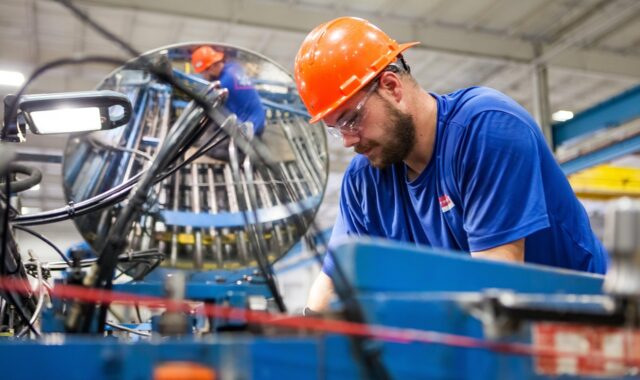
Statewide safety systems for industrial sites and multi-location compliance

What statewide safety systems mean in industrial operations
In industrial operations, statewide safety systems are not a single device, checklist or software product. The term usually refers to a coordinated safety framework used across multiple facilities, projects or field teams within one state. A workable system connects written procedures, machine safeguards, lockout practices, emergency planning, training, inspections and performance review. The purpose is to make safety controls repeatable while still accounting for local site conditions and state-level regulatory differences.
That distinction matters for companies operating plants, warehouses, maintenance shops or utility crews. A policy that works at one location may not work at another if equipment age, contractor activity, weather exposure, staffing, emergency access or state OSHA requirements have not been mapped carefully.
This article uses the term in its general industrial sense. It does not review or endorse any company using a similar name. For related articles on workplace protection, equipment controls and compliance planning, visit the safety systems section.
Why statewide consistency matters
Industrial safety often breaks down between corporate policy and field execution. A headquarters procedure may require machine guarding, but one site may have older equipment with custom access points. A warehouse may train forklift operators in a structured way, while a remote yard relies on informal coaching. A maintenance crew may understand lockout requirements, but contractors brought in for a shutdown may use different tagging practices. A statewide approach helps turn safety into a managed system rather than a set of local habits.
The need is visible in national injury data. In the U.S. Bureau of Labor Statistics release dated January 22, 2026, private industry employers reported 2.5 million nonfatal workplace injuries and illnesses for 2024. The same BLS data showed 332,600 cases in manufacturing, with a rate of 2.7 cases per 100 full-time workers, and 261,500 cases in transportation and warehousing, with a rate of 4.4. These figures do not prove that any specific facility lacks controls, but they show why industrial employers cannot rely on paperwork alone.
A statewide system also gives leadership a more reliable way to compare performance across locations. If every site defines near misses differently, inspection results cannot be meaningfully compared. If every plant uses a different contractor orientation, gaps are harder to identify before an incident. Consistent definitions, forms, approval paths and training records make it easier to see patterns early.
Core elements of a statewide safety system
OSHA’s Recommended Practices for Safety and Health Programs describe a proactive approach built around management leadership, worker participation, hazard identification, hazard prevention and control, education, communication, coordination on multiemployer worksites and program evaluation. A statewide industrial program can translate those principles into practical operating elements.
| System element | Industrial application | Key question to verify |
|---|---|---|
| Governance | Defines responsibility from corporate safety leaders to plant managers, supervisors and contractors. | Who owns corrective action when the same hazard appears at multiple sites? |
| Hazard identification | Uses job hazard analysis, inspections, incident reviews and worker reports to identify risks. | Are hazards recorded in a common format across all locations? |
| Hierarchy of controls | Prioritizes elimination, substitution and engineering controls before administrative controls or PPE. | Are teams defaulting to PPE when a stronger engineering control is feasible? |
| Machine and equipment safety | Covers guarding, interlocks, emergency stops, access control and maintenance procedures. | Can operators reach a point of operation, nip point or rotating part during normal work? |
| Lockout and energy control | Standardizes hazardous energy isolation procedures for service and maintenance. | Are procedures equipment-specific and used during shift changes or contractor work? |
| Emergency readiness | Includes alarm response, evacuation routes, spill response, fire procedures and severe weather plans. | Do drills reflect realistic site conditions instead of only office scenarios? |
| Training and verification | Links required training to roles, equipment, tasks and refresh cycles. | Does the system confirm competence, or only record attendance? |
| Performance review | Tracks leading and lagging indicators, corrective action closure and recurring defects. | Are managers reviewing trends at least annually and after major changes? |
The table is intentionally broad because technical controls vary by industry. A food plant, metal fabrication shop, water utility and construction materials yard may all need statewide safety systems, but their highest-risk tasks will not be the same.
Compliance across federal OSHA and state plans
A statewide program should not assume that federal OSHA requirements are the only rule set. OSHA-approved State Plans are operated by individual states or territories and must provide worker protection that is at least as effective as federal OSHA. OSHA’s state plan information reviewed in September 2026 listed 22 states or territories with plans covering both private sector workers and state and local government workers. It also listed six additional states and one U.S. territory with plans that cover state and local government workers only.
This distinction is important for industrial employers with mixed operations. A private manufacturing plant in one state may be under federal OSHA, while a similar plant in another state may be under a State Plan. A public utility, airport authority or municipal maintenance operation may face different coverage questions than a private contractor working nearby. In some State Plan jurisdictions, standards, penalties, reporting procedures or enforcement priorities can differ from federal practice while still meeting the “at least as effective” requirement.
The practical takeaway is straightforward: a statewide safety system needs a legal applicability matrix. That matrix should identify which OSHA jurisdiction applies, which state-specific standards or reporting rules are relevant, which permits or local emergency planning rules affect the site and who is responsible for monitoring changes. It should be reviewed whenever the business opens a new site, adds a major process, changes contractors or begins work in a new state.
How to build a practical statewide implementation model
The strongest statewide systems usually start with a realistic baseline, not a polished manual. Begin by listing all covered sites, mobile crews, yards, warehouses and temporary project locations. Then identify the major equipment categories, hazardous energy sources, chemical exposures, powered industrial trucks, confined spaces, work-at-height tasks and emergency scenarios at each location.
Next, create a standard procedure library. It should include core rules for hazard reporting, incident investigation, machine guarding review, lockout, hot work, contractor control, emergency action planning and training documentation. Each procedure should have a controlled owner, revision date and approval path. Individual sites should not rewrite the procedure without review. Local addenda are useful, but they should explain site-specific differences rather than replace the statewide standard.
A phased rollout is usually more effective than a one-time launch. A practical sequence looks like this:
- Map requirements. Identify federal, state, local and customer requirements that apply to each site or project type.
- Assess current controls. Compare existing practices against OSHA guidance, applicable standards and internal requirements.
- Prioritize high-risk gaps. Address machine access, hazardous energy, chemical exposure, vehicle movement and emergency response before cosmetic documentation updates.
- Standardize training. Assign required training by role, task and equipment type, then verify understanding through observation or practical demonstration.
- Track corrective actions. Use one statewide system for owners, deadlines, risk ranking and closure evidence.
- Review performance. Compare leading indicators such as inspections, near-miss reports, preventive maintenance completion and overdue actions alongside injury data.
Technology can support the process, but it should not drive the design. Software that stores inspections and training records is useful only when the underlying rules are clear. A spreadsheet with disciplined ownership may outperform a complex platform if supervisors know what to inspect, workers know how to report hazards and leaders act on the findings. See also: production equipment.
Common gaps in statewide safety systems
The first common gap is treating consistency as uniformity. A statewide standard should define minimum expectations, but it should not force every site to use identical controls when hazards differ. For example, one facility may need fixed guarding and interlocked access gates, while another may need traffic segregation, dock safety controls and pedestrian walkways. The same risk assessment method can lead to different controls.
The second gap is overreliance on administrative controls. NIOSH’s hierarchy of controls places elimination, substitution and engineering controls above administrative controls and PPE because they reduce exposure with less dependence on constant human action. In practice, a statewide program should not stop at signs, toolbox talks and gloves when machine redesign, guarding, ventilation, automation or material handling changes would better reduce exposure.
The third gap is weak contractor integration. Industrial sites often share work with electricians, millwrights, cleaning teams, construction contractors, delivery drivers and equipment vendors. A statewide system should define contractor prequalification, site orientation, permit requirements, incident reporting, stop-work authority and supervision. Multiemployer work creates coordination risks that cannot be solved by handing out a generic safety packet.
The fourth gap is poor change management. New equipment, modified production lines, temporary rentals, revised chemicals and staffing changes can make an old procedure unreliable. A statewide safety system should require safety review before startup, not after the first near miss. Management of change does not need to be complicated for every small adjustment, but it should be formal for changes that affect hazardous energy, guarding, chemical exposure, traffic flow, emergency response or required training.
What to measure beyond injury rates
Injury rates are important, but they are lagging indicators. They describe what has already happened and may be too sparse to reveal risk at a smaller site. OSHA’s program evaluation guidance recommends both lagging and leading indicators. For statewide systems, useful leading indicators include reported hazards, time to close corrective actions, percentage of planned inspections completed, preventive maintenance completion, training completion by role, repeat findings, management walkthrough frequency and worker participation in hazard reporting.
Metrics should be simple enough for supervisors to use and strong enough for leadership to act on. A dashboard with hundreds of fields can hide urgent problems. A better approach is to select a small group of statewide measures, review them monthly, and require root-cause review when the same issue appears at more than one location. If three sites report blocked emergency exits or missing machine guards, the problem is not only local housekeeping; it may also point to purchasing, layout, supervision or maintenance planning.
Frequently asked questions
Are statewide safety systems required by OSHA?
OSHA generally requires employers to comply with applicable standards and provide a workplace free from recognized serious hazards. It does not use one universal rule called “statewide safety systems” for all employers. However, OSHA guidance strongly supports systematic safety and health programs, and many specific standards require written procedures, training, inspections or emergency planning.
How is a statewide system different from a site safety plan?
A site safety plan focuses on one location or project. A statewide system sets common rules, responsibilities, data definitions and verification methods across many locations. The statewide system should allow site-specific addenda where equipment, hazards, state rules or emergency conditions differ.
Should a company follow ISO 45001 or ANSI/ASSP Z10?
ISO 45001 specifies requirements for an occupational health and safety management system, while ANSI/ASSP Z10 is a U.S. consensus standard for occupational health and safety management systems. Either can provide structure, but the right choice depends on business goals, customer expectations, certification needs and internal resources. Neither replaces the need to identify applicable OSHA and State Plan requirements.
What is the first step for a small industrial operator?
Start with a short inventory of sites, tasks, equipment and hazards. Then choose the highest-risk areas, such as machine guarding, hazardous energy control, vehicle movement or emergency response. Build simple written procedures, train the affected workers, verify work in the field and correct gaps before expanding the system.
How often should a statewide safety system be reviewed?
A full review should occur at least annually and whenever major equipment, processes, staffing, contractors or regulatory requirements change. Higher-risk operations may need more frequent reviews, especially after serious incidents, repeated near misses or significant inspection findings.