How to choose lifting machinery for industrial sites
Start with the lifting task, not the product name
Choosing lifting machinery is not just a matter of buying the highest rated capacity at the lowest quoted price. The right choice depends on the load, lift path, duty cycle, workplace layout, operator skill, inspection regime, and local safety rules. A small electric hoist may be the best fit for repeated workstation lifts, while a bridge crane, gantry crane, jib crane, mobile crane, winch, or below-the-hook device may suit a different industrial task. This guide gives buyers a practical way to compare options before requesting quotes or approving a purchase.
Start with a written lifting requirement. Before discussing brands or prices, define what must be lifted, where it starts, where it must go, how often it moves, and what the consequences would be if the lift is delayed, unstable, or unsafe. For more procurement articles, visit our buying guides section.

- Load weight: Include the heaviest normal load, lifting attachments, packaging, fixtures, and any expected variation.
- Load shape and center of gravity: Long, flexible, hot, fragile, or off-center loads need different rigging and control than compact loads.
- Lift path: Record vertical height, horizontal travel, rotation, approach distance, and obstacles.
- Frequency: Separate occasional maintenance lifts from high-cycle production handling.
- Environment: Heat, dust, moisture, chemicals, outdoor wind, and explosive atmospheres can change the specification.
- People and traffic: Consider pedestrians, forklifts, workstations, restricted areas, and operator visibility.
Match the machine type to the load path and workspace
Many buying problems start when equipment is selected by rated capacity alone. Capacity is essential, but the load path and workspace usually determine the machine category first. The table below summarizes common options and the main risk to check before purchase.
| Equipment type | Best fit | Key buying risk |
|---|---|---|
| Overhead bridge crane | Repeated lifting across a bay, production area, warehouse, or maintenance zone | Runway structure, building clearance, approach distance, and duty class may cost more than the crane itself |
| Gantry crane | Areas without permanent runway beams, temporary assembly, outdoor yards, and flexible work cells | Floor condition, wheel loads, stability, wind exposure, and travel surface must be checked |
| Jib crane | Localized workstation lifting, machine loading, tool changes, and repetitive short-radius handling | Foundation or column strength, slewing angle, collision risks, and hook coverage can limit usefulness |
| Electric chain hoist | Compact loads, lighter to medium capacities, shorter lifts, and frequent workstation use | Duty rating, chain wear, lift speed, suspension method, and control ergonomics need attention |
| Wire rope hoist | Higher capacities, longer lift heights, faster speeds, and heavier industrial service | Drum, reeving, fleet angle, rope inspection access, and headroom can affect long-term performance |
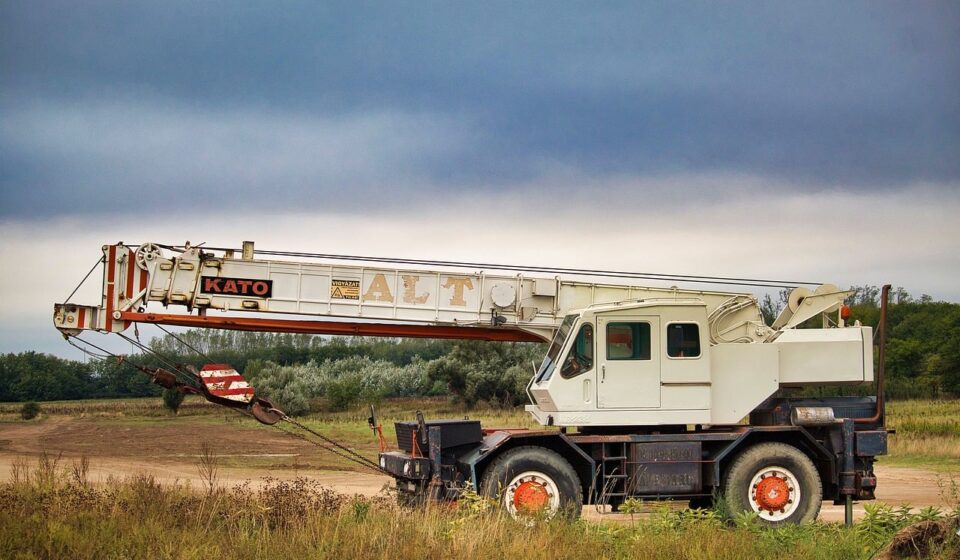
| Mobile crane or loader crane | Outdoor, construction, maintenance, or variable-location lifting | Ground bearing pressure, outriggers, operator certification, lift planning, and site access become critical |
| Winch | Pulling, positioning, controlled lowering, and special-purpose handling | A pulling winch is not automatically suitable for vertical lifting unless it is designed and rated for that use |
| Below-the-hook device | Special loads that need beams, clamps, magnets, vacuum lifters, grabs, or custom fixtures | The attachment weight reduces available lifting capacity and changes the load behavior |
Buyers should also avoid treating forklifts, telehandlers, and cranes as interchangeable. A forklift fitted with an approved lifting attachment may solve some handling problems, but it does not replace a crane where suspended-load control, overhead travel, or precise vertical lifting is required. The correct decision depends on the task, the approved attachment, the manufacturer’s instructions, and the rules that apply at the site.
Rated capacity is only one part of the specification
Rated capacity is the maximum load the machine or component is designed to lift under stated conditions. For overhead and gantry cranes in U.S. general industry, OSHA 29 CFR 1910.179 treats rated load as the manufacturer’s designed and built capacity shown on the equipment nameplate, and it restricts loading beyond that rating except for approved test purposes. In buying terms, the nameplate is not a target to reach every hour; it is a limit within the intended use of the equipment.
Three capacity-related points deserve close attention.
- Gross lifted weight: The load plus hook block, slings, lifting beams, magnets, clamps, vacuum pads, spreader bars, and fixtures may be much heavier than the product alone.
- Load spectrum: A machine that lifts near-rated loads all day needs a different duty rating than one that occasionally lifts the same maximum weight.
- Dynamic effects: Acceleration, braking, snagging, side pull, shock loading, and poor rigging can impose forces beyond a simple static weight calculation.
International standard ISO 4301-1:2016 classifies cranes and mechanisms based on service conditions such as total working cycles over design life, load spectrum factor, and average displacements. This is a useful reminder for buyers: two cranes with the same tonnage can be very different machines if one is designed for occasional service and the other for high-cycle production.
Ask suppliers to state the intended duty class or service classification, not just the tonnage. Also ask what assumptions they use for starts per hour, average load, lift height, ambient temperature, travel distance, and operating hours per day. If those assumptions do not match your site, a low initial price may turn into a reliability problem.
Compliance and safety documentation should be checked before purchase
Lifting equipment is safety-critical, so buyers should treat documentation as part of the product. A machine that arrives without clear identification, manuals, inspection instructions, and conformity evidence can be difficult to commission and risky to operate.
For U.S. industrial environments, overhead and gantry cranes are commonly evaluated against OSHA 29 CFR 1910.179 and relevant ASME B30 volumes. ASME describes the B30 committee scope as covering cableways, cranes, derricks, hoists, hooks, jacks, and slings; buyers should confirm which B30 volume is relevant to the exact equipment and use. For construction activities in the United States, OSHA 29 CFR 1926 Subpart CC may apply to power-operated equipment that can hoist, lower, and horizontally move a suspended load. In the United Kingdom, HSE guidance under LOLER emphasizes that lifting equipment used at work must be suitable, properly marked, and, in many cases, subject to thorough examination. For the European Union, Regulation (EU) 2023/1230 is scheduled to apply from January 20, 2027, and includes machinery as well as related products such as lifting accessories.
Because legal duties vary by country, state, industry, and application, the purchase file should be reviewed by a competent safety, engineering, or compliance person before the order is placed. At minimum, request and retain:
- Manufacturer name, model, serial number, rated load, and identification plates
- Operation, maintenance, inspection, and spare parts manuals in the required language
- Load test records or commissioning test procedure where applicable
- Electrical drawings, control diagrams, and safety device descriptions
- Certificates for wire rope, chain, hooks, slings, lifting beams, magnets, or special attachments where supplied
- Conformity documents required in the destination market, such as CE, UKCA, or other local evidence where applicable
- Training requirements for operators, riggers, signal persons, and maintenance staff
Do not rely on a generic certificate if the actual machine configuration, capacity, controls, or accessories differ from what will be installed. The safer approach is to connect every document to a model number, serial number, drawing, or purchase specification.
Site integration can decide whether the machine works well
Even well-built lifting machinery can perform poorly if it is installed in the wrong environment. Before placing an order, confirm that the building, floor, power supply, controls, and surrounding process can support the equipment.
For overhead cranes, runway beams, end stops, rail alignment, building columns, and available headroom are central issues. A low-headroom hoist may cost more, but it can recover valuable hook height in a crowded facility. For gantry cranes, floor flatness, wheel loads, travel route, and braking behavior are important. For jib cranes, the base plate, foundation, wall bracket, or column attachment must be engineered for the moment loads, not just the vertical weight. See also: production equipment.
Power and control choices also affect usability. Pendant controls are simple and familiar, but they can place the operator close to the load. Radio remote controls may improve visibility and positioning, but they require battery management, signal discipline, and protection against unintended operation. Variable frequency drives can improve smooth starting and stopping, especially where load swing or precise placement matters. Limit switches, overload protection, brakes, emergency stops, warning devices, and anti-collision features should be specified to match the risk level.
Plan for access as well. Can maintenance staff reach the hoist, trolley, brakes, electrical panels, rope drum, and limit switches safely? Can worn chains, ropes, wheels, and hooks be replaced without major production disruption? A compact design is valuable, but not if it makes inspection or repair impractical.
Compare total cost, not just purchase price
The lowest quoted price may not be the lowest cost. Lifting machinery often involves extra expenses for installation, testing, inspection, structural work, spare parts, operator training, and downtime. A realistic comparison should include both capital cost and lifecycle cost.
- Engineering and site work: Foundations, runway beams, electrical supply, floor repairs, and building modifications can be significant.
- Transport and installation: Heavy components may require special lifting, access planning, weekend work, or production shutdowns.
- Commissioning: Load testing, functional checks, documentation review, and operator handover should be planned before first use.
- Inspection and maintenance: OSHA, LOLER, ISO, ASME, manufacturer instructions, and local rules may all influence inspection frequency and content.
- Consumables: Wire rope, load chain, hooks, brakes, contactors, batteries, wheels, bearings, and seals should be available when needed.
- Downtime risk: A cheaper machine with poor parts support can be costly if it stops a production line.
When comparing bids, ask suppliers to separate the machine price from installation, controls, structural components, delivery, commissioning, training, documentation, and optional safety features. This makes it easier to see whether one quote is truly less expensive or simply missing important scope.
A practical checklist before requesting quotes
A clear request for quotation reduces misunderstanding and makes supplier proposals easier to compare. Use the checklist below as a starting point and adapt it to your operation.
- Maximum gross lifted weight, including all attachments and fixtures
- Typical load weight and percentage of lifts near maximum capacity
- Load dimensions, center of gravity, lifting points, temperature, and fragility
- Required lift height, hook approach, span, outreach, travel length, and rotation
- Number of lifts per hour, operating hours per day, and expected design life
- Indoor or outdoor use, wind, temperature, dust, moisture, chemicals, and corrosion exposure
- Power supply, control preference, speed requirements, and positioning accuracy
- Applicable standards, regulations, customer specifications, and site safety rules
- Documentation, testing, inspection, and training requirements
- Installation responsibilities, foundation or runway scope, and commissioning schedule
- Required spare parts, warranty terms, service response, and local support availability
The best supplier response should do more than quote a price. It should explain assumptions, limits, exclusions, required civil or electrical work, inspection access, documentation, and any conditions that may affect safe use. If a supplier cannot explain how the proposed machine matches the lifting task, ask for clarification before purchasing.
Frequently asked questions
What is the difference between a hoist, a crane, and a lifting accessory?
A hoist raises and lowers the load. A crane positions the hoist and load through a defined area, often using a bridge, gantry, jib, trolley, or boom. A lifting accessory connects the load to the lifting machine; examples include slings, shackles, hooks, clamps, magnets, vacuum lifters, and lifting beams. In a safe lifting system, all three parts must be compatible and correctly rated.
How much spare capacity should lifting machinery have?
There is no universal percentage that fits every site. The selected capacity should cover the maximum gross lifted weight, normal variation, attachment weight, and the intended duty cycle, while still respecting the manufacturer’s limits. Spare capacity should not be used as permission for unplanned overloads. If future loads are uncertain, specify the expected growth and ask suppliers to recommend a suitable design margin.
Is used lifting machinery a good option?
Used equipment can be economical when its history, rating, inspection condition, documentation, and spare parts support are clear. It is risky when serial plates are missing, modifications are undocumented, structural condition is unknown, or the machine was designed for a different duty class. Before buying used lifting machinery, arrange a competent inspection and confirm that it can be legally and safely placed into service at your site.
What documents should come with lifting machinery?
Expect identification plates, rated capacity information, manuals, drawings, inspection and maintenance instructions, commissioning or load test records where applicable, conformity documents required by the market, and certificates for supplied lifting accessories. The exact file depends on the equipment type, jurisdiction, and application, but incomplete documentation should be treated as a purchase risk.
When should lifting equipment be inspected?
Inspection timing depends on the type of equipment, activity level, service severity, environment, manufacturer instructions, and local regulations. OSHA rules for overhead and gantry cranes refer to inspection intervals based on activity, severity of service, and environment. HSE guidance under LOLER also emphasizes thorough examination and inspection obligations for many lifting applications. Buyers should build the inspection plan into the purchase decision instead of treating it as an afterthought.