Heavy equipment manufacturers in 2026 and the shifts reshaping production equipment

What is changing for heavy equipment manufacturers
Heavy equipment manufacturers in 2026 are competing on more than horsepower, steel capacity and brand recognition. Public company reporting for 2025, 2026 industry rankings and regulatory information point to a market shaped by infrastructure demand, mining investment, energy and power projects, mixed-fleet telematics, tighter emissions rules and gradual adoption of electrified machines. Caterpillar and Komatsu remain scale leaders. Chinese groups such as XCMG and Sany continue to expand internationally, while European and Japanese manufacturers hold strong positions in specialized equipment. For buyers, the practical question is no longer only which manufacturer is largest. It is which company can support uptime, parts supply, software access, compliance and lifecycle cost over years of operation.
For more coverage of industrial machinery and factory-related equipment trends, visit the production equipment section.
The market is broader than construction machinery
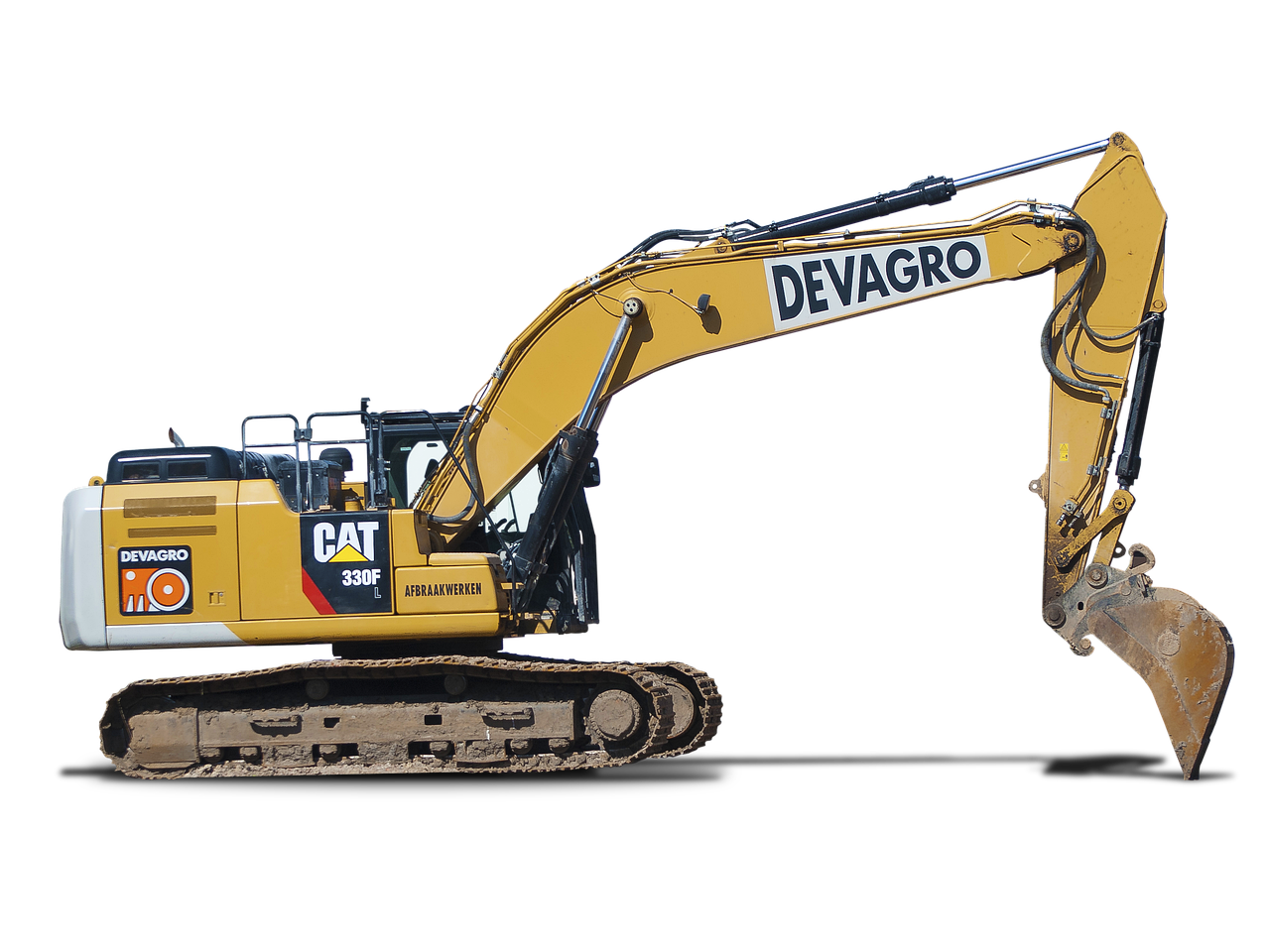
The phrase heavy equipment manufacturers is often used as shorthand for construction equipment companies, but the actual market is wider. It covers manufacturers of excavators, wheel loaders, bulldozers, motor graders, dump trucks, cranes, paving equipment, drilling rigs, underground mining machines, quarry equipment, forestry machines and large material handling systems.
This distinction matters because rankings can be misleading when they compare different revenue bases. KHL’s Yellow Table, for example, is widely cited in the construction equipment industry, but it focuses on construction equipment sales rather than total group revenue across every industrial segment. A company with a large mining, power, engine, rail, crane or finance business may look different in a full corporate report than it does in a construction-equipment-only table.
The strongest manufacturers usually combine four capabilities: a broad product range, a reliable dealer or service network, access to engines and powertrain technology, and digital systems that help owners manage utilization, maintenance and operating cost. Smaller specialists can still be highly competitive when the job requires niche machines, local parts availability or application-specific engineering.
Key manufacturers and public 2025 signals
The table below summarizes selected public signals from major manufacturers. It is not a purchasing ranking and should not be read as a complete list of every capable OEM. It is a practical snapshot of scale, focus and direction, using publicly reported 2025 information where available.
| Manufacturer | Headquarters base | Main heavy equipment focus | Public 2025 signal |
|---|---|---|---|
| Caterpillar | United States | Construction, mining, engines, power and energy systems | Caterpillar reported 2025 sales and revenues of about $67.6 billion in its Form 10-K, with construction, resource and power-related segments central to its business. |
| Komatsu | Japan | Construction, mining and utility equipment | Komatsu reported consolidated net sales of ¥4,104.4 billion for the fiscal year ended March 31, 2025, supported by mining equipment and pricing effects. |
| XCMG | China | Cranes, earthmoving, road machinery and construction equipment | Industry summaries of KHL’s 2026 Yellow Table placed XCMG among the top global construction equipment manufacturers based on 2025 sales. |
| Sany | China | Excavators, concrete machinery, cranes, road machinery and piling equipment | Sany Heavy Industry reported 2025 revenue growth, with excavators, concrete machinery and hoisting machinery all contributing to its sales mix. |
| John Deere | United States | Construction, roadbuilding, forestry and agriculture-related machinery | Deere’s fiscal 2025 reporting showed pressure in overall net sales, while its construction and forestry business remained a key industrial segment. |
| Liebherr | Germany and Switzerland | Earthmoving, mining, cranes, deep foundation and concrete technology | Liebherr reported 2025 group revenue of €14.772 billion and construction machine and mining sector revenue of €9.345 billion. |
| Volvo Construction Equipment | Sweden | Excavators, wheel loaders, articulated haulers, compact equipment and services | Volvo CE reported 2025 net sales of 81.6 billion Swedish kronor and continued to emphasize services, efficiency and lower-emission equipment. |
The main point is that global scale is no longer measured only by the number of machines sold. Large manufacturers are trying to capture more value through parts, maintenance contracts, connected services, rental channels, financing, software and energy-related solutions.
What buyers should compare beyond the nameplate
Fleet owners often begin with specifications such as bucket capacity, operating weight, engine output, lifting capacity or breakout force. Those numbers matter, but they do not describe the full ownership picture. A lower purchase price can become expensive if parts lead times are long, technicians are scarce, software access is limited or resale value is weak.
- Application fit: A quarry loader, urban mini excavator, high-production dozer and underground mining truck operate under very different duty cycles.
- Dealer and parts coverage: Uptime depends on local service capability as much as factory engineering.
- Total cost of ownership: Fuel, tires, undercarriage, hydraulics, maintenance intervals, financing and residual value can outweigh the initial discount.
- Data access: Owners increasingly expect machine data to flow into fleet management systems without being locked inside one brand portal.
- Compliance: Emissions rules, job-site requirements and public-sector procurement policies can limit which machines are eligible for certain projects.
- Operator support: Cab ergonomics, visibility, safety systems, automation aids and training can affect productivity and incident risk.
This is why many fleet decisions are moving from simple brand preference toward lifecycle planning. The right manufacturer for a contractor in one region may not be the right manufacturer for a mining operator, port contractor or public works agency in another region.
Digital systems are becoming part of the machine
Telematics and mixed-fleet data
Telematics is no longer a premium feature reserved for the largest fleets. Owners use machine data to monitor operating hours, idle time, fuel use, location, fault codes and preventive maintenance needs. The ISO 15143-3 standard, also known in the industry as AEMP 2.0, is important because it supports standardized worksite data exchange for mixed fleets.
That standard does not make every manufacturer’s system identical. Each OEM may still decide which data elements to share and under which commercial terms. Even so, it gives contractors and asset managers a more practical way to combine information from different brands. For buyers, data portability is now a procurement issue, especially for fleets that operate excavators, loaders, cranes, compact machines and trucks from several manufacturers.
Automation and operator assistance
Automation in heavy equipment is developing in layers. Many job sites are not ready for fully autonomous mixed-traffic operation, but grade control, payload measurement, machine guidance, object detection, automated digging functions and remote monitoring are already changing how machines are used. These systems can reduce rework, improve consistency and help less experienced operators perform certain tasks more accurately.
The commercial value depends on the application. A roadbuilding contractor may benefit from grade control and compaction documentation. A mine may prioritize dispatching, collision avoidance and predictable haul cycles. Manufacturers that can integrate hardware, software and dealer support have an advantage over companies that treat digital tools as add-ons.
Electrification is advancing, but adoption is uneven
Electrification is one of the most visible shifts in production equipment, but it should be evaluated by duty cycle and site conditions. Battery-electric compact excavators, small wheel loaders and indoor or urban machines are more practical today because their work patterns are more predictable and their charging needs are easier to manage. Large earthmoving, quarrying and mining applications are more difficult because machines operate long hours, carry heavy loads and may work far from stable charging infrastructure.
China has become an important market for electric construction equipment, especially in wheel loaders and other machines that fit local operating patterns and policy incentives. In Europe and North America, adoption is growing but remains selective. Contractors often test electric machines where noise reduction, indoor air quality, municipal procurement rules or low-emission job-site requirements create a clear advantage.
For heavy equipment manufacturers, electrification is not a single technology path. Some are developing battery-electric compact machines, others are testing trolley assist or dynamic charging for mining haulage, and some continue to invest in advanced diesel, hybrid systems, hydrogen-related research or alternative fuels. In 2026, diesel remains essential for many high-utilization heavy-duty applications, but manufacturers that ignore lower-emission powertrains risk losing access to future regulated projects. See also: automation systems.
Regulations and supply chains are shaping product decisions
Emissions compliance continues to influence engine design, aftertreatment, fuel quality and equipment cost. In the United States, EPA nonroad diesel rules include Tier 4 standards for many compression-ignition engines used in heavy equipment, and EPA public information notes the role of ultra-low sulfur diesel with a maximum sulfur concentration of 15 parts per million. In the European Union, Stage V rules apply to non-road mobile machinery engines and have shaped engine and machine development for OEMs selling into Europe.
Regulation is not the only pressure. Tariffs, logistics costs, semiconductor availability, battery supply chains, hydraulic components and engine sourcing can all affect machine pricing and delivery schedules. The most resilient manufacturers are those with diversified production footprints, strong supplier relationships and the ability to support older machines while launching new platforms.
This is also why aftermarket strategy is becoming more important. Parts revenue, rebuild programs, remanufacturing, fluid analysis and predictive maintenance can stabilize manufacturer earnings when new machine demand slows. For customers, the same capabilities can reduce downtime and extend asset life.
How to choose a manufacturer for production equipment planning
A structured evaluation helps prevent decisions based only on purchase price or brand familiarity. Buyers comparing heavy equipment manufacturers should start with the work, not the catalog.
- Define the duty cycle: Record hours per year, load factors, travel distance, climate, terrain, material density and operator skill level.
- Check local support: Confirm technician availability, parts inventory, emergency response time and warranty handling in the actual operating region.
- Model lifecycle cost: Compare fuel or electricity, maintenance, wear parts, financing, insurance, resale value and expected downtime.
- Review data access: Ask whether the equipment supports standard telematics feeds and whether fault codes, utilization and fuel data can be exported.
- Verify compliance: Match engine standards, safety requirements and job-site emissions rules before ordering.
- Plan for operators: Evaluate visibility, cab comfort, controls, training needs and assistance systems.
- Stress-test the service promise: A strong brochure is less valuable than documented parts availability and proven field service.
The best decision is often a portfolio decision. A fleet may use one manufacturer for high-production excavators, another for compact electric machines and a specialist for cranes, drilling equipment or underground mining machines.
Outlook for 2026
The heavy equipment sector enters 2026 with mixed but constructive signals. KHL Yellow Table summaries published in 2026 indicated that the top 50 construction equipment manufacturers generated record combined 2025 sales, while company annual reports show that demand varied by region and segment. Energy, mining and infrastructure-related demand remain supportive for some manufacturers, while housing, interest rates, tariffs and regional construction cycles remain risks.
The likely direction is not a simple race toward bigger machines. The competitive edge is shifting toward uptime, connected services, cleaner powertrains, resilient supply chains and measurable productivity. Heavy equipment manufacturers that can combine durable iron with software, service and compliance support will be better positioned than companies that compete only on machine price.
Frequently asked questions
Who are the largest heavy equipment manufacturers?
Industry rankings commonly place Caterpillar and Komatsu among the largest global construction and mining equipment manufacturers. KHL’s construction-equipment-focused rankings also highlight XCMG, John Deere, Liebherr, Sany, Volvo CE, Hitachi, JCB and Sandvik among major global names. Rankings differ depending on whether they measure construction equipment sales, total corporate revenue or specific product segments.
Are Chinese heavy equipment manufacturers becoming more competitive?
Yes. Chinese manufacturers such as XCMG and Sany have become more visible in global rankings and export markets. Their competitiveness is strongest where pricing, product range, domestic scale and expanding dealer networks align. Buyers should still evaluate local service, parts support, financing, residual value and compliance in their own market.
Is electric heavy equipment ready for large job sites?
Electric heavy equipment is ready for some applications, especially compact machines, urban work, indoor projects and certain predictable duty cycles. Large earthmoving and mining applications still face challenges related to battery size, charging infrastructure, utilization, cost and operating environment. Adoption should be based on duty-cycle analysis rather than a general assumption that electric is always cheaper or always impractical.
What data standard matters for mixed fleets?
ISO 15143-3, often referred to as AEMP 2.0 in the equipment industry, is the key telematics data exchange standard for many mixed-fleet applications. It helps owners collect machine status data from different brands, although the exact data available can still vary by manufacturer, model, subscription and region.
What should buyers ask before choosing an OEM?
Buyers should ask how the machine fits the duty cycle, how quickly parts can be supplied, what telematics data is available, which emissions rules the machine meets, what training is required and what the expected lifecycle cost looks like. The manufacturer with the strongest specification sheet is not always the manufacturer with the lowest operating risk.