How to choose a road paver for asphalt paving work
Start with the work the road paver must actually do
A road paver should be selected around the job mix, paving width, daily tonnage, site access and quality requirements—not around the largest machine in a brochure. For most asphalt paving work, the main decision is not simply tracked versus wheeled. The bigger question is whether the paver can hold a steady paving speed, keep a consistent head of material in front of the screed, support the required grade and slope control, and work smoothly with the trucks, rollers and crew already assigned to the job. Federal Highway Administration paving guidance consistently emphasizes steady paver speed, constant material flow at the screed and proper use of automatic controls as practical indicators of good mat construction.
If you are building a fleet plan, use this guide as a pre-purchase checklist alongside contract specifications, dealer support terms and your own job history. For more industrial equipment selection articles, see our buying guides.
Define the paving application before comparing models
The first buying decision is the application class. A paver that works well on a highway overlay may be costly and awkward on narrow streets, parking lots or utility trench reinstatement. A compact commercial machine may be easy to move and operate in tight areas, but it may lack the hopper capacity, screed stability or traction needed for continuous high-tonnage paving.
For asphalt work, buyers usually compare four broad categories:
- Compact and commercial pavers for driveways, parking areas, paths, utility work and small municipal repairs.
- 8-foot class pavers for streets, county roads, shoulders, ramps and many general paving contracts.
- Highway-class pavers for wider mats, long pulls, high truck volume and demanding smoothness requirements.
- Specialty pavers for shoulders, canals, airport work, curbs, concrete slipform paving or very narrow applications.
These classes should not be treated as fixed industry standards. Manufacturers describe them differently, and the same basic paving width can perform differently depending on screed type, feeder system, engine power and machine weight. The practical question is whether the road paver can place the specified lift at the required width and rate without starving the screed, stopping repeatedly or forcing the roller train out of rhythm.
Choose tracked or wheeled propulsion based on traction and mobility
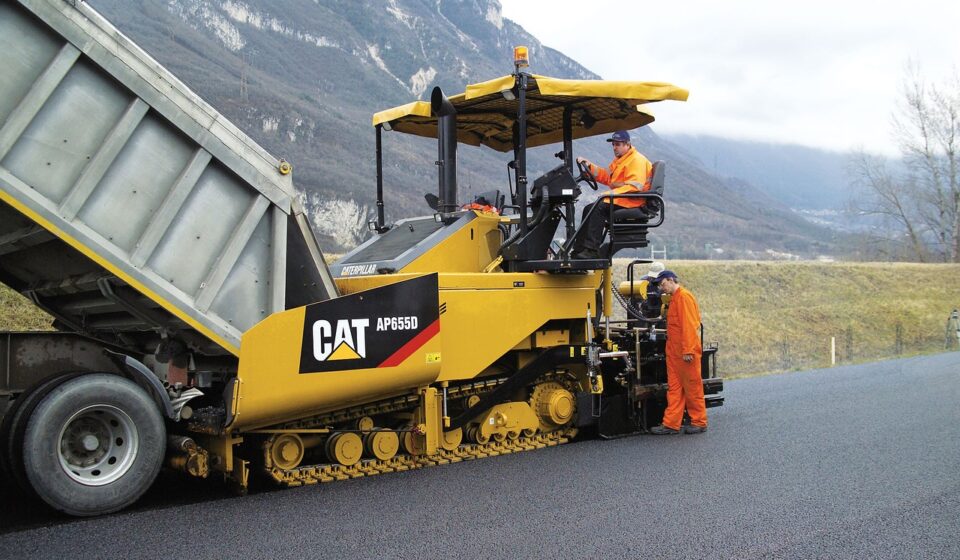
Tracked pavers are usually preferred when traction, flotation and consistent forward movement matter more than travel speed around the site. Rubber-track machines are common on larger roadwork because they spread machine weight, handle soft bases better than tires in many conditions and help maintain steady movement during truck exchange. They are often a strong fit for highways, airports, heavy overlays, steep grades and jobs where trucks frequently push against the hopper.
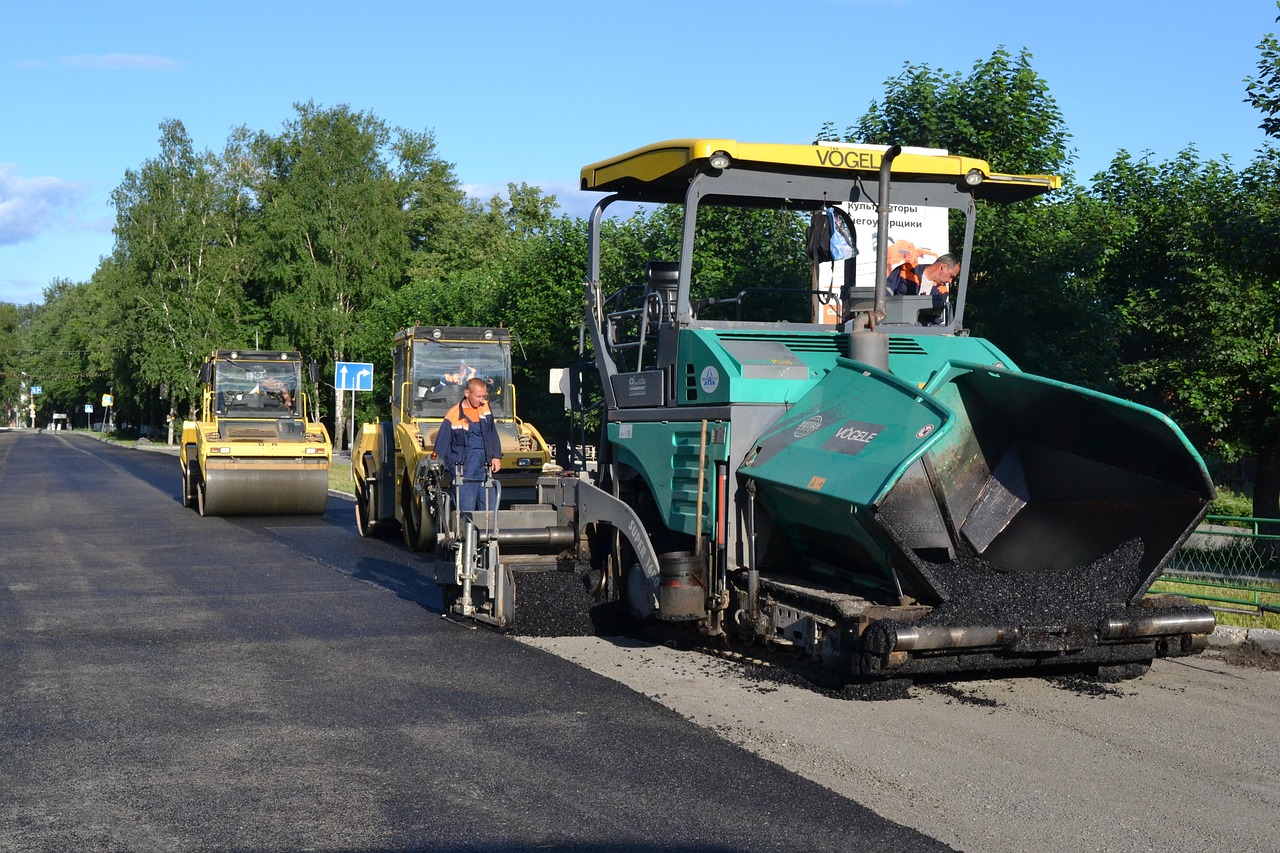
Wheeled pavers are often selected for urban and municipal work because they can be more maneuverable and easier to reposition between short pulls. They may suit parking lots, intersections, patching, residential streets and jobs with many turns or frequent moves. Traction, however, can become a limiting factor on loose, wet or steep surfaces. Buyers should review tire configuration, all-wheel drive options and manufacturer guidance before assuming a wheeled machine will handle every base condition.
Transport should also be part of the decision. A heavier tracked road paver may require a larger trailer, permits or different loading procedures. A smaller wheeled unit may reduce logistics costs but give up mat width, hopper size or stability. If a contractor loses hours moving equipment between short jobs, transport efficiency can matter as much as headline production capacity.
Evaluate the screed before the tractor
The screed is where the asphalt mat is shaped, initially compacted and textured. A powerful tractor with the wrong screed package can still leave waves, open texture, segregation marks or inconsistent density. When comparing pavers, review the screed as a complete system: basic width, extension method, heating, vibration or tamping options, crown adjustment, slope control compatibility and access to wear components.
Fixed screed versus extending screed
A fixed-width screed can be more rigid and may help maintain uniform results over wide paving widths, especially when matched with bolt-on extensions and a consistent paving setup. An extending screed is more flexible for changing lane widths, tapers, parking lots and urban work. For contractors handling many small jobs, hydraulic width adjustment can save setup time. For long highway pulls, rigidity and predictable crown control may be more valuable.
Compare your real paving widths with the screed’s basic and maximum working range. A machine that often works near the extreme end of its extension range may not perform the same as one operating within its most stable range. Ask the dealer how the screed is supported at the widths you use most often, not only at the advertised maximum.
Screed heating matters at start-up
Industry training materials emphasize that screed heaters are used to preheat the screed plate at the start of paving, not to heat the asphalt mix during operation. A cold screed can pull or tear the mat and create an open, coarse texture before the equipment reaches working condition. Buyers should check heater type, warm-up time, zone control, reliability, service access and parts availability. Electric screed heating is common on modern machines, while some older or smaller units may use gas systems.
Check crown, slope and grade control compatibility
Automatic grade and slope controls can reduce operator workload and improve consistency when the project requires a controlled profile. FHWA inspection guidance commonly asks whether automatic controls are being used where practical and whether the paver maintains a constant material head. For buying purposes, confirm that sensors, sonic averaging systems, stringline equipment, skis or 3D control packages can be integrated cleanly. If your jobs include intersections, tie-ins, drainage structures or irregular existing surfaces, the ability to switch between reference methods is important.
Compare specifications that affect real production
Road paver specifications can be confusing because brochures often highlight maximum paving width, maximum speed or engine output. Those figures are useful for shortlisting, but they do not tell the whole story. A machine only produces a good mat when the plant, haul trucks, paver, screed and rollers move as a balanced system.
| Specification | Why it matters | Buying question |
|---|---|---|
| Basic and maximum paving width | Determines lane coverage, shoulder capability and extension requirements. | Does the stable working range match your most common jobs? |
| Hopper capacity | Helps buffer truck exchanges and supports continuous paving. | Will the hopper handle your truck cycle without repeated stops? |
| Conveyor and auger system | Controls material delivery across the screed. | Can it maintain an even head of material at target width and depth? |
| Engine power and emissions tier | Affects load response, fuel use, compliance and resale. | Is the engine accepted on public and regulated jobs in your market? |
| Machine weight and traction | Influences stability, flotation and transport needs. | Can your trailer, crew and typical base conditions handle it? |
| Operator station visibility | Improves control during truck exchange, edge work and reversing. | Can the operator see the hopper, screed ends and crew clearly? |
Manufacturer specification sheets show how wide the range can be. Some 8-foot class pavers use screeds that hydraulically extend from about 8 feet to about 16 feet, while larger machines can support much wider work with bolt-on extensions. Hopper capacities also vary significantly by model and market. Use these numbers to narrow the field, then make the final decision around the paving width, lift thickness, truck cycle and compaction window your crew must hit.
Look closely at material flow and thermal uniformity
Mat problems often begin before the screed. Inconsistent truck delivery, long stops, poor hopper management, uneven conveyor feed and auger imbalance can all affect texture and density. FHWA quality-control guidance has highlighted segregation and non-uniform density as recurring construction issues in hot-mix asphalt. That makes the paver’s feed system a buying priority, not an afterthought.
Check the conveyor chains, slats, augers, auger tunnel, end gates and feeder sensors on any machine you inspect. For used equipment, worn augers or misadjusted feed controls can create visible streaks and uneven material distribution. For new equipment, ask how the control system maintains material height in front of the screed and whether the operator can monitor feed performance easily from the platform. See also: production equipment.
Technology is also changing quality control. FHWA materials from its Mobile Asphalt Technology Center describe paver-mounted thermal profilers as systems that create real-time two-dimensional infrared maps of the mat behind the paver. These tools can help crews identify potential thermal segregation and adjust hauling, loading, paving speed or stops. They do not replace proper mix design, compaction testing or density acceptance, but they can provide useful feedback on high-specification work.
Consider emissions, safety and operator environment
In the United States, road pavers with diesel engines fall within the broader nonroad compression-ignition equipment category regulated by the Environmental Protection Agency. EPA information updated in 2026 describes Tier 4 standards and the use of ultra-low sulfur diesel with a maximum sulfur concentration of 15 parts per million. For buyers, this affects public project eligibility, maintenance procedures, fuel quality, aftertreatment service and resale value.
Do not evaluate emissions equipment only as a compliance cost. Diesel particulate filters, selective catalytic reduction systems and sensors require maintenance discipline, but a machine that meets current project requirements may be easier to bid on regulated work. When buying used, verify engine tier, service records, fault history and whether any emissions components have been removed or altered. A cheaper machine can become expensive if it cannot legally or reliably work on your target contracts.
Safety should be part of the purchase specification. Asphalt paving involves backing trucks, workers near the hopper and screed, hot material, fumes, night work and traffic exposure. OSHA struck-by guidance identifies heavy equipment as a major contributor to construction struck-by fatalities, while NIOSH has published engineering control guidance for reducing worker exposure to asphalt fumes during paving. Practical features to compare include lighting, mirrors, cameras, backup alarms, emergency stops, handrails, platform access, ventilation or fume extraction provisions, and clear sight lines to both screed ends.
Decide whether to buy new, buy used or rent
Buying new makes sense when utilization is high, uptime is critical, emissions compliance matters and dealer support is strong. New machines also provide the latest operator controls, diagnostics, screed heating systems and warranty coverage. The trade-off is capital cost and depreciation, especially if the paver sits idle outside a short paving season.
Used road pavers can be good value when the frame, screed, feeder system and hydraulics are sound. However, used pavers hide risk in expensive wear areas. Inspect screed plates, crown mechanisms, extension slides, tamper or vibrator systems, augers, conveyor chains, hopper wings, hydraulic pumps, electrical harnesses, grade-control wiring, track or tire condition, and engine aftertreatment. Run the machine until warm and check whether the screed heats evenly, extensions move smoothly and material feed controls respond correctly.
Renting is often the safest route for occasional paving, one-off widths, uncertain bid volume or testing a machine class before purchase. The rental rate may look high per day, but it can be cheaper than owning a machine without enough annual tonnage. If rental availability is unreliable during your peak season, ownership may still be justified for schedule control.
Use a purchase checklist before signing
Before committing to a road paver, bring the decision back to measurable job requirements. A practical checklist should include the following:
- List the most common paving widths, lift thicknesses and daily production targets from recent or expected jobs.
- Confirm whether tracked or wheeled propulsion fits the base conditions, grades, turning radius and transport plan.
- Match screed type, extension range and heating system to the work you perform most often.
- Verify that hopper capacity and material feed can support your truck cycle and paver speed.
- Check compatibility with grade, slope, thermal profiling or 3D control systems required by your contracts.
- Review engine emissions tier, fuel requirements and aftertreatment maintenance.
- Inspect safety features, operator visibility, lighting and access for daily cleaning and service.
- Compare dealer response time, wear-part availability, training and warranty or rental support.
- Estimate total ownership cost, including transport, insurance, seasonal storage, wear parts and downtime risk.
The right road paver is the one that helps your crew place a uniform mat at a steady pace within the limits of your projects. Oversizing can raise transport and ownership costs. Undersizing can cause stops, poor feed consistency and missed production. A disciplined specification review protects both paving quality and long-term equipment economics.
Frequently asked questions
What size road paver should I buy first?
For many contractors, an 8-foot class asphalt paver is the most versatile starting point because it can handle streets, parking lots, shoulders and general municipal work. The correct size still depends on your actual paving widths, tonnage, transport equipment and crew experience. If most jobs are small repairs or tight commercial sites, a compact paver may be more profitable.
Is a tracked road paver always better than a wheeled paver?
No. Tracked pavers usually provide stronger traction and flotation, which helps on large roadwork and softer bases. Wheeled pavers can be easier to maneuver and reposition on urban or commercial projects. The better choice depends on site conditions, haul patterns, turning space and transport needs.
Which paver feature has the biggest effect on mat quality?
The screed and material feed system have the most direct effect on mat texture, thickness and initial density. A steady paving speed, consistent head of material, properly heated screed and suitable grade control are often more important than maximum travel speed or advertised horsepower.
Should I buy a used road paver?
A used paver can be a good purchase if it has verifiable service records and passes a detailed inspection of the screed, feed system, hydraulics, engine, controls and emissions equipment. Avoid buying only on hours or price. Wear in the screed and conveyor system can quickly turn a low purchase price into a high repair cost.
Do I need thermal profiling technology on a road paver?
Not every contractor needs it, but it can be valuable on high-specification asphalt work where agencies or owners care about thermal segregation, uniformity and real-time quality feedback. It should support, not replace, proper paving practices, rolling patterns and density verification.