Occupational health and safety management for industrial equipment workplaces

What occupational health and safety management should achieve
Occupational health and safety management is the structured process an organization uses to identify hazards, control risk, train people, check performance and improve over time. In industrial equipment workplaces, it should do more than support compliance or generate records. It should help ensure that machines, maintenance activities, energy sources, materials, employees and contractors are managed as one connected operating system.
The need is not theoretical. The U.S. Bureau of Labor Statistics reported 5,070 fatal work injuries in 2024, down from 5,283 in 2023, but still equal to one worker death every 104 minutes. That figure covers many industries, but it reinforces a point that equipment-intensive facilities already know: waiting for incidents to expose weak controls is a costly way to manage risk.
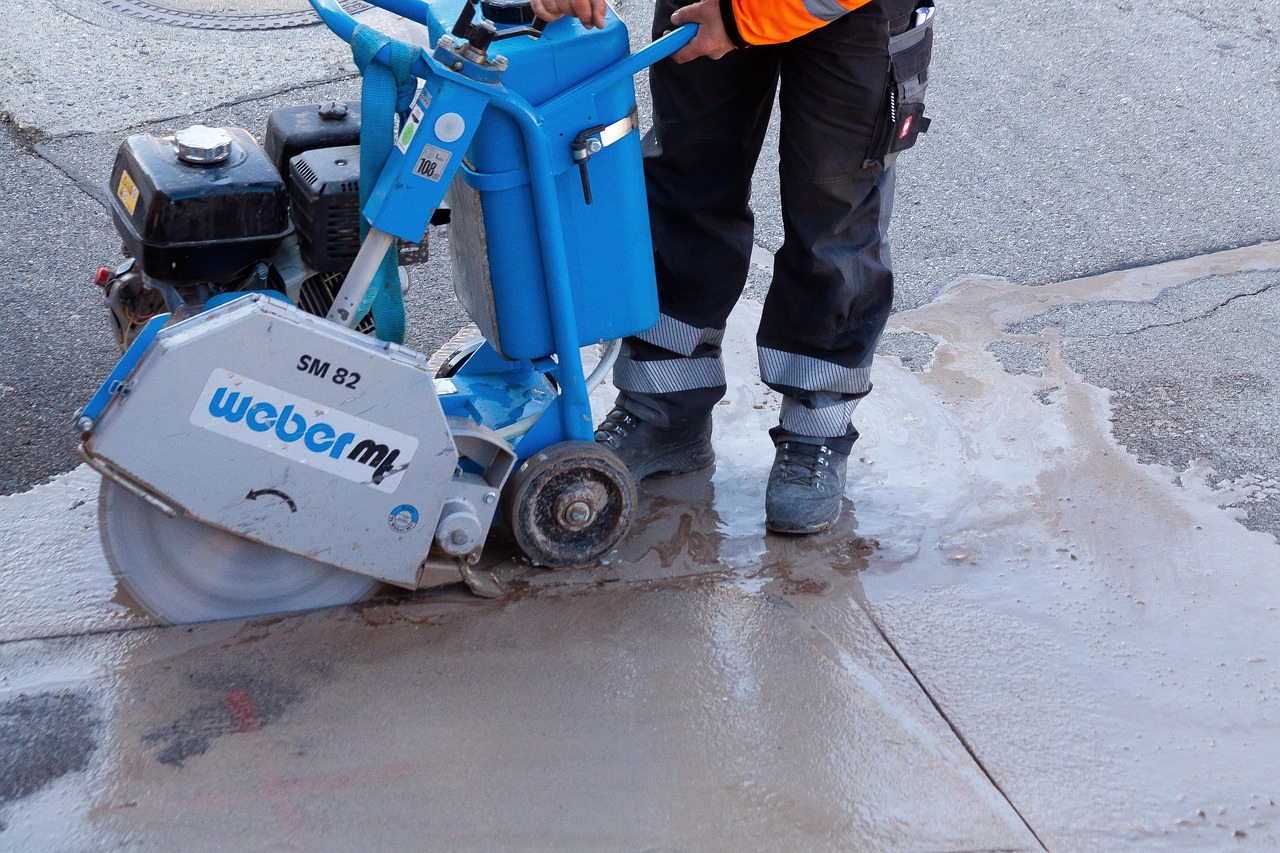
A useful management system moves a facility from reaction to prevention. It links safety policy to daily work, connects engineering controls to training, and gives supervisors a repeatable way to verify that safeguards still work after production changes, maintenance activity or staffing changes.
Why a system approach matters in equipment-heavy environments
Industrial equipment creates layered risk. A single production line may involve rotating shafts, conveyors, hydraulic pressure, pneumatic energy, electrical isolation, stored gravity, heat, sharp edges, chemicals, forklifts, robotics and manual intervention. A checklist for one machine is not enough if the wider process changes faster than the safety controls around it.
This is why agencies and standards bodies describe occupational safety and health as a management system rather than a set of isolated rules. OSHA’s Recommended Practices for Safety and Health Programs are built around core elements such as management leadership, worker participation, hazard identification, hazard prevention and control, education, training, evaluation, improvement and coordination with contractors or staffing agencies. ISO 45001:2018 provides an international framework for an occupational health and safety management system, while ILO-OSH 2001 describes a continual improvement cycle built around policy, organizing, planning and implementation, evaluation and action for improvement.
For facility managers, the value is coordination. A machine guard may be well designed, but the system still fails if maintenance personnel bypass it without a lockout procedure, temporary workers are not trained, or a production change introduces a new pinch point. Occupational health and safety management creates the routines that catch those gaps before they become incidents.
Core elements of an effective occupational health and safety management system
Leadership with defined accountability
Leadership is more than a policy statement. In a functioning system, management sets measurable safety objectives, assigns responsibility, provides resources and reviews results. The real test is whether supervisors and managers are accountable for closing hazards, maintaining controls and acting on worker reports, not only for meeting production targets.
In industrial workplaces, accountability should be visible at equipment level. If a guarding issue is reported on a packaging machine, the system should define who evaluates the hazard, who approves interim controls, who verifies the permanent fix and how the decision is recorded.
Worker participation that improves decisions
Workers often know where equipment is difficult to clean, where jams occur, which access panels are frequently opened and which tasks force awkward body positions. OSHA emphasizes worker participation because people closest to the work can identify hazards that may not be obvious during office-based reviews.
Participation should include more than incident reporting. Operators, maintenance technicians, electricians, cleaners and contractors should be involved in job hazard analysis, pre-startup reviews, lockout procedure validation, near-miss review and change assessments. Participation also depends on trust. If reporting a hazard leads to blame or lost incentives, the system will receive weaker information.
Hazard identification and risk assessment
Hazard identification is where occupational health and safety management becomes operational. Equipment-heavy sites should review routine operation, non-routine maintenance, cleaning, troubleshooting, startup, shutdown, material changeovers and emergency response. A machine that is safe during normal production may present much higher risk when a technician reaches into a guarded area to clear a jam.
Risk assessment should consider severity, exposure, frequency, people affected and the reliability of existing controls. It should also account for foreseeable misuse or pressure to defeat controls. A control that makes a task nearly impossible may be bypassed; that is not only a behavior issue, but also a design and management issue.
Controls selected through the hierarchy of controls
NIOSH and OSHA both present the hierarchy of controls as the preferred order for reducing risk: elimination, substitution, engineering controls, administrative controls and personal protective equipment. For industrial equipment, this means facilities should first ask whether the hazard can be removed or isolated before relying on procedures or PPE.
Engineering controls can include fixed guards, interlocked doors, light curtains, two-hand controls, local exhaust ventilation, barriers, automation, guarding of in-running nip points and physical energy isolation. Administrative controls include procedures, permits, scheduling, signage, supervision and training. PPE still matters, but it should normally be the last layer, not the main protection against a severe machine hazard.
How equipment safety fits into the management system
Equipment safety systems are strongest when they are managed across the full equipment life cycle: specification, purchasing, installation, commissioning, operation, maintenance, modification and disposal. A facility that buys machinery without reviewing guarding, access, lockout points and maintenance tasks may inherit risks that are expensive to correct later.
For related coverage of safeguards, controls and industrial risk topics, visit the safety systems category.
| Equipment risk area | Management system question | Typical evidence to keep |
|---|---|---|
| Machine guarding | Are operators protected from point of operation, rotating parts, in-running nip points, flying chips and sparks? | Guarding assessments, inspection records, corrective actions and operator feedback |
| Lockout and hazardous energy | Are servicing and maintenance tasks controlled when unexpected energization or stored energy could injure workers? | Energy control procedures, authorized employee training and annual procedure reviews |
| Changeovers and cleaning | Do non-routine tasks introduce reach-in, chemical, thermal or ergonomic hazards? | Job hazard analyses, safe work instructions and pre-task briefings |
| Automation and interlocks | Are safety functions validated after maintenance, software changes or component replacement? | Commissioning records, functional test logs and management of change approvals |
| Contractor work | Are contractors informed about site hazards and coordinated with production and maintenance teams? | Contractor orientation, permits, communication logs and post-job reviews |
OSHA’s lockout/tagout standard, 29 CFR 1910.147, applies to the control of hazardous energy during servicing and maintenance of machines and equipment. OSHA’s general machine guarding rule, 29 CFR 1910.212, requires one or more guarding methods to protect operators and other employees in the machine area from hazards such as point of operation hazards, rotating parts and flying chips. These requirements are specific, but they work best inside a broader management system that keeps procedures current, trains employees and reviews changes before controls become unreliable. See also: production equipment.
How OSHA practices, ISO 45001 and ILO-OSH 2001 compare
Different frameworks use different language, but they point in a similar direction: leadership, participation, planning, control, evaluation and improvement. The practical difference is how an organization applies them.
| Framework | Main role | Useful application for industrial facilities |
|---|---|---|
| OSHA Recommended Practices | Practical guidance for building safety and health programs | Useful for step-by-step program development, hazard control, training and program evaluation |
| ISO 45001:2018 | International occupational health and safety management system standard | Useful when a facility wants a formal structure aligned with other management systems and, where chosen, certification |
| ILO-OSH 2001 | International guideline model based on policy, organizing, planning, evaluation and improvement | Useful as a policy and continual improvement reference, especially for organizations comparing national or corporate requirements |
ISO states that ISO 45001 specifies requirements for an occupational health and safety management system and helps organizations manage OH&S risks and improve performance. The ISO page for the standard identifies ISO 45001:2018 as edition 1, published in March 2018, and indicates that the version was reviewed and confirmed in 2024. That matters for readers checking currency: the 2018 edition remains the core reference rather than a replaced historical standard.
Certification is a business decision, not a universal legal requirement. Some companies pursue certification because customers, insurers or corporate governance programs expect it. Others use the structure without certification. Either way, the system only adds value if it changes how hazards are found, controlled and reviewed at the worksite.
Measuring performance without waiting for injuries
Lagging indicators such as recordable injuries, lost-time cases and workers’ compensation costs are important, but they describe what has already happened. A stronger occupational health and safety management process also tracks leading indicators that show whether risk controls are active.
- Percentage of corrective actions closed on time, especially high-risk actions
- Number and quality of job hazard analyses completed for non-routine tasks
- Completion rate for lockout/tagout procedure reviews and authorized employee training
- Frequency of machine guard inspections and safety function tests
- Near-miss reports that lead to verified control improvements
- Worker participation in risk assessments, audits and improvement teams
- Time from hazard report to interim control and permanent correction
Metrics should not reward underreporting. If a department is praised only for a low incident count, employees may hesitate to report pain, near misses or unsafe conditions. Better metrics reward risk discovery, timely correction and verified control effectiveness.
A practical implementation roadmap
An organization does not need to build a perfect system before taking action. The following sequence is realistic for many industrial equipment workplaces.
- Define scope. Identify which sites, departments, machines, contractors and activities are included. Include maintenance and non-routine tasks, not only normal production.
- Set leadership responsibilities. Assign owners for hazard assessment, training, corrective actions, equipment changes, contractor coordination and management review.
- Map high-risk equipment and tasks. Prioritize machinery with severe energy, frequent jams, manual intervention, past incidents, complex guarding or contractor exposure.
- Review legal and other requirements. For U.S. general industry sites, this often includes machine guarding, lockout/tagout, powered industrial trucks, electrical safety, PPE and hazard communication, depending on operations.
- Assess hazards with workers involved. Walk the process with operators and maintenance staff. Review startup, shutdown, cleaning, setup, troubleshooting and emergency scenarios.
- Apply the hierarchy of controls. Look first for elimination, substitution and engineering controls. Use procedures and PPE as supporting layers, not substitutes for feasible engineering controls.
- Document critical controls. Keep procedures concise and usable. Long documents that workers cannot apply during real tasks are weak controls.
- Train for roles, not just awareness. Operators, maintenance technicians, supervisors, contractors and managers need different knowledge. Training should match the decisions each group must make.
- Verify and improve. Audit controls in the field, test safety functions, review incidents and near misses, and update risk assessments after equipment or process changes.
The roadmap should be repeated after major changes such as new machinery, line reconfiguration, new materials, staffing changes, acquisition of used equipment or a pattern of near misses. Management of change is often where safety systems either prove their value or reveal their gaps.
Common weaknesses to avoid
Many safety programs look complete on paper but fail during real work. Common weaknesses include outdated procedures, training records without skill verification, corrective actions closed without field confirmation, guards removed for convenience, risk assessments that ignore maintenance, and incident investigations that blame the worker without examining design, supervision, workload or control reliability.
Another weakness is treating compliance as the ceiling. Regulations set enforceable expectations, but a facility may need stronger controls because of its equipment, pace, workforce mix or maintenance demands. Good occupational health and safety management uses regulations, standards and guidance as inputs, then adapts controls to actual risk.
Frequently asked questions
Is occupational health and safety management the same as compliance?
No. Compliance is part of the system, but occupational health and safety management is broader. It includes leadership, participation, hazard assessment, prevention, training, performance review and continual improvement. A site can meet a narrow rule and still have weak risk management if hazards are not systematically identified and controlled.
Does every industrial facility need ISO 45001 certification?
No. ISO 45001 certification is not universally required by law. Some organizations choose certification for customer, governance or market reasons. Others use ISO 45001 principles internally. The key question is whether the facility has a working system that improves safety performance and manages legal obligations.
Why are engineering controls emphasized over PPE?
Engineering controls are higher in the hierarchy of controls because they isolate people from hazards or remove hazards at the source. PPE can reduce exposure, but it depends heavily on correct selection, fit, condition and worker behavior. For severe machine hazards, PPE alone is rarely an adequate primary control.
How often should an occupational health and safety management system be reviewed?
Review frequency depends on risk, complexity, regulatory change and system maturity. High-risk equipment and critical procedures may need frequent field verification, while formal management review may occur on a planned cycle. Reviews should also happen after incidents, near misses, equipment changes or process changes.
What is the most useful first step for a facility starting from scratch?
Start with a focused review of high-risk equipment and tasks. Identify where people interact with moving parts, stored energy, elevated loads, chemicals, heat or electrical systems. Then assign responsibility for correcting the most serious hazards and build the management routines around that work.