How to choose material handling equipment for industrial facilities
Start with the job, not the machine
The right material handling equipment is the option that moves, lifts, stores, protects, or controls materials with the least practical risk and waste for a specific operation. Before comparing forklifts, pallet jacks, conveyors, cranes, racks, carts, lift tables, or automated systems, define the load, route, frequency, height, operator interface, storage method, and work environment.
A low-cost cart can outperform a powered truck in a short, low-volume work cell. A conveyor or automated storage system may be justified when movement is repetitive, measurable, and constrained by labor or floor space. The buying decision should balance throughput, safety, ergonomics, maintainability, training, energy use, and lifecycle cost, not just the purchase price.
For more industrial purchasing frameworks, visit the buying guides section.
What material handling equipment includes
Material handling equipment is a broad category. It covers simple devices used by one worker and engineered systems that connect receiving, production, storage, picking, packing, and shipping. In industrial facilities, the term usually covers four overlapping functions: movement, storage, control, and protection of materials.
| Equipment group | Common examples | Typical use |
|---|---|---|
| Manual handling aids | Hand trucks, platform carts, hand pallet trucks, dollies | Short-distance movement, small batches, maintenance work, light distribution tasks |
| Powered industrial trucks | Forklifts, reach trucks, order pickers, powered pallet trucks, tow tractors | Pallet movement, loading docks, racking aisles, mixed warehouse transport |
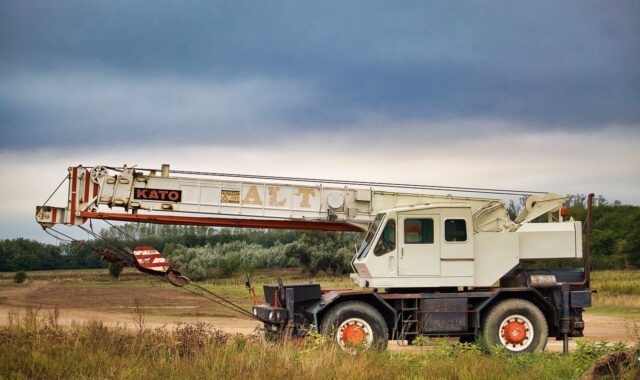
| Lifting and positioning equipment | Lift tables, hoists, jib cranes, bridge cranes, vacuum lifters, tilters | Raising, lowering, rotating, or positioning loads for production or assembly |
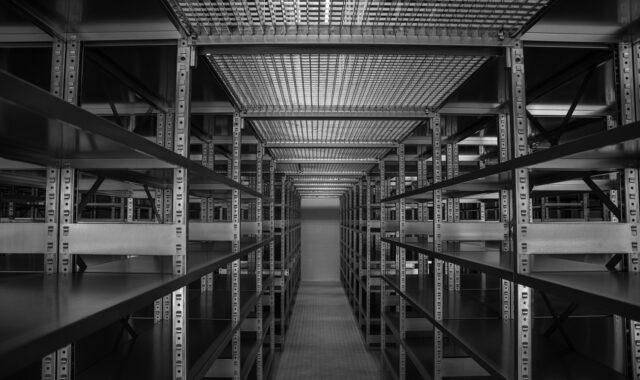
| Storage equipment | Pallet rack, shelving, mezzanines, bins, flow rack, cantilever rack | Space utilization, inventory control, pick accessibility, product protection |
| Conveying and sortation | Belt conveyors, roller conveyors, screw conveyors, sorters, accumulation lines | Repetitive movement along a defined path with predictable flow |
| Automated and semi-automated systems | AGVs, AMRs, AS/RS, robotic palletizers, automated conveyors | High-volume, repeatable, data-driven operations where labor, space, or accuracy is constrained |
| Bulk handling equipment | Hoppers, silos, feeders, bucket elevators, pneumatic systems | Powders, granules, agricultural goods, minerals, chemicals, and process materials |
This table is only a starting point. Many facilities need a combination rather than a single machine. A warehouse, for example, may use pallet rack, forklifts, hand pallet trucks, dock equipment, ergonomic lift assists, and a conveyor line in the same workflow.
Match the equipment to measurable requirements
A useful specification starts with numbers. If the data are missing, collect them before asking suppliers for proposals. Vendors can recommend more accurately when the operating profile is clear.
Load characteristics
Define the maximum and average load weight, dimensions, center of gravity, packaging type, pallet quality, stackability, fragility, and whether the load is liquid, loose, sharp, hot, cold, hazardous, or irregular. A 2,000 lb pallet with a stable center of gravity is not the same handling problem as a long steel bar, a drum of liquid, or a fragile machine component.
Travel path and facility layout
Measure aisle widths, turning radius, door openings, dock heights, floor flatness, floor load capacity, ramp grades, rack elevations, column spacing, mezzanine restrictions, and pedestrian routes. In narrow aisles, a reach truck or turret truck may improve storage density. In a wide manufacturing bay, a forklift or tugger route may be more flexible. In a fixed production line, a conveyor, hoist, or crane may reduce unnecessary handling.
Throughput and movement frequency
Count moves per hour, peak demand, shift patterns, queue time, dwell time, travel distance, and seasonal variation. Equipment that looks oversized at average volume may be justified at peak volume. The reverse is also common: facilities often overbuy automation for work that is intermittent, poorly standardized, or not yet measured.
Environment and utilities
Consider temperature, dust, moisture, washdown requirements, floor debris, explosive atmospheres, outdoor surfaces, battery charging space, ventilation, compressed air, electrical capacity, and maintenance access. A cold storage facility, food plant, metal fabrication shop, and e-commerce distribution center can have very different equipment demands even when all of them move pallets.
Safety and compliance should shape the purchase
Safety is not an accessory decision. OSHA identifies warehousing hazards that include powered industrial trucks, ergonomics, material handling, slips and falls, hazardous chemicals, and robotics. OSHA also notes that the most common injuries in warehousing include musculoskeletal disorders, mainly from overexertion in lifting and lowering, and incidents where workers are struck by powered industrial trucks or other materials handling equipment.
The U.S. Bureau of Labor Statistics reported that the warehousing and storage subsector had 32 fatalities in 2024 and a total recordable injury and illness rate of 4.8 cases per 100 full-time workers. That does not mean every facility has the same risk, but it shows why equipment selection should be tied to traffic management, training, ergonomics, guarding, visibility, and maintenance.
For forklifts and related powered industrial trucks, OSHA standard 29 CFR 1910.178 is central in U.S. general industry settings. OSHA states that only trained and certified workers may operate forklifts and that operators must be trained on both the type of vehicle and workplace conditions. OSHA also describes the powered industrial truck standard as the most commonly cited standard in material-handling industries.
For industrial steel storage racks, ANSI MH16.1-2023 addresses the design, testing, and utilization of several rack types, including movable-shelf racks, rack-supported systems, pallet-flow racks, case-flow racks, pick modules, and certain automated storage and retrieval rack structures. It does not cover every rack type, so cantilever racks, drive-in racks, special structures, seismic requirements, and damaged-rack repairs should be reviewed by qualified professionals.
- Ask whether operators need formal certification, refresher training, or site-specific training.
- Separate pedestrian walkways from truck routes where practical.
- Check whether visibility, mirrors, blue lights, alarms, cameras, or speed controls are appropriate for the environment.
- Confirm rack capacity plaques, anchoring, impact protection, and inspection procedures.
- Evaluate ergonomic risks, including lifting height, reach distance, repetition, twisting, vibration, and awkward postures.
- Plan lockout, guarding, emergency stops, and safe access for conveyors, lifts, cranes, and automated systems.
Manual, powered, fixed, or automated equipment
The buying decision is often less about whether a system is modern and more about whether the process is stable enough to justify the system. Use the lowest level of complexity that can safely meet the requirement. See also: production equipment.
| Option | Best fit | Limitations to check |
|---|---|---|
| Manual carts and hand pallet trucks | Short moves, low frequency, flexible work areas, low capital budgets | Operator fatigue, ergonomic exposure, slope limits, load weight, floor condition |
| Powered trucks | Palletized transport, loading docks, racks, variable routes | Training, battery or fuel infrastructure, aisle width, pedestrian interaction, maintenance |
| Conveyors | Repeatable flow between fixed points | Layout inflexibility, guarding, accumulation logic, jams, emergency access |
| Cranes and hoists | Heavy or awkward loads, production cells, machine loading | Building structure, rated capacity, inspection, below-the-hook devices, operator skill |
| AGVs and AMRs | Repeatable transport, labor-constrained operations, digital workflow environments | Traffic control, floor condition, software integration, charging, change management |
| AS/RS and automated storage | High-density storage, controlled inventory, high repeatability | Capital cost, implementation time, data accuracy, maintenance support, operational rigidity |
MHI and Deloitte have highlighted automation, robotics, artificial intelligence, and supply chain technology as important transformation topics in recent annual industry reporting. That direction is real, but it should not turn every buying decision into an automation project. Automation works best when item data are clean, packaging is consistent, exceptions are understood, and the facility has maintenance and systems support.
Total cost matters more than purchase price
The initial invoice rarely shows the real cost of material handling equipment. A lower-cost machine can become expensive if it increases damage, downtime, injury exposure, maintenance labor, energy use, or congestion. A higher-cost system may be justified if it removes repeated touches, improves cube utilization, reduces overtime, or prevents bottlenecks.
Build a total cost view that includes the following items:
- Purchase price, freight, taxes, installation, and commissioning.
- Floor work, electrical work, charging areas, ventilation, dock upgrades, guarding, and signage.
- Operator training, supervisor training, maintenance training, and documentation.
- Spare parts, tires, batteries, chargers, lubrication, inspections, service contracts, and software licenses.
- Energy consumption, fuel, battery replacement, and end-of-life disposal.
- Downtime risk, backup plans, rental equipment, and availability of local service technicians.
- Product damage, rack damage, floor damage, and insurance implications.
For a simple purchase, a spreadsheet may be enough. For a conveyor, crane, automated storage system, or multi-vehicle fleet, model several operating scenarios: average day, peak day, one-shift growth, two-shift growth, maintenance outage, and product-mix changes.
Vendor questions before placing an order
A clear request for quotation should include load data, drawings, photos, duty cycle, utility information, compliance expectations, installation constraints, and acceptance criteria. Do not rely on a product brochure alone.
- What load rating applies at the actual lift height, attachment, reach, or boom position?
- What standards, regulations, or engineering assumptions were used for the design?
- What floor, rack, dock, or building conditions must be verified before installation?
- What operator training and maintenance training are included?
- What preventive maintenance schedule is recommended?
- Which wear parts are stocked locally, and what is the expected lead time?
- What happens if the equipment fails during peak operations?
- Can the supplier provide drawings, manuals, inspection forms, and capacity documentation?
- How will the system be tested before handover?
- What changes would void warranty, capacity ratings, or safe-use assumptions?
For engineered systems, include a factory acceptance test or site acceptance test when practical. Acceptance should measure real outputs, such as pallets per hour, positioning accuracy, lift speed, stopping distance, emergency-stop function, operator access, and integration with warehouse or production systems.
A practical buying checklist
- Define the materials, load dimensions, maximum weight, center of gravity, packaging, and fragility.
- Map each movement from receiving to storage, production, picking, packing, and shipping.
- Measure aisle widths, lift heights, travel distances, floor condition, dock geometry, and congestion points.
- Quantify current labor time, touches per item, damage rates, downtime, and peak throughput.
- Identify safety risks before selecting the equipment type.
- Choose the simplest equipment that meets capacity, safety, and throughput needs.
- Compare total cost over the expected service life, not only purchase price.
- Verify training, maintenance, spare parts, inspections, and documentation.
- Plan commissioning, operator feedback, and post-installation adjustments.
- Review the decision again after real operating data are available.
Frequently asked questions
What is the most important factor when choosing material handling equipment?
The most important factor is fit to the actual job. Load weight, dimensions, route, height, frequency, operator interaction, and environment should be defined before choosing between manual, powered, fixed, or automated equipment.
Is automation always better than forklifts or manual equipment?
No. Automation can improve consistency, space utilization, labor productivity, and tracking when the process is repeatable and data are reliable. For low-volume, variable, or frequently changing work, powered trucks, carts, lift assists, or a better storage layout may provide a better return.
How do safety rules affect a material handling equipment purchase?
They affect equipment type, operator training, traffic layout, guarding, inspection needs, maintenance access, and documentation. Forklifts and other powered industrial trucks require particular attention because OSHA 29 CFR 1910.178 includes training and operating requirements in U.S. general industry settings.
When should a facility upgrade from manual handling to powered equipment?
Consider upgrading when load weight, repetition, travel distance, lifting height, injury risk, or throughput demand exceeds what workers can handle safely and consistently. The upgrade should be justified with measurements, not only complaints or assumptions.
What documents should be kept after installation?
Keep manuals, capacity information, training records, inspection forms, maintenance logs, engineering drawings, commissioning records, warranty terms, and any rack, crane, conveyor, or automation acceptance documentation. These records support safe operation and future modifications.