How to choose roof safety equipment for industrial facilities
What roof safety equipment must accomplish
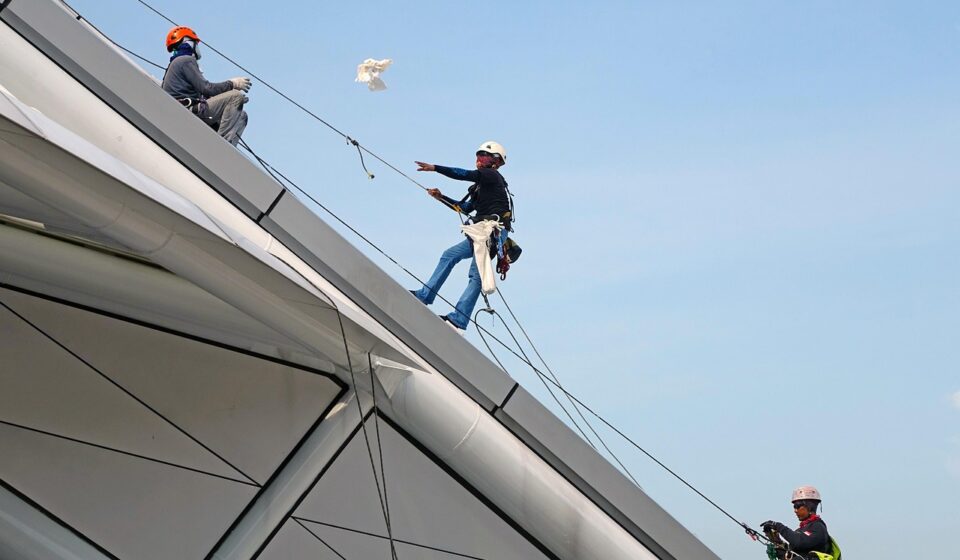
Roof safety equipment is not one product. It is the combination of engineered systems, access equipment, personal protective equipment and work procedures used to prevent falls, reduce the consequences of a fall and control falling-object hazards. In an industrial facility, the right choice depends on why people need roof access, how close they work to edges or openings, the roof slope, the access method, the number of workers exposed and whether a prompt rescue can realistically be performed.
In U.S. practice, OSHA construction and general industry rules use different trigger points and control methods. A maintenance visit to a plant roof may therefore be evaluated differently from a roofing project on the same building. A sound specification starts with the task and the exposure, not with a catalog page for harnesses.
For related industrial safety coverage, see the safety systems category.
Start with the roof task and the applicable rule
The first decision is whether the work is construction, roofing, repair, inspection, maintenance or equipment service. OSHA construction rules under 29 CFR 1926 Subpart M generally require fall protection when employees are exposed to falls of 6 feet or more to a lower level. For low-slope roofing work with unprotected sides and edges, the standard allows guardrail systems, safety net systems, personal fall arrest systems, or certain combinations using warning lines and additional controls. For steep roofs, the listed options are more direct: guardrails with toeboards, safety nets or personal fall arrest systems.
General industry work on roofs is often evaluated under 29 CFR 1910 Subpart D. That rule includes a general 4-foot threshold for unprotected sides and edges, and it has specific provisions for low-slope roofs based on distance from the roof edge and whether the work is temporary and infrequent. This distinction matters for facility teams that send technicians to HVAC units, vents, solar equipment, tanks or communication devices.
State-plan OSHA programs, owner standards, insurance requirements and consensus standards may be stricter than the federal baseline. When roof safety equipment will be installed permanently, the specification should record the governing rule, the assumed task and the exposure the system is intended to control. That record helps prevent a system designed for occasional inspection from being used later for a construction activity it was never intended to cover.
Use the hierarchy of controls before selecting products
Roof safety should follow a hierarchy of controls. Passive systems that do not require a worker to clip in, adjust a lanyard or calculate fall clearance are usually easier to manage than active fall arrest systems. Personal fall arrest can be essential, but it should not be the first design choice when an edge can be guarded or the work can be kept away from the hazard.
Guardrails and parapets
Guardrails, compliant parapet extensions and self-closing gates are preferred where employees repeatedly access the same roof zones. They reduce dependence on individual worker behavior and can protect multiple trades at the same time. They are especially useful around roof hatches, fixed ladder exits, service platforms and frequently accessed mechanical equipment. Key checks include structural attachment, corrosion resistance, toeboard needs, gate direction, roof membrane compatibility and protection at the transition from ladder to roof.
Travel restraint before fall arrest
A travel restraint system prevents the worker from reaching the fall edge. It normally uses an anchorage, body support and a fixed-length or adjusted connector that limits movement. For many flat industrial roofs, restraint is easier to plan than fall arrest because it avoids the need to arrest a fall after it starts. The layout still has to be controlled. If a worker can misadjust a line, walk around an obstruction or reach a corner exposure, the system may not function as restraint in real use.
Personal fall arrest where exposure cannot be eliminated
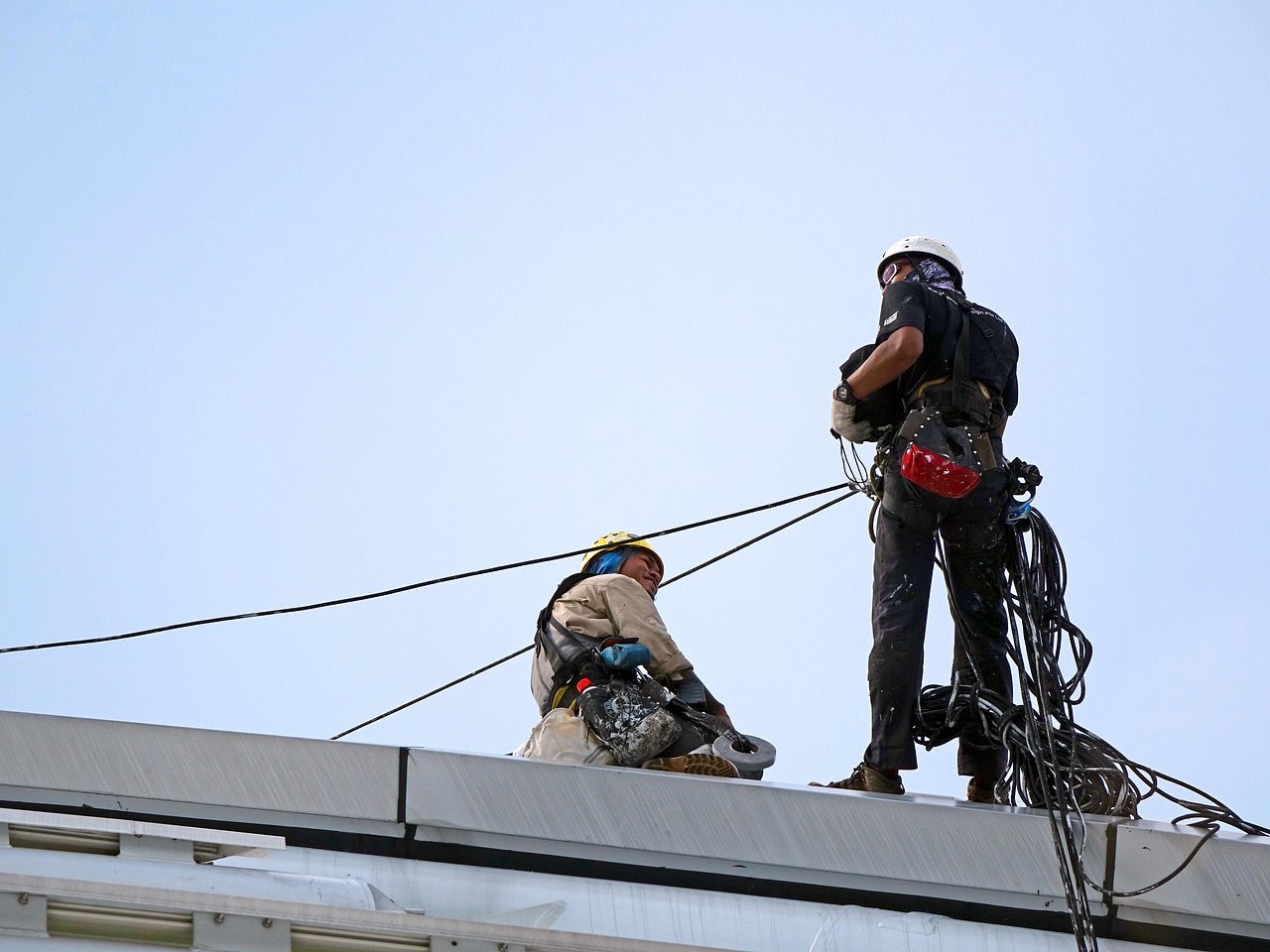
Personal fall arrest systems are used when workers may be exposed to an edge or opening and other controls are not feasible or sufficient. A complete system includes an anchorage, connector, full-body harness and deceleration device such as a lanyard or self-retracting device. It also requires fall clearance, component compatibility, inspection and rescue planning. A harness without a rated anchor, compatible connector and workable rescue plan is not a complete roof safety solution.
Compare the main categories of roof safety equipment
| Equipment category | Where it fits | Key checks before selection |
|---|---|---|
| Guardrails and edge protection | Repeated access areas, roof perimeters, hatch openings and service zones | Structural attachment, roof membrane protection, gate locations, corrosion resistance and falling-object protection |
| Warning lines and designated areas | Low-slope roofs where permitted by the applicable rule and work conditions | Distance from edge, visibility, line strength, supervision, task duration and whether workers are trained not to cross without protection |
| Anchor points and horizontal lifelines | Restraint or fall arrest layouts where workers need controlled movement | Qualified design, substrate strength, number of users, swing-fall risk, inspection access and clear labeling |
| Full-body harnesses, connectors and lanyards | Personal fall arrest, restraint or positioning applications | Correct application, user weight range, D-ring location, connector compatibility, adjustment, inspection and removal-from-service criteria |
| Self-retracting devices | Work requiring shorter free fall or movement around equipment | Class, leading-edge rating, anchor elevation, fall clearance chart, locking function, housing orientation and manufacturer limits |
| Walkways, anti-slip surfaces and crossovers | Routes over roof membranes, piping, cable trays or uneven surfaces | Slip resistance, drainage, load capacity, thermal movement, trip hazards and roof warranty impact |
| Skylight screens and covers | Fragile roof lights, roof openings and smoke vents | Load rating, attachment, weathering, compatibility with vent operation and visibility to workers |
| Fixed ladders, stairs and roof hatches | Permanent access to roofs and elevated platforms | Ladder height, landing protection, ladder safety system needs, hatch guarding, handholds and safe transition to the roof |
| Rescue and evacuation equipment | Any site using personal fall arrest | Rescue time, trained personnel, access for responders, descent or retrieval method and suspension-trauma risk |
Anchors, lifelines and fall clearance need the most scrutiny
Anchorage is often the weak point in a roof safety plan because a simple label can hide a complex load path. OSHA construction criteria for personal fall arrest anchorages require either capacity of at least 5,000 pounds per employee attached or design, installation and use under a qualified person as part of a complete system with an appropriate safety factor. Horizontal lifelines are not just cables between two posts. They must be designed and used as complete systems because fall forces can multiply across the line during an event.
Fall clearance is just as important. OSHA criteria for personal fall arrest include limits on free fall and deceleration distance, and the system must prevent the worker from contacting a lower level. In practice, the clearance calculation should include free fall, deceleration, harness stretch or D-ring movement, worker height, connector length and a safety margin. A system that works in a high-bay area may fail the clearance calculation on a low roof, mezzanine or canopy.
Leading edges add another complication. Cable, webbing or rope can be damaged if it loads over a sharp or abrasive edge during a fall. ANSI/ASSP Z359.14-2021 changed the classification language for self-retracting devices, with Class 1 generally associated with anchorages at or above the dorsal D-ring and Class 2 covering applications that may involve anchorages below the dorsal D-ring. For roof work, buyers should check the device label, leading-edge limitations and the manufacturer’s fall clearance chart instead of assuming every self-retracting lifeline is suitable for roof edges.
Safe roof access is part of the system
Many roof incidents begin before the worker reaches the work area. A roof safety plan should evaluate portable ladders, fixed ladders, stairs, hatches, crossover platforms and transition zones. If a worker exits a ladder into an unprotected edge area, the access point may require guardrails, a swing gate, a landing platform or an immediate tie-off strategy.
Fixed ladder rules deserve special attention in industrial facilities. Under OSHA general industry provisions, fixed ladders that extend more than 24 feet above a lower level have specific fall protection requirements. Fixed ladders installed on or after November 19, 2018 generally must be equipped with a ladder safety system or personal fall arrest system. As of the publication of this article, OSHA had proposed removing the November 18, 2036 retrofit deadline for older fixed ladders, but the proposal did not remove the existing requirement for new fixed ladders. Facilities planning long-life access equipment should verify the current rule before final design.
Access equipment also needs to match the people, tools and materials that will use it. A narrow hatch may be adequate for inspection but poor for carrying filters or repair parts. A ladder may meet dimensional criteria and still create a practical hazard if the landing is cluttered, icy, poorly lit or too close to an unprotected edge. See also: production equipment.
Inspection, training and documentation before purchase
Roof safety equipment should be purchased with the inspection and training plan already defined. Harnesses, lanyards, self-retracting devices and temporary anchors need pre-use inspection and must be removed from service when damaged, deployed in a fall or outside the manufacturer’s criteria. Permanent anchors, guardrails, hatch systems, skylight covers and walkways need periodic inspection for corrosion, loose fasteners, membrane damage, impact, modification and labeling.
Training should cover more than how to put on a harness. Workers need to understand roof-specific hazards such as skylights, fragile panels, wet membranes, wind, loose gravel, sharp edges, unprotected hatch openings and mechanical equipment clearances. They also need to know which anchor points are approved, how many workers may connect, which areas are out of bounds, how to report defects and what to do if a fall occurs.
Documentation turns equipment into a managed system. A practical roof safety file should include a roof plan, approved access routes, anchor IDs and ratings, permitted user counts, inspection logs, rescue procedures, equipment manuals, training records and any engineering calculations required for permanent systems. This record is especially valuable when contractors, maintenance teams and emergency responders share the same roof.
A practical selection checklist for industrial buyers
- Define the task: inspection, maintenance, construction, cleaning, repair or emergency access.
- Confirm whether OSHA construction, general industry, state-plan or owner rules apply.
- Map roof edges, openings, skylights, fragile panels, slopes and elevation changes.
- Identify how workers reach the roof and how they transition from access equipment to the work surface.
- Use passive protection such as guardrails where routine access is expected.
- Use restraint where workers can be kept from reaching the edge.
- Use fall arrest only when clearance, anchor strength, compatibility and rescue can be confirmed.
- Specify leading-edge-rated equipment when lifelines may load over roof edges or structural edges.
- Check the number of users allowed on each anchor or lifeline system.
- Protect skylights and roof openings as fall hazards, not only as daylighting features.
- Include inspection intervals, replacement criteria and storage requirements in the purchase specification.
- Require a rescue method before allowing work that depends on personal fall arrest.
Common mistakes to avoid
The most common mistake is buying personal protective equipment before designing the work method. A harness can create a false sense of control if the anchor is not rated, the line is too long, the worker can swing into equipment, or there is not enough clearance below the roof edge.
Another mistake is treating warning lines as a universal substitute for fall protection. Warning lines and designated areas are rule-specific controls with conditions. They are not appropriate for every task, distance, roof slope or worker activity. They also require supervision and training because they depend heavily on behavior.
Facilities also under-protect skylights. Workers may recognize roof edges but step backward onto a skylight, smoke vent or deteriorated panel. Screens, covers and guardrail systems should be evaluated anywhere a surface may not support the load of a person, tools and materials.
Finally, many sites overlook rescue. If a personal fall arrest system stops a fall, the worker may still be suspended and unable to self-rescue. A rescue plan that relies only on calling emergency services may be too slow or may not account for roof access, locked gates, ladder height or the location of the suspended worker.
Frequently asked questions
What is included in roof safety equipment?
Roof safety equipment can include guardrails, parapet extensions, warning lines, designated areas, anchors, horizontal lifelines, full-body harnesses, lanyards, self-retracting devices, skylight protection, roof walkways, ladders, roof hatch guarding and rescue equipment. The correct mix depends on the work and exposure.
Are guardrails better than harnesses for roof work?
For routine access, guardrails are often easier to manage because they are passive and protect multiple workers without requiring tie-off. Harness-based systems may still be necessary where guardrails are not feasible, but they require anchor design, fall clearance, inspection, training and rescue planning.
Do roof anchors always need to be rated for 5,000 pounds?
For OSHA personal fall arrest applications, one common compliance path is an anchorage capable of supporting at least 5,000 pounds per attached employee. Another path is design, installation and use under a qualified person as part of a complete system with the required safety factor. The anchor should be labeled and documented for its intended use.
Can a warning line alone be used on a roof?
Sometimes, but only under specific rules and work conditions. The answer depends on roof slope, distance from the edge, task type, whether the work is temporary and infrequent, and which OSHA standard applies. A warning line should not be treated as a universal replacement for guardrails, restraint or fall arrest.
How often should roof safety equipment be inspected?
Workers should inspect personal fall protection equipment before use, and a competent or qualified person should perform documented inspections at intervals set by the employer, manufacturer and applicable rules. Permanent systems also need periodic inspection after storms, impacts, roof work, modifications or suspected damage.