How to choose fire and safety equipment for industrial facilities
Choosing fire and safety equipment for an industrial facility is a risk-based specification task, not a catalog exercise. The right plan connects ignition sources, combustible materials, work processes, occupancy, evacuation routes, and maintenance capability with suitable detection, suppression, emergency communication, egress, and worker protection. In the United States, OSHA requirements, NFPA standards, adopted building and fire codes, insurance requirements, and the local authority having jurisdiction can all affect the final specification. For industrial sites, the practical goal is to detect problems early, control small incidents before they escalate, protect people during evacuation, and keep every device inspection-ready. For more facility protection topics, see our safety systems section.
What counts as fire and safety equipment in an industrial setting
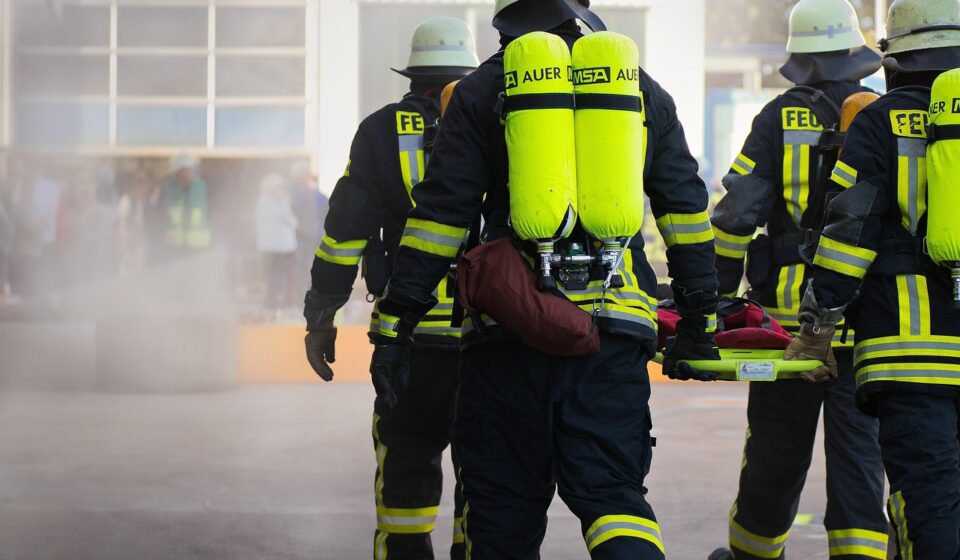
In industrial facilities, fire and safety equipment usually covers much more than portable extinguishers. It includes the layered systems and devices used to prevent ignition, warn occupants, suppress fire, support evacuation, and protect workers who may face thermal, electrical, smoke, chemical, or mechanical hazards.
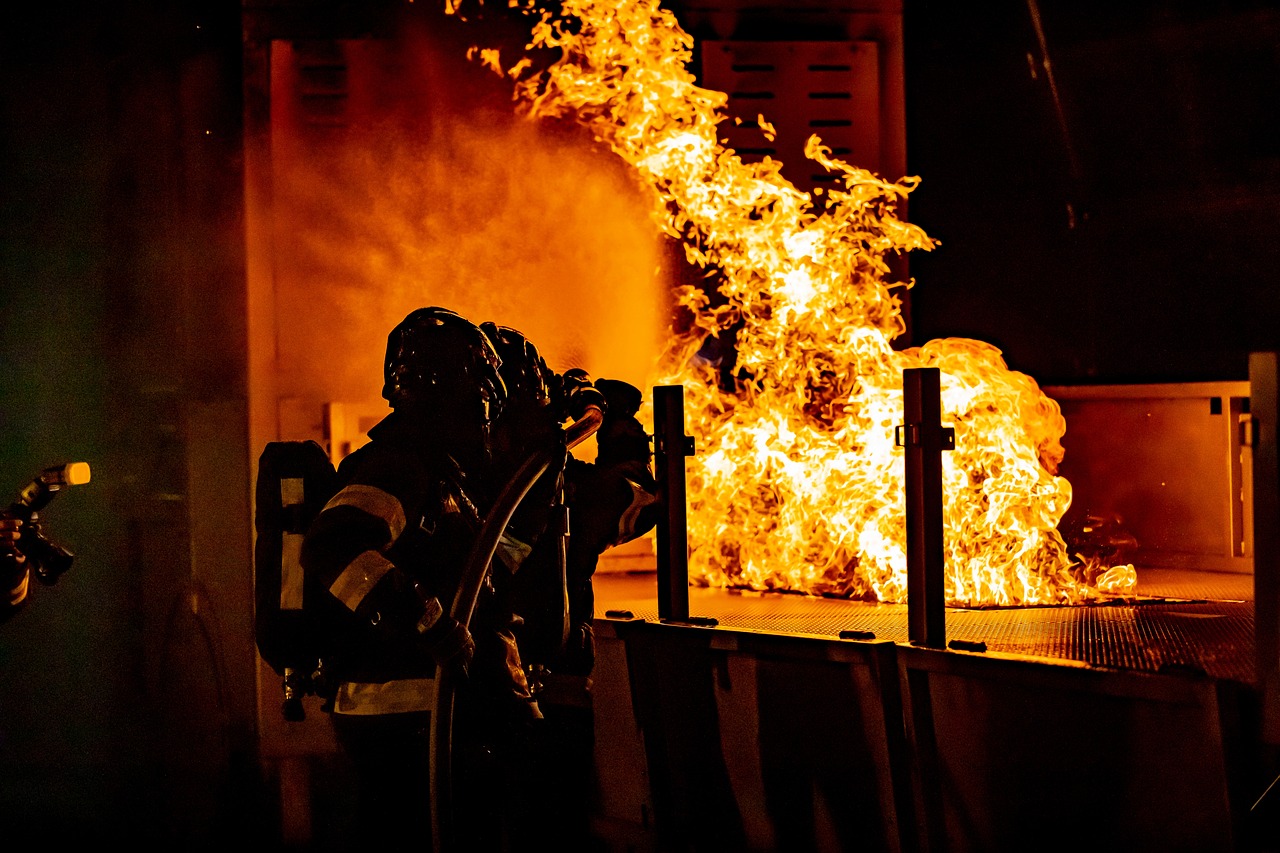
A practical industrial equipment program often includes:
- Detection and alarm equipment, such as smoke, heat, flame, gas, carbon monoxide, and process-specific detectors, plus employee alarm and emergency communication systems.
- Suppression equipment, including portable fire extinguishers, hose stations, sprinkler systems, clean agent systems, foam systems, dry chemical systems, and special hazard suppression for electrical rooms, paint booths, ovens, or flammable liquid areas.
- Egress and evacuation equipment, such as exit signs, emergency lighting, fire doors, panic hardware, evacuation maps, muster-point signage, and illuminated route marking where required.
- Personal protective equipment, including flame-resistant clothing, arc-rated clothing, face shields, helmets, gloves, safety footwear, respiratory protection, and heat-resistant or chemical-resistant garments where justified by a hazard assessment.
- Emergency response and support equipment, including first-aid supplies, eyewash and shower equipment, spill control materials, lockout devices, radios, and rescue tools used by trained personnel.
Integration matters. A detector that does not activate the right alarm, an extinguisher blocked by inventory, or PPE issued without training can create a false sense of protection. Fire and life safety equipment works only when the equipment, layout, procedures, training, and maintenance program support one another.
Start with hazards before selecting equipment
The most common procurement mistake is buying standard equipment before mapping the facility’s real risks. Industrial fire scenarios vary widely between a metal fabrication shop, food processing plant, warehouse, chemical blending area, battery charging room, data room, or sawdust-producing operation. Each area may require different detection methods, extinguisher classes, ventilation controls, and PPE.
NFPA research covering 2017 through 2021 estimated that U.S. fire departments responded to an annual average of 36,784 fires at industrial or manufacturing properties. The same report identified electrical distribution, lighting, and power transfer equipment as a leading equipment category involved in ignition in industrial properties, while shop tools were a leading category in manufacturing property fires. Those findings do not replace a site-specific assessment, but they reinforce a practical point: electrical rooms, production equipment, maintenance shops, and hot work areas need close attention.
| Industrial risk area | Equipment questions to ask | Verification needed |
|---|---|---|
| Electrical rooms and motor control centers | Are detection, clean agent or appropriate suppression, arc-rated PPE, and clear access provided? | Electrical safety study, equipment labels, preventive maintenance records, and local code review |
| Flammable liquid storage or dispensing | Are the right extinguisher class, bonding and grounding, spill control, ventilation, and separation controls in place? | Safety data sheets, fire code quantities, storage cabinet ratings, and inspection logs |
| Hot work and maintenance areas | Are extinguishers, fire watch tools, screens, gas checks, permits, and post-work monitoring defined? | Hot work permits, worker training, and supervisor review |
| Combustible dust or powder handling | Are housekeeping, dust collection, explosion protection, and ignition control addressed before relying on portable equipment? | Dust hazard analysis where applicable and equipment maintenance records |
| Warehouses and loading areas | Are sprinklers, rack layouts, aisle widths, exit routes, charging stations, and extinguisher access protected from obstruction? | Rack storage review, sprinkler design limits, housekeeping inspections, and evacuation drills |
This type of matrix gives buyers a clearer basis for decisions. It prevents a facility from treating every room the same and helps purchasing teams ask suppliers for evidence that the proposed equipment fits the hazard, not only the budget.
Understand the compliance baseline without treating it as the full solution
Compliance is the floor, not the full fire protection strategy. For many U.S. workplaces, OSHA’s general industry rules are central. OSHA 29 CFR 1910.157 makes employers responsible for the inspection, maintenance, and testing of portable fire extinguishers when extinguishers are provided for employee use. The rule includes monthly visual inspection and annual maintenance check requirements. OSHA also requires employee education and training when employees are expected to use portable extinguishers for incipient-stage firefighting.
OSHA’s exit route rule, 29 CFR 1910.37, requires emergency safeguards such as sprinkler systems, alarm systems, fire doors, and exit lighting to be maintained in proper working order. It also addresses adequate lighting, visible exit signs, unobstructed exit routes, and an operable employee alarm system unless employees can promptly detect the emergency in another adequate way. These requirements are especially relevant in plants where temporary storage, maintenance work, or construction activity can block routes or disable safeguards.
For PPE, OSHA’s general PPE framework requires employers to assess workplace hazards and select protective equipment when hazards are present or likely to be present. Electrical work may also involve NFPA 70E practices for shock and arc flash risk management. Fire alarm, sprinkler, extinguisher, life safety, and special hazard systems are often shaped by NFPA standards, but the enforceable edition and exact requirement usually depend on the code adopted by the jurisdiction, the insurer, and the authority having jurisdiction.
Procurement specifications should therefore avoid vague phrases such as code compliant unless they identify the applicable code edition, occupancy classification, hazard classification, and inspection standard. A supplier can provide listed or approved components, but the facility owner or operator still needs a documented basis for why those components are suitable for the specific space.
Equipment categories buyers should evaluate carefully
Detection, alarms, and emergency communication
Detection should match the hazard and the operating environment. Smoke detection may be suitable for some offices and clean rooms, while heat or flame detection may be more appropriate in dusty, humid, or high-airflow industrial areas. Gas detection may be necessary where flammable or toxic gases can accumulate. In high-noise production areas, audible alarms may need visual notification devices or other communication methods so workers receive a clear warning.
Industrial buyers should ask how alarms are supervised, how trouble signals are handled, whether systems are monitored, and how alarms interact with process shutdowns, ventilation, access control, and emergency response procedures. False alarms are not only a nuisance. Frequent nuisance alarms can reduce worker trust and slow the response to a real event.
Suppression and extinguishers
Portable extinguishers remain a visible part of most fire and safety equipment plans, but they must be selected by fire class and installed so workers can reach them without entering unacceptable danger. Water, dry chemical, carbon dioxide, foam, wet chemical, and clean agent options are not interchangeable. An extinguisher suitable for ordinary combustibles may be ineffective or unsafe for energized electrical equipment, flammable liquids, cooking oils, or reactive metals.
Fixed suppression requires even more care. Sprinkler systems depend on design density, water supply, storage height, commodity classification, ceiling conditions, and obstructions. Clean agent systems may be appropriate for certain electrical or electronic hazards but require enclosure integrity and occupant safety considerations. Foam or dry chemical systems may be needed for specific liquid fuel or process hazards. In each case, the equipment choice should follow an engineered design and acceptance testing, not a generic product description.
Egress, lighting, and fire doors
Evacuation equipment is easy to overlook because it is less visible than suppression equipment. Yet blocked exits, dead batteries in emergency lights, damaged fire doors, missing signs, and confusing travel paths can turn a manageable incident into a life safety failure. Exit signs and emergency lighting should be included in routine inspections, especially after layout changes, rack installations, temporary construction, or seasonal inventory changes. See also: production equipment.
Fire doors also need disciplined management. Propping a fire door open for convenience, damaging door closers, or storing materials in the swing path can compromise compartmentation. Procurement teams should consider hold-open devices connected to alarm systems where operational needs conflict with fire door discipline.
PPE and emergency support equipment
PPE should be selected after engineering and administrative controls are considered. Flame-resistant clothing, arc-rated garments, respiratory protection, gloves, and face protection must match the hazard exposure and task. A welding helmet does not solve flammable vapor risk. Arc-rated clothing does not replace de-energization practices. A respirator does not work without proper selection, medical evaluation, fit testing where required, training, storage, and cartridge change-out controls.
Emergency showers, eyewash equipment, first-aid kits, radios, spill kits, and rescue tools should be located based on realistic travel paths and response times. They also need inspection intervals, responsible owners, and replacement criteria. If workers cannot find or use the equipment under stress, the specification is incomplete.
Maintenance and documentation determine whether equipment will work
Industrial environments are hard on safety equipment. Dust, vibration, moisture, forklifts, heat, corrosion, blocked aisles, and unauthorized relocation can degrade devices long before their nominal service life ends. Maintenance planning should be part of the buying decision, not an afterthought after installation.
A strong maintenance program defines what is checked daily by operators, monthly by supervisors or safety staff, annually by qualified service providers, and after any incident or facility change. For portable extinguishers, OSHA’s rule is explicit about monthly visual inspection and annual maintenance when extinguishers are provided. For alarms, sprinklers, emergency lighting, and special hazard systems, inspection and testing schedules usually come from adopted codes, manufacturer instructions, and insurer requirements.
Documentation should be simple enough to use and strong enough to prove control. Barcode or QR-code inspections, computerized maintenance management systems, tagged equipment, deficiency tracking, and photo records can reduce missed checks. However, software is not a substitute for accountability. Each device should have an owner, inspection frequency, pass-fail criteria, and corrective action process.
Management of change is also essential. New machinery, revised storage height, additional flammable liquids, relocated walls, blocked sprinkler discharge patterns, battery charging stations, or new shift schedules can make the old equipment plan obsolete. Fire and safety equipment should be reviewed whenever the process changes, not only during annual audits.
Common buying mistakes to avoid
- Buying by unit price alone. The cheapest device may cost more if it creates service problems, false alarms, limited compatibility, or poor spare-parts availability.
- Using one extinguisher type everywhere. Industrial sites often contain mixed hazards that require different extinguisher classes and agent considerations.
- Ignoring environmental conditions. Dust, washdown, vibration, corrosive atmospheres, and temperature extremes can affect detector choice, cabinet materials, seals, batteries, and signage.
- Failing to coordinate systems. Detection, alarms, suppression, access control, ventilation, and process shutdowns may need coordinated cause-and-effect logic.
- Letting layout changes outpace safety systems. Racking, mezzanines, temporary partitions, and stored materials can affect sprinklers, detection coverage, travel paths, and equipment access.
- Training only once. Workers need refresher training when equipment, hazards, procedures, or staffing change.
A practical procurement checklist
Before issuing a purchase order, industrial buyers should confirm that each major item has a documented purpose, standard, owner, and maintenance path.
- Define the hazard area, occupancy, process, and materials involved.
- Identify applicable OSHA requirements, adopted fire and building codes, NFPA standards, insurer requirements, and authority having jurisdiction expectations.
- Confirm listing, approval, rating, capacity, environmental suitability, and compatibility with existing systems.
- Require installation, commissioning, acceptance testing, and training documentation.
- Set inspection, testing, maintenance, and recordkeeping responsibilities before handover.
- Plan spare parts, batteries, cartridges, recharge materials, signage, cabinets, and replacement intervals.
- Review the equipment plan after incidents, near misses, process changes, layout changes, and code updates.
The best fire and safety equipment plan is not necessarily the largest or most expensive one. It is the plan that is specific to the facility, supported by credible standards, understood by workers, maintained on schedule, and reviewed whenever risk changes.
Frequently asked questions
What is the difference between fire equipment and safety equipment?
Fire equipment focuses on detection, alarm, suppression, evacuation, and fire containment. Safety equipment is broader and may include PPE, eyewash stations, spill kits, first-aid supplies, gas detection, lockout devices, and rescue tools. In industrial facilities, the categories overlap because fire, chemical, electrical, and process hazards often interact.
How often should fire and safety equipment be inspected?
The interval depends on the equipment type, jurisdiction, manufacturer instructions, and applicable standard. For example, OSHA requires monthly visual inspection and annual maintenance checks for portable fire extinguishers when they are provided under its general industry rule. Other systems, such as alarms, sprinklers, emergency lighting, and special hazard suppression, should follow the adopted code, manufacturer instructions, and qualified service provider recommendations.
Can a facility rely only on portable fire extinguishers?
Usually not. Extinguishers are intended for limited, early-stage fire response by trained people when conditions are safe. They do not replace detection, alarms, evacuation routes, fixed suppression where required, fire prevention controls, or emergency planning. Some facilities also choose full evacuation policies rather than expecting employees to fight fires, subject to applicable OSHA and local requirements.
Who should approve industrial fire and safety equipment specifications?
Specifications should be reviewed by qualified internal safety, engineering, maintenance, and operations personnel. Depending on the project, the local fire authority, building official, insurer, licensed fire protection contractor, electrical safety specialist, or professional engineer may also need to review or approve the design.