Personal safety devices for industrial safety systems and how to choose them
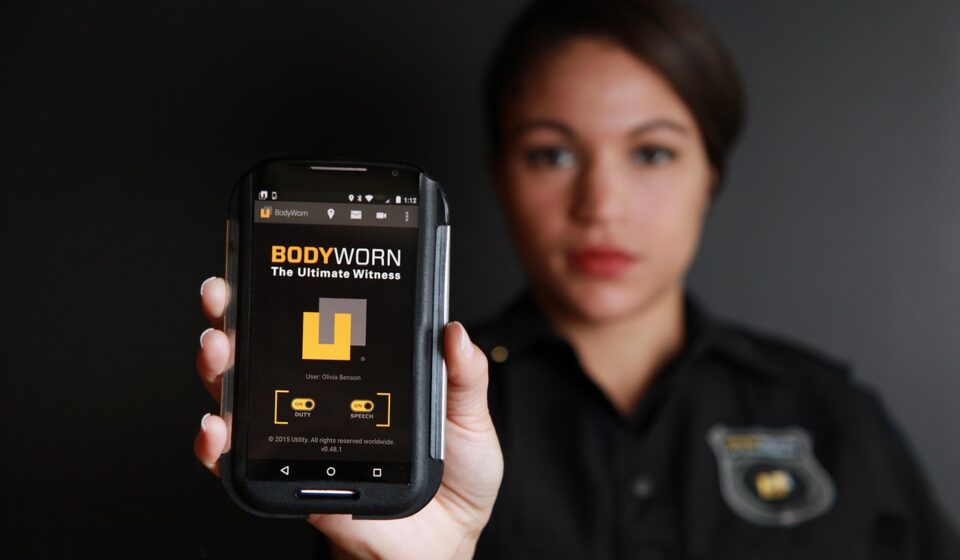
What personal safety devices do in an industrial safety system
Personal safety devices protect, warn, locate, or support individual workers when workplace hazards cannot be fully removed. In industrial settings, the category can include conventional PPE, portable gas detectors, hearing protectors, high-visibility apparel, personal fall arrest equipment, lone-worker alarms, panic buttons, and newer wearable sensors. The need is still significant even in mature safety programs. Private industry employers in the United States reported 2.5 million nonfatal workplace injuries and illnesses in 2024, down 3.1 percent from 2023, according to the U.S. Bureau of Labor Statistics. (bls.gov)
For EHS teams, procurement managers, and plant leaders, the lesson is straightforward: do not buy devices first and build the program later. A strong safety system starts with the hazard, applies controls in the right order, and then uses personal safety devices as the worker-level layer that makes those controls visible, usable, and auditable.
This article focuses on selection and integration rather than brand comparison. For more articles on industrial safety controls, monitoring, and emergency planning, visit the safety systems section.
Personal devices are the last line of defense, not the whole defense
Personal devices should not be treated as a substitute for eliminating or engineering out hazards. NIOSH describes the hierarchy of controls as a preferred order for controlling workplace exposures, with elimination and substitution at the top and personal protective equipment at the lower end. NIOSH also cautions that employers should not rely on PPE alone when other effective control options are available. (cdc.gov)
That principle changes how a plant should evaluate devices. A gas detector is valuable during confined-space entry, but it does not replace ventilation, isolation, entry permits, attendant procedures, and rescue planning. A fall arrest harness can reduce the consequence of a fall, but it does not make an unguarded edge safe by itself. Hearing protectors are important, but noise reduction at the source may be more reliable than asking every worker to wear the correct plug with a correct fit every minute of the shift.
Personal safety devices are most effective when they close a specific gap. They may detect a hazard near the worker, protect a body part, trigger an alarm, send a location signal, or create a record that supervisors can act on. If the device is not connected to a defined hazard and a defined response, it becomes an accessory rather than a control.
Start with a documented hazard assessment
In U.S. general industry, OSHA’s 29 CFR 1910.132 requires employers to assess the workplace for hazards that are present, or likely to be present, and that require PPE. When such hazards exist, the employer must select protective equipment that protects affected employees, communicate selection decisions, and select PPE that properly fits each affected employee. OSHA also requires written certification that the hazard assessment has been performed. (osha.gov)
A useful assessment for personal safety devices should be task-based, not only site-based. A facility walk-through may identify baseline requirements such as eye protection or high-visibility clothing, but individual tasks often create different exposures. Maintenance inside tanks, battery charging, forklift traffic, energized electrical work, roof access, hot work, chemical transfer, and lone inspections after hours may each require a different device set.
For each task, document four items: the hazard, the control already in place, the worker-level device needed, and the response if the device warns or fails. For example, a portable gas detector should be tied to pre-entry testing, continuous monitoring rules, calibration or bump-test practices, evacuation triggers, and rescue procedures. A lone-worker device should be tied to check-in intervals, alarm escalation, supervisor responsibilities, and what happens if GPS, Wi-Fi, cellular, or radio coverage drops.
Common categories of personal safety devices
The term personal safety devices is broad, so it helps to separate the category by function. The table below shows how common device types fit into an industrial safety system.
| Device category | Primary function | Where it is commonly used | Key selection issue |
|---|---|---|---|
| Head, eye, face, hand, foot, and body PPE | Protects the worker from impact, splash, cut, heat, electrical, or contact hazards | Manufacturing, maintenance, utilities, warehouses, processing plants | Fit, compatibility, certified design, comfort, and task-specific hazard match |
| High-visibility apparel | Improves worker conspicuity around vehicles and moving equipment | Yards, loading docks, road work, warehouses, airports, logistics operations | Appropriate garment type, performance class, background material, retroreflective material, and labeling |
| Portable gas detectors | Warns workers about oxygen deficiency, combustible gases, or toxic gases | Confined spaces, wastewater, chemical handling, oil and gas, tanks, pits, sewers | Sensor type, calibration, alarm settings, response time, sampling method, and worker training |
| Hearing protectors | Reduces noise reaching the ear | Stamping, machining, grinding, compressors, turbines, packaging lines | Noise exposure, attenuation, fit testing, compatibility with communication needs, and hygiene |
| Personal fall protection | Prevents a fall or limits fall forces after a fall begins | Platforms, roofs, ladders, mezzanines, equipment access points | Anchor point, clearance, free-fall distance, inspection, rescue plan, and user training |
| Lone-worker and panic devices | Sends distress, no-motion, man-down, or location alarms | Remote inspections, security rounds, utilities, field service, wastewater sites | Coverage, alarm routing, battery life, false alarm handling, privacy, and response time |
| Ergonomic wearables and exoskeletons | Supports posture, reduces strain, or alerts on risky movement | Manufacturing, warehousing, assembly, repetitive handling | Evidence of benefit, worker acceptance, task interference, maintenance, and data governance |
High-visibility apparel is a useful example of why labeling matters. ANSI/ISEA 107-2020 sets design, testing, performance, and labeling criteria for high-visibility safety apparel and organizes garments by type and performance class. (webstore.ansi.org) The same logic applies across the device program: the more severe or variable the hazard, the less acceptable it is to rely on vague product descriptions.
Selection criteria that matter more than features
Hazard match
The device must address the specific exposure. A multi-gas monitor selected for a permit space should match the expected atmospheric hazards, not just the most common sensor package. OSHA’s confined-space standard notes that atmospheric testing for permit spaces should test first for oxygen, then combustible gases and vapors, and then toxic gases and vapors. (osha.gov) That sequence is a reminder that device selection is part of a procedure, not a stand-alone purchase.
Fit, comfort, and compatibility
A technically correct device can still fail in use if it interferes with the job. Gloves that reduce grip, eyewear that fogs, hearing protection that blocks essential communication, and harnesses that restrict movement may lead to nonuse or misuse. Compatibility also matters across devices: safety glasses, respirators, helmets, face shields, earmuffs, and communication headsets can affect each other’s fit and protective performance.
Alarm design and human response
Personal alarms must be understandable in the environment where they will be used. A vibration alarm may help in high-noise areas, while a visual-only alarm may be insufficient in smoke, glare, or low light. OSHA’s emergency action plan requirements state that employee alarm systems must use a distinctive signal for each purpose and comply with OSHA alarm requirements. (osha.gov) For connected worker devices, the same principle applies: workers and responders must know what each alert means and what action is expected.
Maintenance and verification
Any device that depends on sensors, batteries, straps, lanyards, filters, seals, or electronics needs a verification routine. Gas detectors need calibration and functional checks according to the manufacturer’s instructions and site policy. Fall protection equipment needs inspection and removal from service when damaged or exposed to a fall event. Hearing protection adequacy should be reconsidered when noise exposures increase; OSHA’s occupational noise standard includes reevaluation of hearing protector attenuation when exposures rise enough that the protection may no longer be adequate. (osha.gov)
Connected wearables need evidence, privacy rules, and a pilot plan
Wearable safety technology is expanding quickly, especially in manufacturing, warehousing, construction, utilities, and field service. Devices may monitor posture, detect falls, track location, identify heat strain risk, support muscles, or send alerts through a wireless network. The opportunity is real, but the limitations need to be managed before deployment.
A U.S. Government Accountability Office technology assessment published in December 2024 and publicly released in January 2025 reviewed exoskeletons and ergonomic sensors in manufacturing and warehousing. GAO found that certain wearables may help workers experiencing discomfort, such as back pain, but it also found limited evidence that current wearables reduce injuries. GAO identified deployment challenges including worker practicality concerns, preference for higher-level hazard controls, and concerns about data ownership, privacy, and security. (gao.gov) See also: production equipment.
For industrial sites, cautious adoption is the practical approach. Connected wearables should usually begin with a controlled pilot, a written objective, worker participation, and clear criteria for success. A pilot might measure comfort, false alarms, battery performance, network coverage, maintenance burden, training time, and whether supervisors actually act on alerts. It should also define what data is collected, who can see it, how long it is retained, and whether it can be used for discipline, productivity tracking, or only safety intervention.
This is especially important for lone-worker and location-aware devices. The same data that helps locate a worker in distress can create mistrust if employees believe it is being used for continuous productivity surveillance. Adoption improves when the safety purpose is specific, the limits are written, and workers have a way to report nuisance alarms or task interference.
A practical implementation checklist
Before adding personal devices to a safety system, use a checklist that connects equipment to work reality. The goal is not paperwork for its own sake. It is to prevent a device from being deployed without the conditions that make it effective.
- Define the task and exposure. Identify when, where, and how the worker is exposed, including abnormal tasks such as cleaning, clearing jams, troubleshooting, and emergency response.
- Apply the hierarchy of controls first. Ask whether the hazard can be eliminated, substituted, engineered out, isolated, ventilated, guarded, or controlled administratively before relying on the individual device.
- Select the device against a standard or documented requirement. Use applicable OSHA requirements, consensus standards, manufacturer instructions, and site procedures to avoid vague specifications.
- Test usability with workers. Include the people who will wear or carry the device. Evaluate comfort, motion, visibility, grip, hearing, communication, and interference with other PPE.
- Write the response rule. Define what happens when the device alarms, loses signal, fails inspection, reaches low battery, or is damaged.
- Train for use and limitations. Workers should know how to inspect, wear, activate, silence, report, clean, store, and remove the device from service.
- Assign maintenance ownership. Decide who checks batteries, sensors, firmware, straps, filters, calibration records, and inspection logs.
- Review after incidents and near misses. If an alarm was ignored, not heard, delayed, or misunderstood, revise the device choice or the procedure.
The strongest programs treat personal devices as part of a feedback loop. Alarm histories, inspection failures, nuisance alerts, near misses, and worker complaints can reveal where engineering controls, staffing, layout, ventilation, guarding, or training need improvement.
Common mistakes to avoid
The first mistake is buying a device because it is popular rather than because it solves a documented hazard. The second is assuming that a connected device automatically improves safety. A panic button with no responder, a gas alarm with no evacuation discipline, or an ergonomic sensor with no job redesign process may create data without reducing risk.
The third mistake is ignoring fit and diversity among workers. A single glove, harness, eyewear, respirator, or wearable form factor may not fit all body types or job movements. OSHA’s general PPE rule specifically includes proper fit as part of equipment selection. (osha.gov)
The fourth mistake is failing to plan for maintenance. Personal safety devices are close to the worker, so they are exposed to sweat, dust, chemicals, shock, weather, vibration, dropped tools, cleaning agents, and battery cycles. A device that is not inspected or maintained becomes a false assurance.
The final mistake is treating privacy as an afterthought. If a device collects location, motion, fatigue, posture, or physiological data, the organization should define boundaries before deployment. Clear governance is not only an ethics issue; it affects worker acceptance and data quality.
Frequently asked questions
Are personal safety devices the same as PPE?
Some are PPE, but not all. Gloves, eyewear, hearing protectors, high-visibility apparel, respirators, and fall arrest components are typically PPE or personal protective systems. Lone-worker alarms, panic buttons, and wearable sensors may be better described as personal monitoring, alerting, or communication devices. In practice, they should all be selected through the same hazard-based safety process.
Can wearable safety devices replace engineering controls?
Usually no. Wearables can add warning, support, detection, or documentation, but they do not remove the hazard. NIOSH’s hierarchy of controls places elimination, substitution, and engineering controls above PPE, and GAO’s 2024 assessment noted that some stakeholders may prefer higher-level controls before deploying industrial wearables. (cdc.gov)
How often should portable gas detectors be checked?
The correct interval depends on the manufacturer’s instructions, sensor type, site policy, and exposure severity. At minimum, the program should define calibration, bump testing or functional checks, battery charging, alarm verification, recordkeeping, and removal from service. The key is to make the check routine clear enough that workers do not have to guess before entry or field work.
What records should an industrial site keep?
Useful records include the hazard assessment, device selection rationale, training records, fit or assignment records, inspection logs, calibration or functional check records, maintenance history, alarm response reviews, incident investigations, and privacy or data-use rules for connected devices. The records should show not only that the device exists, but that it is suitable, maintained, and linked to action.
What is the best way to improve an existing device program?
Start by reviewing tasks with the highest risk, most alarms, most near misses, or most worker complaints. Check whether each device still matches the hazard, whether workers use it correctly, whether supervisors respond consistently, and whether a higher-level control would reduce dependence on the device. Improvements often come from simplifying the device set, improving fit, clarifying alarms, and strengthening maintenance discipline.