Warehouse equipment types and selection factors for industrial facilities
Why warehouse equipment choices matter now
Warehouse equipment decisions should start with throughput, product risk and safety requirements, not with a catalog search. Racks, forklifts, conveyors, dock systems, packing stations and automation all affect inventory flow, usable space and employee safety. Market conditions make that planning more important: the U.S. Census Bureau reported on August 18, 2026 that U.S. retail e-commerce sales reached $340.2 billion in the second quarter of 2026 and represented 17.1% of total retail sales, while the Bureau of Labor Statistics reported a 2024 total recordable injury and illness rate of 4.8 cases per 100 full-time workers in warehousing and storage. (census.gov)
For industrial facilities, the equipment package must support faster order profiles without creating unsafe aisles, overloaded racks or systems that are difficult to maintain. The objective is not to buy the most advanced equipment available. It is to match equipment to product dimensions, order volume, labor availability, facility layout, fire protection limits and future operating flexibility.
What counts as warehouse equipment
Warehouse equipment is the set of physical systems used to receive, store, move, pick, pack, identify and ship materials. In production and distribution environments, it overlaps with material handling equipment, storage infrastructure and operational technology. Readers comparing broader production equipment should treat warehouse assets as part of the same operating system rather than as isolated purchases.
- Storage systems: selective pallet racking, drive-in racks, push-back racks, pallet-flow racks, cantilever racks, shelving, mezzanines and bins.
- Material handling vehicles: forklifts, reach trucks, order pickers, pallet jacks, tow tractors and carts.
- Conveyance and sortation: belt conveyors, roller conveyors, accumulation lines, sorters and transfer devices.
- Dock equipment: dock levelers, restraints, seals, shelters, doors, bumpers and yard safety systems.
- Packing and workstation equipment: benches, scales, label printers, carton erectors, strapping tools and ergonomic accessories.
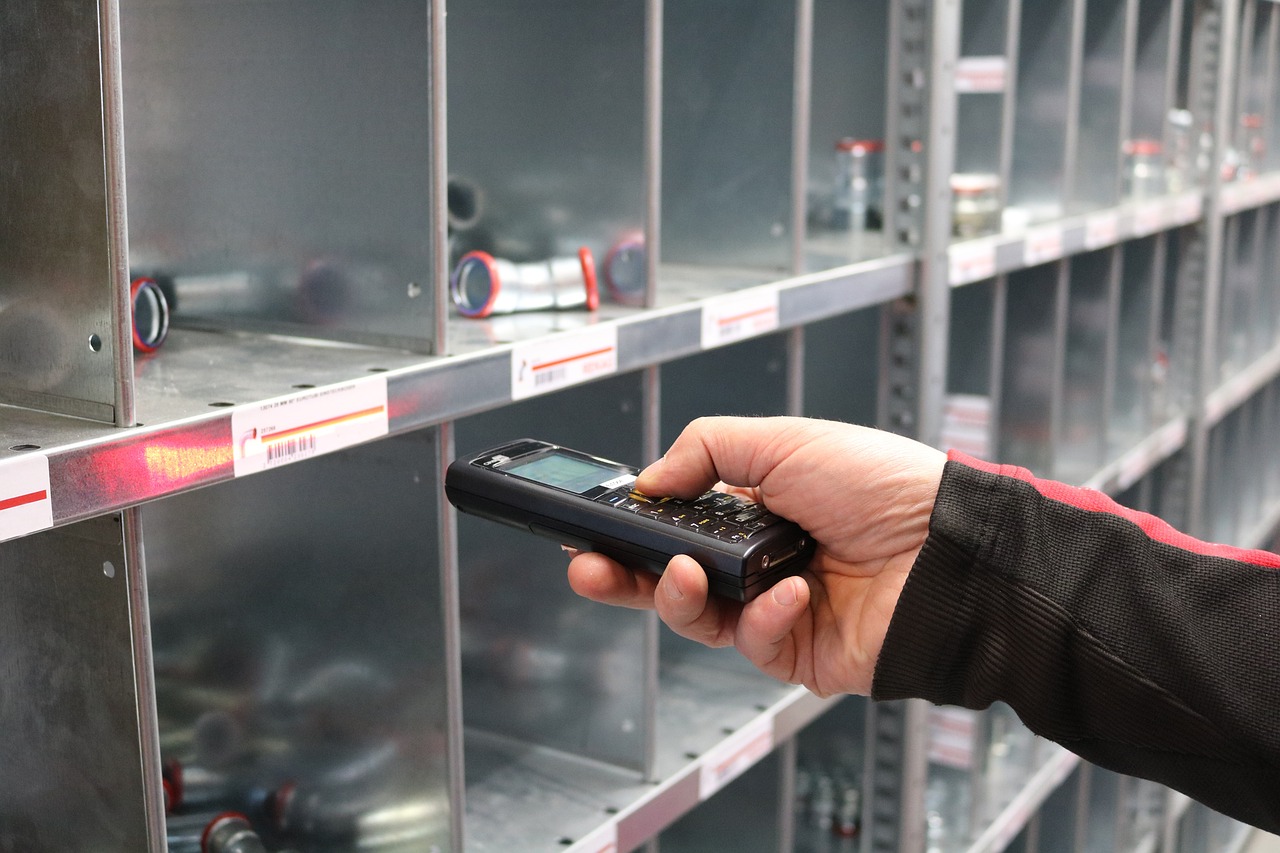
- Identification and control: barcode scanners, RFID portals, dimensioning systems, warehouse management software interfaces and mobile terminals.
- Automation: automated storage and retrieval systems, goods-to-person systems, automated guided vehicles, autonomous mobile robots and robotic palletizing or depalletizing cells.
These categories are connected. A narrow-aisle reach truck may increase storage density, but it also changes rack layout, floor flatness expectations, battery charging space and operator training requirements. A conveyor can reduce walking, but it may also create pinch points, limit maintenance access and lock part of the process into a fixed path that is harder to change later.
Start selection with product, process and risk
A sound warehouse equipment plan usually begins with a map of the operation. A facility storing heavy industrial components has different needs from one shipping small e-commerce parcels. A cold storage warehouse, a spare-parts room and a manufacturing-side supermarket may all use racks and forklifts, but their temperature, speed, traceability and safety constraints differ.
| Planning question | Why it affects equipment | Evidence to collect |
|---|---|---|
| What are the largest, smallest, heaviest and most fragile units? | Determines rack beam capacity, pallet type, fork length, conveyor design and packaging support. | SKU dimensions, pallet weights, load photos and damage history. |
| How many order lines move per hour and per shift? | Separates low-speed storage needs from high-throughput picking or sortation needs. | Order history, peak-day profile, receiving volume and shipping cut-off times. |
| How many pallet positions and pick faces are required? | Drives the choice between selective rack, dense storage, flow systems or automated storage. | Inventory turns, reserve stock, pick frequency and seasonal buffers. |
| Where do people and vehicles cross paths? | Identifies risks that may require guardrails, marked walkways, traffic controls or layout changes. | Spaghetti diagrams, near-miss reports and forklift travel paths. |
| What might change in three to five years? | Prevents overspending on rigid systems or underbuilding for predictable growth. | Sales forecast ranges, customer service targets and lease or building constraints. |
This front-end work is often more useful than comparing equipment brands too early. It shows whether the real constraint is storage density, labor travel, dock congestion, picking accuracy, packaging capacity or safety exposure. Each constraint points to a different equipment response.
The main equipment groups and where they fit
Storage and racking
Storage equipment defines cube utilization and access. Selective pallet rack is common because every pallet position is accessible, which makes it flexible for mixed-SKU operations. Dense systems such as drive-in, push-back or pallet-flow racks can improve space use, but they reduce direct access or require stricter inventory rotation. Cantilever racks are better suited to long materials such as pipe, lumber or profiles, while shelving and bin systems support small parts.
Rack specification should not rely only on nominal capacity labels. The Rack Manufacturers Institute and ANSI MH16.1-2023 address design, testing and utilization requirements for industrial steel storage racks, including certain rack-supported systems and automated storage and retrieval rack structures. The ANSI Blog summary also notes that the standard includes load capacity calculations based on frame design, material strength and seismic zoning. (blog.ansi.org)
Material handling vehicles
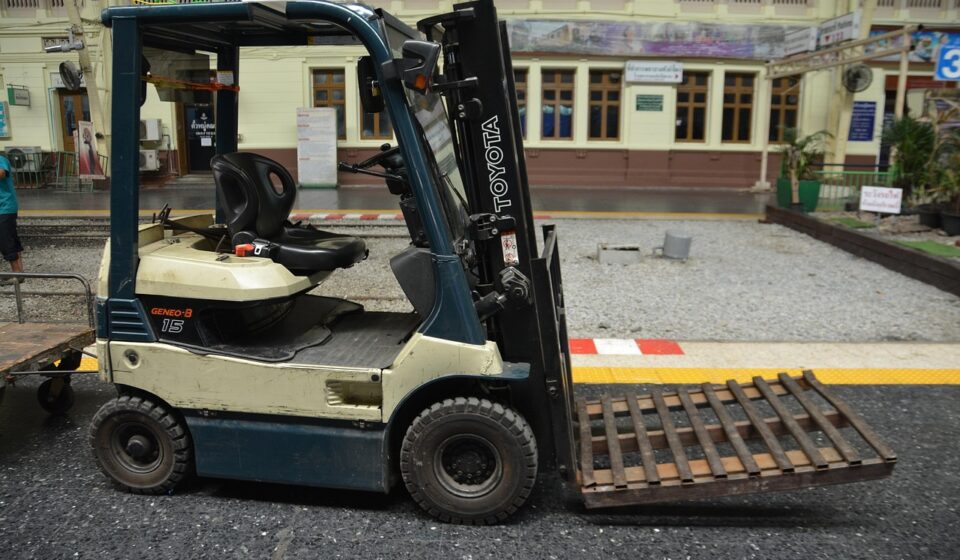
Forklifts and other powered industrial trucks are flexible because they can support receiving, storage, replenishment and shipping. Counterbalance forklifts work well for general pallet movement, while reach trucks and turret trucks support narrower aisle layouts. Order pickers can improve piece-picking from elevated locations, and pallet jacks may be sufficient for short horizontal movement in low-lift operations.
The tradeoff is that vehicles require aisle width, charging or fueling infrastructure, inspection routines and trained operators. OSHA’s powered industrial truck standard, 29 CFR 1910.178, covers requirements related to design, maintenance and use of fork trucks, tractors, platform lift trucks, motorized hand trucks and other specialized industrial trucks in general industry. (osha.gov)
Conveyors, sortation and automated storage
Conveyors make sense when material follows a repeatable path at sufficient volume. They can reduce manual carrying and stabilize flow between picking, packing and shipping. Sortation equipment becomes more attractive when outbound orders must be separated quickly by carrier, route, zone or customer.
Automation should be justified by process data. Automated storage and retrieval systems, goods-to-person systems, autonomous mobile robots and robotic palletizers can improve speed or ergonomics in the right environment, but they also add software integration, maintenance skills and exception-handling requirements. MHI’s 2026 industry coverage describes supply chains as being shaped by economic uncertainty, labor shortages, rising customer expectations and accelerating technological change, which helps explain why many operators are evaluating automation more seriously. (mhisolutionsmag.com)
Dock, packing and identification equipment
Dock equipment is easy to underestimate because it sits at the edge of the warehouse, yet it controls the rhythm of inbound and outbound work. Dock levelers, vehicle restraints, seals and shelters influence trailer safety, weather protection and loading speed. Poor dock design can cause staging congestion even when the storage area is well organized.
Packing and identification equipment also deserves attention. Dimensioning, scales, label printers, scanners and ergonomic workstations can reduce rework and improve shipment accuracy. In parcel-heavy operations, a bottleneck at pack-out can offset the benefits of faster picking equipment.
Safety and compliance checks before buying
Equipment decisions should be checked against safety and code requirements before purchase orders are issued. In the United States, OSHA’s general material handling rule at 29 CFR 1910.176 requires sufficient safe clearances where mechanical handling equipment is used, clear and well-maintained aisles and passageways, appropriate marking of permanent aisles and secure storage that does not create hazards from sliding or collapse. (osha.gov)
- Aisles and turning clearances: Compare equipment manufacturer turning-radius data with actual rack, column, door and dock positions. A layout that works on a clean drawing may fail when pallets, guards or building columns reduce usable width.
- Rack capacity and impact protection: Use engineered load data, posted capacities and damage inspection routines. Upright protectors, end-of-aisle guards and bollards may be necessary where vehicle traffic is frequent.
- Operator training and inspections: Powered industrial trucks require operator controls, inspection discipline and maintenance records. A low-cost used lift truck can become expensive if batteries, brakes, hydraulics or safety devices are unreliable.
- Fire protection limits: Storage height, commodity type, pallet material, aisle width and rack configuration can affect sprinkler design. NFPA 13 is widely used for sprinkler system design, but local adoption and insurer requirements should be confirmed with qualified fire protection professionals.
- Ergonomics: Lift assists, adjustable benches, turntables and better slotting may deliver meaningful benefits before a facility invests in large automation projects.
These checks are not a formality. They can change the equipment type, layout density and total project cost. For example, a dense rack layout may look attractive until sprinkler limitations, emergency egress, rack anchoring, forklift aisle width and staging needs are fully considered. See also: automation systems.
How current market signals affect equipment priorities
Public data does not tell a facility which machine to buy, but it does help explain why warehouse equipment planning has moved from a back-office task to a strategic operations decision.
| Source signal | What it indicates | Equipment implication |
|---|---|---|
| U.S. Census Bureau, August 18, 2026 | Second-quarter 2026 e-commerce sales were estimated at $340.2 billion, up 12.2% from the second quarter of 2025 and equal to 17.1% of total retail sales. (census.gov) | More facilities need equipment that supports smaller orders, faster replenishment, returns handling and accurate parcel processing. |
| Bureau of Labor Statistics, 2024 warehousing and storage data | Warehousing and storage recorded 32 fatalities and a total recordable injury and illness rate of 4.8 per 100 full-time workers. (bls.gov) | Safety-related equipment, traffic separation, training support and ergonomic handling should be part of the equipment budget. |
| MHI 2026 industry coverage | Industry reporting highlights labor pressure, customer expectations and technological change as continuing forces in supply chain operations. (mhisolutionsmag.com) | Automation should be evaluated where it solves a measured constraint, but flexible equipment remains important under uncertainty. |
| OSHA material handling standards | Rules on clear aisles, stable storage and powered industrial trucks set practical boundaries for layout and vehicle use. (osha.gov) | Compliance requirements should be built into layout design before equipment is ordered. |
The practical takeaway is balanced investment. A warehouse may need more rack positions, but it may also need better aisle discipline. It may need automation, but only after slotting, packaging and data accuracy problems are under control. It may need new forklifts, while the best return could still come from a revised traffic plan and a safer dock interface.
A practical specification checklist
- Define the operating profile. Document inbound pallets, outbound orders, SKU count, peak volume, storage days, returns volume and carrier cut-off times.
- Measure the building. Confirm clear height, column grid, dock positions, floor condition, fire protection, power availability and expansion constraints.
- Classify inventory. Group products by size, weight, velocity, hazard characteristics, temperature needs and handling sensitivity.
- Model the flow. Separate receiving, reserve storage, forward picking, replenishment, value-added work, packing, staging and shipping.
- Check safety boundaries. Validate aisle widths, pedestrian routes, rack loads, storage stability, dock controls and emergency access.
- Compare total cost, not only purchase price. Include installation, permitting, training, energy use, maintenance, spare parts, software integration and downtime risk.
- Plan for change. Favor modular rack, movable workstations and scalable controls where demand is uncertain.
- Review with qualified parties. Structural engineers, fire protection specialists, safety managers and equipment suppliers may each identify constraints that operations teams miss.
This checklist applies to both new facilities and retrofit projects. In a retrofit, the most important step is often identifying which existing equipment should remain, which should be relocated and which creates hidden bottlenecks.
Common mistakes to avoid
Buying equipment before fixing data. Poor item dimensions, inaccurate inventory and weak location discipline can make even good equipment underperform.
Maximizing storage density at the expense of flow. High-density storage may reduce rent per pallet, but it can increase travel, touches and congestion if the order profile requires frequent access.
Ignoring maintenance access. Conveyors, lifts, doors and automation need safe access for inspection and repair. If maintenance space is designed out of the layout, downtime becomes harder to control.
Treating automation as a single project rather than a system change. Automated equipment depends on software, process discipline, spare parts, trained technicians and exception workflows.
Underestimating docks and staging. Many warehouses lose capacity at the dock, not in the rack. Trailer arrival patterns, staging lanes and labeling quality can determine whether equipment inside the building performs as intended.
Frequently asked questions
What is the most important warehouse equipment for a small facility?
For many small facilities, the first priorities are safe storage, reliable pallet movement, clear labeling and organized packing space. Selective pallet rack, pallet jacks or forklifts, workbenches, scales and barcode labeling may deliver more immediate value than advanced automation.
When should a warehouse consider automation?
Automation is worth evaluating when the process is repetitive, volume is high enough to support the investment, labor constraints are persistent and data quality is strong. If order profiles change constantly or basic slotting is unresolved, modular manual or semi-automated equipment may be a safer first step.
How often should pallet racks be inspected?
Racks should be checked regularly and after any impact, load change, relocation or visible deformation. A qualified rack professional should review damaged components, uncertain capacities or modifications. Local code, insurer requirements and company safety policy may set more specific intervals.
Do forklifts always require wider aisles than pallet jacks?
Usually, but aisle requirements depend on the exact truck type, load size, turning radius and operating method. Counterbalance forklifts generally need more room than pallet jacks, while reach trucks and turret trucks are designed for narrower aisles under the right floor and rack conditions.
What is the biggest hidden cost in warehouse equipment projects?
Installation disruption is often underestimated. Moving racks, changing traffic routes, adding power, modifying sprinklers, training operators and integrating software can affect operations before the new equipment produces benefits.