Small construction equipment guide for compact jobsites and fleets
Small construction equipment is now a fleet strategy, not just a size category
Small construction equipment refers to compact machines that solve access, transport, labor and utility problems on restricted jobsites. The category includes mini excavators, skid steer loaders, compact track loaders, compact utility loaders, trenchers, compactors, small lifts and portable power units. For a contractor, plant maintenance team or rental buyer, the core question is not simply which machine is smaller. It is which machine can enter the site, handle the required load, dig or lift safely, run the needed attachment, move legally and efficiently between jobs, and be supported over its service life. This guide explains the main categories, selection specs, safety constraints and 2026 fleet trends shaping production equipment decisions.
What counts as small construction equipment?
There is no single global definition for small construction equipment. In practice, the term covers machines that are smaller than full-size earthmoving or lifting equipment but still rely on industrial hydraulics, engines, batteries, attachments or work tools. The Association of Equipment Manufacturers classifies commercial worksite equipment into categories such as skid steer loaders, compact track loaders, compact utility loaders, trenchers, rough-terrain forklifts, telehandlers and compact backhoe configurations. That approach is useful because compact equipment is defined by application and machine architecture, not by weight alone.
| Equipment type | Common work | Key specification to check | Main limitation |
|---|---|---|---|
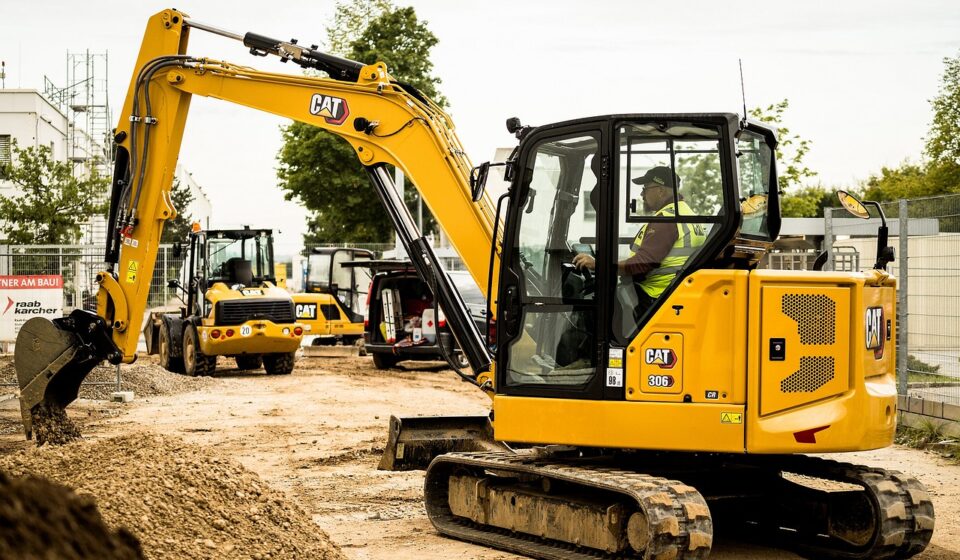
| Mini or compact excavator | Trenching, utility work, small demolition, footings, drainage | Operating weight, dig depth, reach, bucket breakout force, auxiliary hydraulic flow | Limited lift capacity compared with larger excavators |
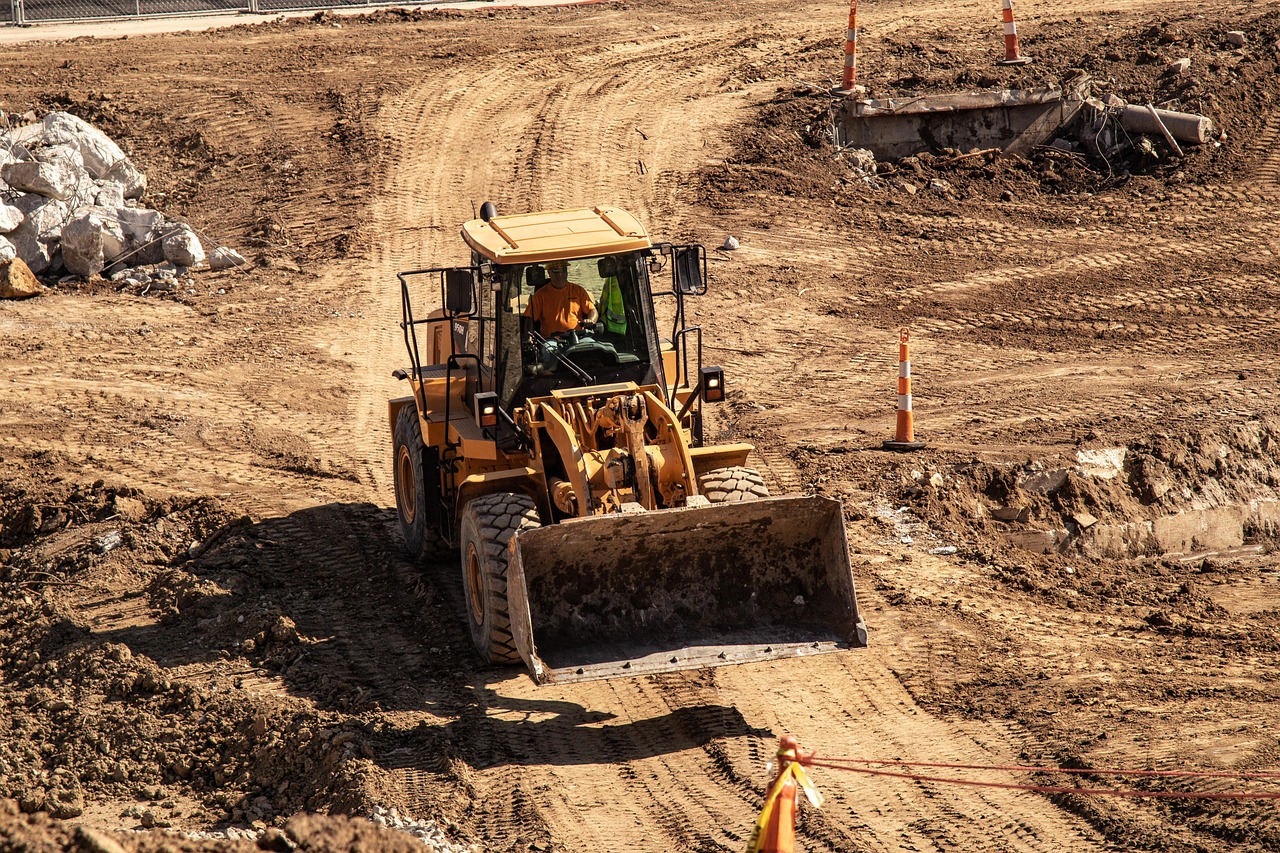
| Skid steer loader | Loading, grading, material handling, snow removal, attachment work | Rated operating capacity, lift path, hydraulic flow and machine width | Wheel traction and ground disturbance on soft soil |
| Compact track loader | Earthmoving, landscape work, rough terrain, attachment-heavy jobs | Rated operating capacity, ground pressure, undercarriage durability and hydraulic flow | Higher undercarriage wear cost than wheeled machines |
| Compact utility loader | Backyards, landscaping, small trenching, material movement through narrow access | Width, operating load, stand-on or walk-behind design, attachment compatibility | Lower capacity and operator protection than larger cabbed loaders |
| Walk-behind or ride-on compactor | Trench backfill, asphalt patching, small foundations, hardscape work | Plate size, centrifugal force, compaction depth and surface type | Not suitable for large production paving or mass earthwork |
| Compact aerial lift or small scissor lift | Indoor finishing, maintenance, overhead installation | Platform height, load rating, floor loading, power source and turning radius | Requires stable surfaces and proper fall protection planning |
A compact machine should not be treated as light-duty simply because it is small. Many incidents happen when a machine looks easy to approach but still carries enough hydraulic force, weight and stored energy to crush, strike, overturn or pin a worker.
Why compact machines are getting more attention in 2026
Several conditions are pushing compact machines into mainstream fleet planning. First, more work is taking place on congested urban, commercial, utility and retrofit sites where turning radius, machine width and ground pressure can determine whether equipment can reach the work area at all. Second, labor availability remains a constraint. In a Sept. 3, 2026 workforce survey, the Associated General Contractors of America and NCCER reported that labor shortages remained a leading cause of project delay, with 1,830 survey respondents contributing to the results. Compact equipment cannot solve workforce shortages on its own, but one trained operator with the right attachment can often reduce the amount of hand labor required for repetitive digging, hauling, cleanup or material handling.
Third, rental is influencing how fleets are built. The American Rental Association has estimated that total equipment and event rental industry revenues would approach $100 billion by 2026, and it projected 2026 investment in new equipment at $23.4 billion for the construction equipment and tool segment. For contractors, that means access to compact machines is increasingly available through rental channels, although popular sizes and attachments may still be difficult to secure during peak seasons.
Fourth, emissions rules and jobsite restrictions are changing equipment choices. The U.S. Environmental Protection Agency regulates nonroad diesel engines through tiered emission standards, including Tier 4 requirements for newer nonroad compression-ignition engines. At the same time, the Association of Equipment Manufacturers has described battery-electric power as a visible alternative for compact construction machinery such as skid steers and compact wheel loaders, while also noting barriers such as charging infrastructure, upfront cost and battery reliability concerns. The practical takeaway is straightforward: electric machines can be a good fit for indoor, urban, low-noise or emissions-sensitive work, while diesel remains important where long duty cycles, remote locations or limited charging access dominate.
How to choose the right compact machine
Start with the job envelope
Before comparing horsepower, define the physical limits of the work. Measure gate width, floor load limits, slope, overhead clearance, turning space, haul distance, soil condition, access road quality and trailer loading space. A machine with slightly less power but safe access to the work area will usually be more productive than a larger unit parked outside the gate.
Match capacity to the heaviest real task
For loaders, rated operating capacity and tipping load are more useful than engine power alone. For excavators, check dig depth, reach, lifting chart, bucket force and tail swing. For compactors, match compaction force and plate or drum type to the material. For aerial lifts, verify platform height and rated platform load, then confirm floor loading and ground conditions before the machine arrives.
Check hydraulic flow and attachment requirements
Attachments are a major reason contractors buy small construction equipment, but they are also a common source of mismatch. Augers, trenchers, breakers, planers, brush cutters, brooms and grapples may require specific flow, pressure, case drain lines, couplers, electrical controls or machine weight. A high-flow attachment on a standard-flow loader will underperform. An oversized attachment can damage components or make the machine unstable.
Plan transport before purchase or rental
Operating weight is not the same as transport weight. Buckets, forks, extra attachments, fuel, fluids, trailer weight and tie-down hardware all count. For small contractors, the cost of upgrading a truck, trailer, brake controller or licensing arrangement can change the economics of a compact equipment purchase. A realistic transport plan should include loading angle, tie-down points, gross vehicle weight rating, axle ratings and driver requirements.
Comparing common compact equipment choices
The right first machine depends on the work mix. A mini excavator is usually the better choice for trenching, foundations, drainage, stump removal and precise digging. A skid steer or compact track loader is usually better for loading, spreading, grading, carrying pallets with forks and running a wide range of front-mounted attachments. A compact utility loader can be the practical choice for landscaping, backyard access and small residential work where width is the deciding factor.
| Decision | Better fit | Why it matters |
|---|---|---|
| Mostly trenching and digging | Mini excavator | Dig depth, reach and boom control are central to productivity |
| Mostly loading and cleanup | Skid steer or compact track loader | Fast cycle times and bucket capacity are more important than dig reach |
| Soft ground or slopes | Compact track loader | Tracks spread weight and improve traction, although undercarriage cost rises |
| Hard pavement and frequent travel | Wheeled skid steer | Tires can be cheaper to maintain than tracks on abrasive surfaces |
| Narrow residential access | Compact utility loader | Small width may be more valuable than high horsepower |
| Indoor or noise-sensitive work | Electric compact equipment where charging is available | Lower local emissions and quieter operation can support restricted sites |
Many fleets eventually pair a compact excavator with a compact loader. The excavator digs, demolishes or places material precisely; the loader carries, grades, backfills and handles attachments. The combination often delivers more flexibility than one larger machine, but it also requires more transport planning, attachment management and operator training.
Safety and compliance cannot be scaled down
Small equipment can reduce access problems, but it does not reduce the employer’s duty to manage risk. OSHA’s construction standards for motor vehicles and mechanized equipment include requirements for safe equipment conditions, parking, blocking and operation. OSHA 1926.600 states that suspended or raised heavy machinery, equipment or parts must be substantially blocked or cribbed before employees work under or between them, and that blades, buckets, dump bodies and similar equipment must be lowered or blocked when repaired or not in use.
OSHA’s struck-by guidance also warns that workers can be pinned between vehicles and walls, struck by swinging equipment, crushed beneath overturned vehicles or injured by reversing equipment. Relevant controls include pre-shift checks, seat belt use where required, reverse alarms or signalers where rear views are obstructed, rated load limits, barricades and keeping people clear before dumping or lifting.
Skid steers and compact track loaders deserve particular attention because the operator works close to lift arms, buckets and attachment movement. NIOSH has long warned about injuries and deaths involving workers pinned by skid-steer loader lift arms, buckets or frames. Practical controls include using the seat belt and restraint system, never bypassing interlocks, using approved lift-arm supports during maintenance, keeping bystanders outside the work zone and following the manufacturer’s operating manual. See also: automation systems.
Internationally, ISO 20474-1:2017 covers general safety requirements for earth-moving machinery and is intended to be used with machine-family-specific parts of the ISO 20474 series. For buyers, the point is not to memorize every standard number. It is to confirm that the machine, attachment and operating procedure are supported by recognized safety requirements, training and documentation.
Ownership, rental and lifecycle economics
The cheapest machine on the first invoice is not always the lowest-cost machine. Compact equipment economics include utilization, maintenance, attachments, transport, downtime, insurance, fuel or charging, operator training and resale value. Track loaders may outperform wheeled skid steers on soft ground, but their undercarriage costs can be higher. Electric equipment may reduce local emissions and some maintenance items, but the duty cycle must fit charging time and battery capacity. Used equipment may look attractive, but hydraulic leaks, worn pins, damaged undercarriages, missing guards, incomplete service records or emissions system problems can erase the savings.
| Option | When it makes sense | What to verify |
|---|---|---|
| Rent | Short projects, uncertain utilization, one-off attachments or seasonal peaks | Delivery timing, included hours, attachment availability, damage terms and training needs |
| Buy new | High utilization, standardized fleet, warranty value and predictable support needs | Dealer coverage, parts supply, warranty exclusions, financing and transport cost |
| Buy used | Known application, strong inspection process and available maintenance capability | Hours, service records, hydraulic condition, pins and bushings, tracks or tires, safety devices and emissions compliance |
A disciplined fleet plan starts with utilization. If a compact excavator will work only a few weeks per year, rental may be more rational. If a loader runs every week with multiple attachments, ownership can improve availability and operator familiarity. For mixed fleets, standardizing couplers, hydraulic connectors and attachment controls can reduce downtime and training complexity.
Future-ready decisions for compact fleets
Three trends should influence compact equipment planning through 2026 and beyond. The first is attachment specialization. More contractors are using compact loaders as tool carriers for trenching, sweeping, grading, brush cutting, snow removal, material handling and light demolition. That increases the value of hydraulic compatibility, quick-coupler quality and operator training.
The second trend is data. AEM has described mixed-fleet data and connected machine systems as a productivity trend for construction operations. For small equipment, the most practical uses are location tracking, utilization records, service alerts, fault codes and theft reduction. Advanced automation may attract attention, but basic uptime and maintenance data often produce the first measurable benefit.
The third trend is power-source flexibility. Diesel, battery-electric and alternative fuel technologies will coexist. A practical fleet policy should match power source to duty cycle, site rules and support infrastructure. Battery-electric compact machines are strongest where noise, indoor work, ventilation or local emissions are decisive. Diesel remains strong where refueling speed, long shifts, cold weather or remote work are more important.
Pre-purchase and pre-rental checklist
- Define the heaviest lift, deepest dig, narrowest access point and longest duty cycle before comparing models.
- Confirm operating weight, transport weight and trailer capacity with attachments included.
- Match hydraulic flow, pressure, couplers and electrical controls to every planned attachment.
- Review ROPS, FOPS, seat belts, interlocks, guards, alarms, lights and operator visibility.
- Ask for the operator manual, maintenance schedule, inspection checklist and training requirements.
- For used machines, inspect pins, bushings, undercarriage, tires, cylinders, hoses, quick couplers, leaks and service records.
- For electric machines, verify charging power, charger compatibility, runtime assumptions and cold-weather performance.
- For rental machines, reserve attachments early and confirm delivery, pickup, damage terms and included operating hours.
Frequently asked questions
What is considered small construction equipment?
It usually means compact machines used for digging, loading, lifting, compacting, trenching, access or portable power. Examples include mini excavators, skid steers, compact track loaders, compact utility loaders, trenchers, plate compactors, small rollers and compact aerial lifts. The exact definition varies by manufacturer, market and application.
Is a skid steer or mini excavator better as a first machine?
A skid steer or compact track loader is often more versatile for loading, cleanup, grading and attachment work. A mini excavator is better when the core work is digging, trenching, drainage, foundations or demolition. Many small fleets eventually use both because the machines complement each other.
When does electric small construction equipment make sense?
Electric compact equipment makes the most sense for indoor work, urban sites, night work, emissions-restricted areas and applications with predictable duty cycles. It is less suitable when charging is unavailable, shifts are long, the site is remote or cold-weather battery performance is uncertain.
Which specs matter most?
For loaders, focus on rated operating capacity, tipping load, hydraulic flow, lift path, operating weight, width and attachment compatibility. For compact excavators, focus on operating weight, dig depth, reach, bucket force, lift chart, tail swing and auxiliary hydraulics. For any machine, transport and safety specifications should be checked before price.
Can small construction equipment replace full-size machines?
Sometimes, but not always. Compact equipment can replace larger machines on tight sites, short hauls, finish work, utility work and attachment-driven tasks. Full-size machines remain necessary for high-volume earthmoving, heavy lifting, deep excavation, long production cycles and applications where capacity is more important than access.