Automation and control systems for industrial equipment upgrades

What automation and control systems do in an industrial plant
Automation and control systems turn isolated industrial equipment into coordinated, measurable and repeatable production assets. In daily operation, they collect signals from sensors, execute control logic, drive motors and actuators, display machine status, record operating data and help operators respond to abnormal conditions.
For an equipment upgrade, the objective is not simply to install a PLC or replace an operator screen. A well-planned upgrade should improve uptime, product consistency, energy awareness, maintainability and safe operation without adding avoidable cybersecurity or integration risk.
For more coverage of related industrial technologies, visit the automation systems section. This article focuses on how engineers, maintenance teams and plant managers can evaluate automation architecture before committing to hardware, software or migration work.
Core layers and where each system fits
A modern industrial control environment usually combines several layers. The terminology varies by sector, but the functions are broadly consistent across packaging lines, water treatment systems, process plants, energy assets, material handling systems and discrete manufacturing cells.
Field devices and drives
The field layer includes sensors, transmitters, encoders, limit switches, vision devices, valves, variable frequency drives, servo drives and motor starters. These devices provide the measurements and movement that control logic depends on.
One common upgrade mistake is replacing the controller while leaving unstable instrumentation, poor grounding or undocumented field wiring untouched. If field signals are noisy, inaccurate or unreliable, higher-level software will not solve the problem. It will usually make the problem easier to see.
PLCs, DCS and machine controllers
Programmable logic controllers are widely used for machine control, sequential control and high-speed discrete operations. Distributed control systems are more common in continuous processes where loop control, redundancy, alarm management and operator stations are closely integrated. Some equipment also relies on embedded machine controllers or motion controllers.
The right platform depends on scan time, I/O size, redundancy needs, process criticality, vendor support and the skill set of the site team. A compact standalone machine and a critical process unit may both need automation, but they do not need the same architecture.
HMI, SCADA and historians
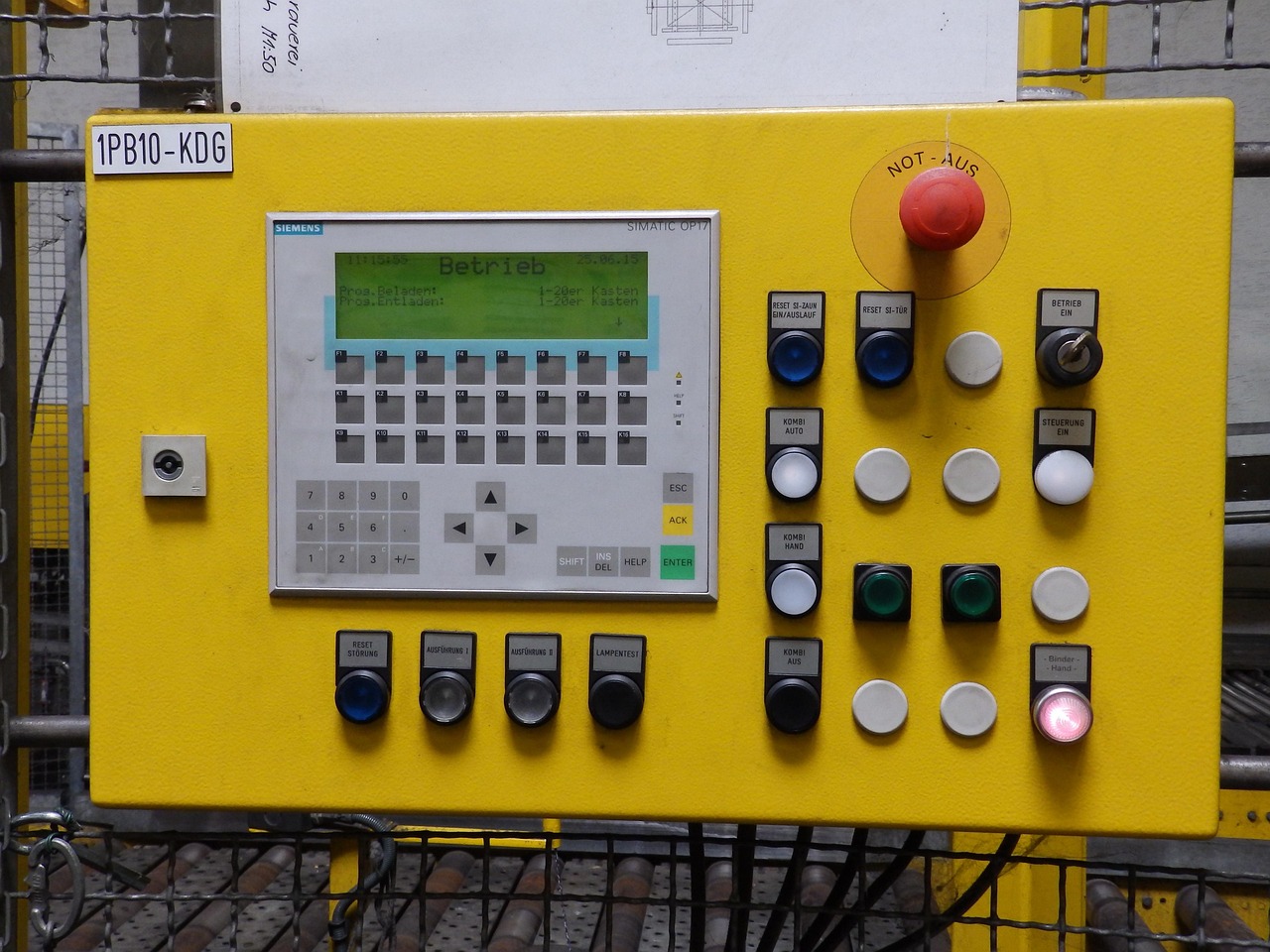
Human-machine interfaces give operators a local view of machine status, alarms and setpoints. Supervisory control and data acquisition systems extend that visibility across areas, lines or remote assets. Historians store time-series data for troubleshooting, performance analysis and regulatory evidence where applicable.
The value of these systems depends on disciplined tag naming, useful alarm priorities, readable graphics and clear responsibility for data quality. Without those basics, a plant can collect more data while still leaving operators and maintenance teams with unclear information.
MES and enterprise integration
Manufacturing execution systems connect production scheduling, work orders, quality checks, material tracking and performance reporting. ISA-95, also known internationally as IEC 62264, is often used as a reference model for defining the interface between manufacturing control functions and enterprise functions.
This separation matters because real-time control and business planning have different priorities. ISA-95 helps teams define what should remain close to the equipment and what can be shared with higher-level systems, so enterprise integration does not interfere with equipment stability.
What has changed in recent standards and guidance
Automation projects are now judged by more than throughput and labor savings. Cybersecurity, lifecycle support, interoperability and governance increasingly influence control system design. Several standards and guidance documents are useful reference points, even when they are not mandatory for a specific facility.
| Reference | Date context | Why it matters for automation projects |
|---|---|---|
| NIST SP 800-82 Rev. 3 | Published September 2023 | Provides guidance for operational technology security, including industrial control systems, PLCs, DCS and SCADA environments. |
| NIST Cybersecurity Framework 2.0 | Released February 26, 2024 | Organizes cybersecurity outcomes around Govern, Identify, Protect, Detect, Respond and Recover, which is useful for assigning accountability in OT programs. |
| ISA/IEC 62443 series | Ongoing series with updates including ANSI/ISA-62443-2-1-2024 | Defines cybersecurity requirements and processes for industrial automation and control systems across the lifecycle. |
| IEC 61131-3 | IEC lists a 2025 edition for programmable controller programming languages | Supports consistent expectations for PLC programming languages and engineering practices. |
| OPC UA and IEC 62541 | Established interoperability standard series | Supports secure and structured data exchange between industrial devices, control systems and higher-level software. |
The practical takeaway is that an automation upgrade should be documented as a lifecycle system, not treated as a one-time panel replacement. A project file should identify who owns the architecture, which assets are connected, how users are authenticated, how backups are restored, how alarms are managed and how suppliers will support the system after commissioning.
Selection criteria for an upgrade project
Before choosing a platform, teams should define the operating problem in measurable terms. Typical goals include reducing unplanned downtime, improving batch repeatability, lowering manual data entry, replacing obsolete parts, adding remote visibility or improving energy monitoring. Each goal leads to different design decisions.
Important selection criteria include:
- Control performance. Confirm scan time, loop response, motion requirements, redundancy and deterministic communication needs.
- Lifecycle support. Check hardware availability, firmware support, spare parts strategy, vendor roadmap and local engineering skills.
- Integration capability. Review support for industrial protocols, OPC UA, historian connectivity, MES integration and data modeling.
- Cybersecurity features. Evaluate user management, role-based access, secure remote access options, logging, patching guidance and network segmentation support.
- Maintainability. Favor readable logic, structured documentation, standard tag naming, version control and clear diagnostic screens.
- Safety and compliance boundaries. Keep safety instrumented functions, machine safety and process control responsibilities clearly separated and verified by qualified personnel.
Cost should be evaluated across the full lifecycle. A low purchase price can become expensive if the system depends on unusual spare parts, specialist-only troubleshooting, proprietary data access or frequent production stoppages for minor changes. At the same time, a large platform may be unnecessary for a compact machine with stable requirements and limited integration needs. See also: production equipment.
Integration and cybersecurity should be designed together
Industrial connectivity can improve visibility, but it also expands the attack surface. A plant that connects PLCs, HMIs, engineering workstations, historians and remote support tools without a network plan may gain dashboards while losing control over risk. Security therefore needs to be designed into the architecture, not added after commissioning.
A sound design starts with an asset inventory. The team should know which controllers, computers, switches, drives, servers and remote access tools are installed; what firmware or software versions they use; who can access them; and which systems they communicate with. This inventory supports maintenance planning, incident response and procurement decisions.
Network segmentation is another essential design point. Critical control traffic should not be treated the same as office traffic, guest wireless access or internet-facing services. The ISA/IEC 62443 concept of zones and conduits is useful because it encourages teams to group assets with similar risk and define controlled communication paths between them. Even when a site does not pursue formal certification, the model can improve design discipline.
Remote access deserves special attention. Vendors and internal engineers often need to diagnose equipment quickly, but permanent uncontrolled remote connections create risk. Better practice includes approved access windows, multi-factor authentication where feasible, session logging, least-privilege accounts and a process for disabling access when the work is complete.
A practical migration path for existing equipment
Brownfield equipment upgrades are usually harder than new installations. Production cannot stop indefinitely, legacy documentation may be incomplete and undocumented changes may have accumulated for years. A staged migration helps reduce that risk.
- Audit the installed base. Record controller models, I/O cards, panel condition, network devices, software versions, backup status, drawings and known failure points.
- Rank assets by business risk. Prioritize equipment with obsolete parts, high downtime impact, safety concerns, weak backups or poor diagnostic capability.
- Define the target architecture. Decide which systems remain local, which data goes to SCADA or historians, and which information is shared with MES or enterprise systems.
- Clean up data before connecting more systems. Standardize tag names, alarm messages, units, equipment identifiers and time synchronization.
- Build and test offline where possible. Use simulation, staged panels or test racks to validate logic, HMI screens, communication and alarm behavior before plant cutover.
- Plan commissioning around production reality. Prepare rollback steps, spare parts, temporary operating procedures, operator training and acceptance criteria.
- Capture the final state. Update drawings, network diagrams, backups, user lists, maintenance instructions and cybersecurity records after startup.
A useful migration plan also separates urgent replacement from strategic modernization. For example, a failing HMI may need immediate replacement, while historian deployment, MES integration and advanced analytics can follow after the control layer is stable. This reduces the chance of combining too many risks in one shutdown window.
How to measure value after commissioning
An automation project should be evaluated after startup, not declared successful simply because the equipment runs. Useful metrics include unplanned downtime, mean time to repair, alarm frequency, changeover time, scrap rate, first-pass quality, energy use per unit, manual data entry time and the percentage of assets with verified backups. Not every project needs every metric, but every project should define success before purchase orders are issued.
Operator feedback is also important. If screens are confusing, alarms are excessive or manual overrides are difficult to interpret, the system may technically function while still creating operational risk. Maintenance feedback matters as well. A maintainable control system should make faults easier to isolate, not require a specialist for every sensor replacement or communication issue.
The strongest automation and control systems are not necessarily the most complex ones. They match the process, expose the right data, protect critical functions, remain serviceable over time and help people make better decisions under pressure.
Frequently asked questions
What is the difference between automation and control systems?
Control systems regulate equipment behavior through logic, feedback and actuation. Automation is the broader application of control, sensing, software, data and operating procedures to reduce manual intervention and improve repeatability. In industry, the terms often overlap because most automation projects include one or more control systems.
Is SCADA the same as a PLC?
No. A PLC executes control logic close to the machine or process. SCADA supervises multiple devices or areas, displays information, manages alarms and often records data. A SCADA system may read from many PLCs, but it should not replace the need for reliable local control.
When should older industrial equipment be upgraded?
Common triggers include obsolete spare parts, unsupported software, frequent downtime, poor diagnostics, cybersecurity exposure, missing backups, new reporting requirements or the need to integrate production data with higher-level systems. The strongest business case usually combines operational risk with measurable improvement potential.
Do all automation upgrades require ISA/IEC 62443 compliance?
Not always. Requirements depend on the sector, customer contracts, regulation and internal risk policy. However, the ISA/IEC 62443 approach is useful even without formal certification because it encourages lifecycle thinking, defined responsibilities, segmentation and risk-based security requirements.
What should be documented before handover?
At minimum, the project should deliver updated electrical drawings, network diagrams, controller programs, HMI and SCADA backups, software versions, user roles, alarm lists, maintenance procedures, recovery steps and acceptance test records. Documentation is part of the system, not an optional extra.