Automation controls for industrial equipment and system integration
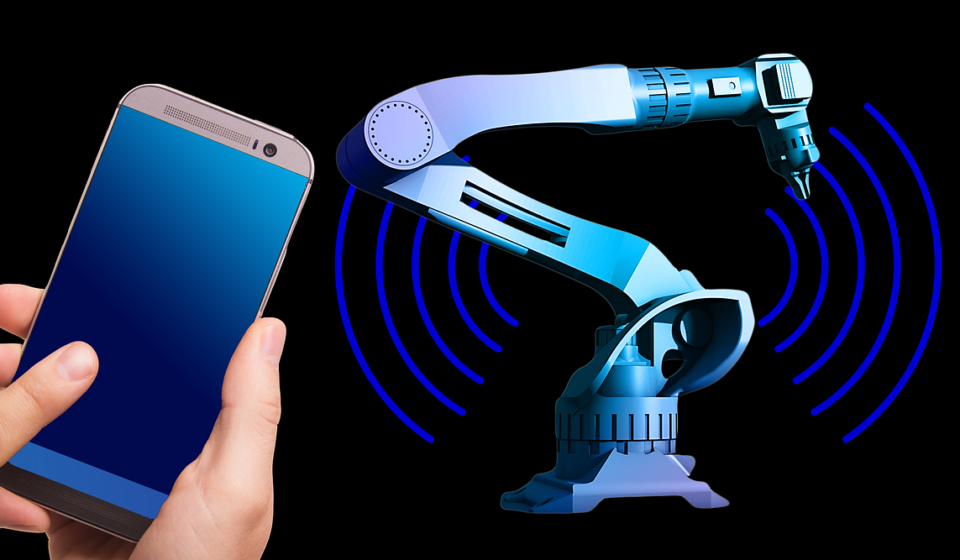
Automation controls are the hardware, software and engineering rules that keep industrial equipment running safely, consistently and measurably. They cover sensors, actuators, PLCs, distributed control systems, HMIs, SCADA platforms, industrial networks, safety functions and the data links that connect production with maintenance and business systems.
For plant teams, the question is not simply whether to automate. It is how to design controls that match the process, protect uptime, support cybersecurity requirements and remain serviceable over the equipment lifecycle. This guide explains the main control layers, where they fit in industrial architecture, and how to evaluate automation controls before a retrofit, line expansion or new equipment purchase.

What automation controls include
In industrial equipment, automation controls form a chain from physical measurement to decision logic and operator visibility. A temperature sensor, motor starter or servo drive may be purchased as a single component, but it becomes useful only when it is connected to a control strategy, network, user interface and maintenance plan.
Field devices and final control elements
Field devices measure or influence the process. Sensors detect variables such as position, pressure, temperature, vibration, flow, current or level. Final control elements act on the process through valves, motors, drives, heaters, relays, pneumatic cylinders, robots or motion axes. Choices at this layer affect accuracy, response time, durability and calibration workload.
For harsh industrial environments, the correct device is not only the one with the right measurement range. Engineers also need to consider enclosure rating, temperature tolerance, electrical noise, washdown exposure, hazardous-area requirements, connector style, spare-parts availability and the skills of the local maintenance team.
Controllers, logic and safety functions
Programmable logic controllers, programmable automation controllers and distributed control systems execute the logic that turns measurements into actions. A discrete packaging line may depend on fast PLC sequencing. A chemical process may require distributed control, loop tuning and alarm management. A machine with coordinated axes may need motion control tightly linked to the main controller.
Safety functions should be treated as a separate design responsibility, not as an afterthought inside ordinary production logic. Emergency stops, light curtains, interlocks, safe torque off, safety PLCs and safety-rated networks must be designed around risk reduction, predictable behavior and validation. The production controller may request a stop, but the safety system must be able to bring equipment to a safe state when required.
Operator interfaces and supervisory systems
Human-machine interfaces and SCADA systems give operators visibility into status, alarms, recipes, trends and manual commands. Poor interface design can create avoidable downtime if operators cannot identify the real cause of a fault or are distracted by nuisance alarms. Effective interfaces make the current state, abnormal conditions and recovery steps easy to understand.
Supervisory systems also provide historical data for maintenance planning, energy monitoring, quality analysis and production reporting. That data needs context. A motor current trend is more useful when it is linked to product type, batch, speed, downtime event and maintenance history.
Where controls fit in the industrial architecture
Industrial automation is easier to plan when teams separate control layers by function. ISA-95, also adopted internationally as IEC 62264, is widely used to describe integration between enterprise systems and control systems; ISA describes Part 3 as defining activity models for manufacturing operations management that enable enterprise-to-control integration. (isa.org)
A simplified architecture helps clarify responsibilities:
| Layer | Typical elements | Main planning question |
|---|---|---|
| Physical process | Machines, utilities, products, materials | What must be measured, moved, heated, cooled, mixed or protected? |
| Field control | Sensors, actuators, drives, valves, I/O | Can the device survive the environment and provide reliable feedback? |
| Control logic | PLCs, PACs, DCS, motion controllers, safety controllers | Does the controller meet timing, safety, redundancy and lifecycle needs? |
| Supervision | HMI, SCADA, alarms, historians | Can operators understand the process and recover from faults quickly? |
| Operations management | MES, maintenance, quality, inventory workflows | How will production data support decisions beyond the machine? |
| Business systems | ERP, planning, purchasing, reporting | Which production data must be exchanged with business applications? |
This layered view prevents two common mistakes. First, it avoids pushing business reporting requirements into PLC code, where they become difficult to maintain. Second, it keeps enterprise software teams from underestimating real-time control constraints at the machine level. More articles on related automation systems topics are available in this category.
How to select automation controls for industrial equipment
The right control platform depends on the process, the risk profile and the expected operating life. A low-cost controller may be appropriate for a simple standalone skid, but not for a multi-line production cell that needs coordinated motion, cybersecurity management, remote diagnostics and long-term spare support.
Key evaluation criteria include:
- Process type: Discrete, batch and continuous processes have different control needs. Sequence logic, recipe handling, loop control and traceability should be evaluated separately.
- Cycle time and determinism: High-speed packaging, robotics and motion applications may require deterministic networks and fast scan times.
- I/O count and signal types: Count digital, analog, safety, motion, temperature and specialty signals early. Allow spare capacity for future modifications.
- Communications: Confirm support for required industrial protocols, data models and secure remote access methods before selecting hardware.
- Maintainability: Local technicians should be able to troubleshoot the system with available tools, documentation and training.
- Lifecycle and vendor support: Controls should be assessed for firmware availability, replacement parts, migration paths and compatibility with existing plant standards.
- Environmental requirements: Panel design, grounding, heat management, electromagnetic compatibility and enclosure selection influence long-term reliability.
A practical specification should describe required functions and constraints before naming brands or catalog numbers. This gives engineering teams room to choose the most suitable architecture while still meeting plant standards.
Integration and cybersecurity must be designed together
Modern automation controls are rarely isolated. Production data moves to historians, maintenance systems, analytics platforms and sometimes cloud services. Remote support is common, and vendors may need temporary access. These connections can improve uptime, but they also expand the attack surface if they are added without segmentation, identity control and monitoring.
NIST Special Publication 800-82 Revision 3 is an official guide focused on operational technology security, including industrial control systems such as PLC, DCS and SCADA environments. (csrc.nist.gov) ISA states that the ISA/IEC 62443 series defines requirements and processes for implementing and maintaining electronically secure industrial automation and control systems, with a lifecycle approach that bridges operations, IT, process safety and cybersecurity. (isa.org)
For equipment projects, cybersecurity planning should start during design review, not after commissioning. At minimum, teams should define:
- Which assets are in scope, including controllers, HMIs, engineering workstations, network switches and remote access devices.
- Which network zones should be separated, and what traffic is allowed between them.
- How user accounts, engineering privileges and vendor access will be approved, logged and removed.
- How backups, firmware, patches and configuration files will be managed without disrupting production.
- How alarms and logs will be reviewed when abnormal network or controller behavior appears.
CISA recommended practices for industrial control systems include resources on defense-in-depth, secure remote access and related control-system protections; its published guidance also emphasizes measures such as asset inventory, network segmentation, backups and recovery testing. (cisa.gov) (cisa.gov) See also: production equipment.
Data-driven controls and measurable operational value
Automation controls now play a larger role in operational intelligence. A controller may still execute interlocks and sequences, while the data around that controller can reveal downtime patterns, energy waste, quality drift and maintenance risk. The value comes from connecting reliable machine signals with operational context.
The World Economic Forum announced on January 14, 2025 that 17 industrial sites had joined its Global Lighthouse Network, expanding the community to 189 production facilities and value chains using digital technologies at scale for performance goals such as productivity, resilience, customer centricity, sustainability and talent. Its 2025 materials also discuss examples involving analytics, flexible automation and AI-enabled design. (weforum.org)
That does not mean every facility should copy a lighthouse factory. Large global manufacturers often have capital, data teams and standardized production systems that smaller plants do not. The more practical lesson for many equipment owners is narrower: controls should be designed so that critical machine data is accurate, timestamped, accessible and tied to the decisions the plant wants to improve.
Examples of useful control-data connections include:
- Linking downtime codes with actual controller faults instead of relying only on manual operator entries.
- Capturing drive current, vibration or temperature trends before a motor or gearbox failure.
- Comparing cycle time by product, shift or recipe to identify bottlenecks.
- Recording alarm frequency to separate true process risks from nuisance alarms.
- Connecting quality results with process conditions to find repeatable causes of scrap.
Common mistakes in automation control projects
Automation projects often struggle for predictable reasons. The first is unclear scope. If a project begins with a preferred technology instead of a defined production problem, teams may automate the wrong task or create a system that is technically impressive but operationally fragile.
The second mistake is weak documentation. Electrical drawings, network diagrams, I/O lists, alarm lists, software backups, version records and cause-and-effect descriptions are not administrative extras. They are the basis for troubleshooting, safety validation and future upgrades.
The third mistake is treating commissioning as a short final step. Factory acceptance testing, site acceptance testing, loop checks, safety validation and operator training should be built into the schedule. A control system that works in simulation may still fail when exposed to real product variation, mechanical wear, field wiring errors or operator habits.
The fourth mistake is overlooking lifecycle cost. A cheaper device can become expensive if it requires special software, lacks local support, creates spare-parts complexity or cannot be integrated with plant reporting. Lifecycle thinking should include energy, downtime, cybersecurity maintenance, training and migration options.
A practical planning checklist
Before selecting or upgrading automation controls, industrial teams can reduce risk by answering a structured set of questions:
- Define the operating objective. Is the main goal throughput, quality, safety, energy reduction, labor reduction, traceability or maintainability?
- Map the process. Identify each measurement, control action, manual intervention, alarm and abnormal condition.
- Separate safety from productivity. Determine which functions are safety-related and require formal risk assessment and validation.
- Design the architecture. Decide where logic, visualization, data storage and business-system integration should reside.
- Review cybersecurity early. Include asset inventory, segmentation, user access, backups and remote support in the design.
- Plan testing. Define acceptance criteria for sequence logic, alarms, safety functions, communications, failure recovery and operator workflows.
- Prepare for operations. Deliver documentation, training, spare-parts lists and backup procedures before handover.
This checklist is not a replacement for detailed engineering, but it keeps stakeholders aligned. It also helps purchasing, maintenance, production and IT teams evaluate trade-offs before equipment arrives on site.
Frequently asked questions
What are automation controls in manufacturing?
Automation controls are the devices, software and engineering methods used to monitor and control industrial equipment. They include sensors, actuators, controllers, safety systems, HMIs, SCADA platforms, networks and data connections to maintenance or production systems.
How are PLCs and SCADA different?
A PLC executes control logic close to the machine or process. SCADA supervises larger systems by collecting data, displaying status, managing alarms and supporting operator decisions. In many plants, PLCs handle real-time control while SCADA provides visibility and coordination.
Why is cybersecurity important for automation controls?
Automation controls affect physical operations. A cybersecurity incident can disrupt production, damage equipment, compromise quality data or create safety concerns. Because modern control systems are increasingly connected to plant networks and remote support tools, security must be part of control-system design and maintenance.
What should be documented in an automation control project?
Important documents include electrical drawings, panel layouts, I/O lists, network diagrams, software versions, backup files, alarm lists, cause-and-effect logic, safety validation records, operator instructions and maintenance procedures. Complete documentation reduces downtime during troubleshooting and future upgrades.
When should a plant upgrade its automation controls?
An upgrade may be justified when hardware is obsolete, spare parts are difficult to obtain, downtime is increasing, cybersecurity controls are inadequate, production data is unavailable, or the existing platform cannot support new safety, quality or integration requirements. The strongest business case usually links the upgrade to measurable operational risk or performance improvement.