Automation engineering priorities for modern industrial systems

What automation engineering means in industrial operations
Automation engineering is the discipline of designing, integrating and maintaining systems that allow industrial equipment to run with less manual intervention, more consistent control and better operational visibility. In modern plants, the work is no longer limited to PLC programming or robot deployment. It brings together control architecture, sensors, drives, safety systems, human-machine interfaces, industrial networks, production data, cybersecurity and lifecycle support. The practical aim is straightforward: automation should improve throughput, quality, safety and resilience without creating systems that are hard to maintain or unsafe to modify.
For industrial equipment owners, system integrators and operations teams, the strongest automation projects usually start with process understanding rather than technology selection. A robot, vision system, servo axis or SCADA upgrade only creates value when it addresses a defined production constraint. For more related industrial coverage, see the automation systems section.
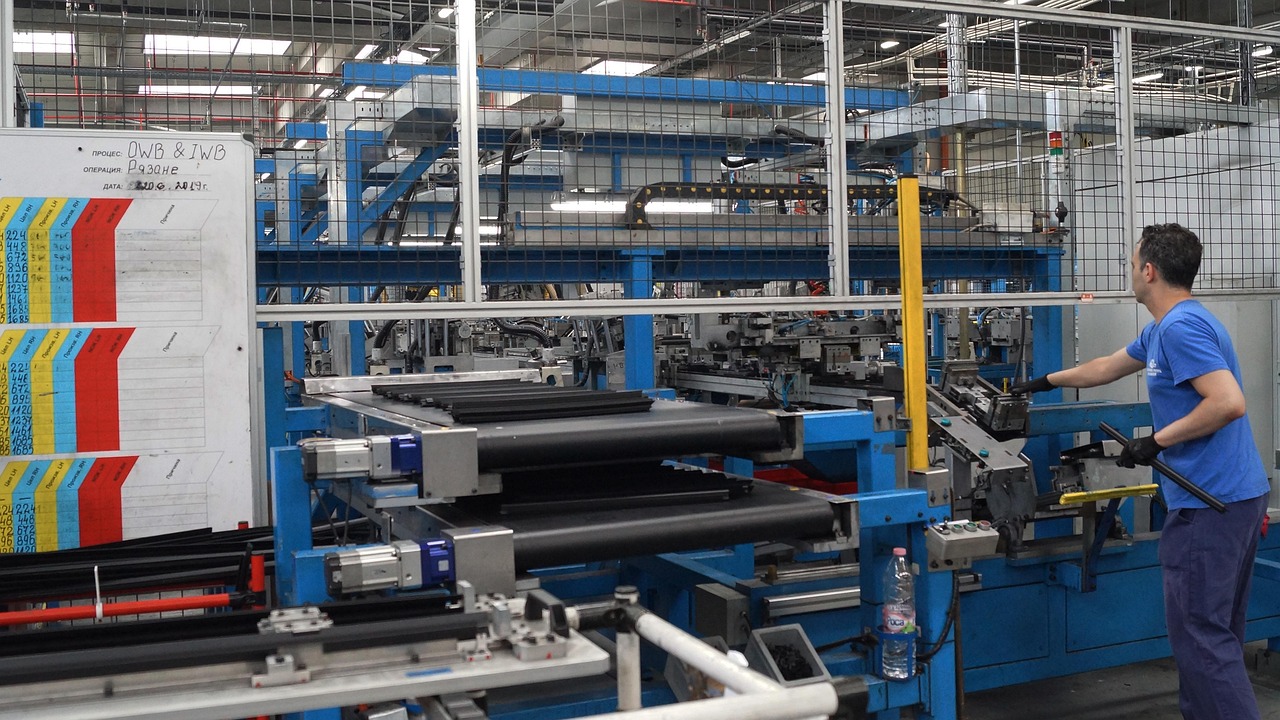
Why automation engineering is becoming more strategic
Several industry signals show why automation engineering has moved from a support function to a strategic manufacturing capability. The International Federation of Robotics reported in its World Robotics 2025 industrial robot data that factories installed about 542,000 industrial robots in 2024, with roughly 4.66 million industrial robots operating worldwide by the end of that year. Robotics is only one part of automation, but the figures show the scale of investment being made in repeatable, programmable industrial capacity.
The driver is not simply labor substitution. Manufacturers are also using automation to reduce quality variation, meet traceability demands, respond to skilled labor shortages, handle shorter product cycles and increase asset utilization. In high-mix production, automation engineering must support faster changeovers and flexible recipes. In regulated or safety-critical environments, it must support documented control, alarms, audit trails and validated behavior. In energy-intensive operations, it can also support closer monitoring and optimization of motors, compressed air, thermal systems and production utilities.
This broader role changes the engineering question. Instead of asking only, “Can the machine be automated?” teams increasingly need to ask, “Can the automated system be operated, secured, maintained, expanded and audited over its full life?” That question should shape the project from the first requirements discussion.
The core building blocks of an automation engineering project
A reliable automation system is built from several layers that have to work together. Weakness in one layer often creates problems elsewhere, even when the individual components are high quality.
| Engineering layer | Typical components | Main design concern |
|---|---|---|
| Field level | Sensors, actuators, valves, drives, instruments | Accurate measurement, correct actuation and environmental suitability |
| Control level | PLCs, PACs, motion controllers, robot controllers | Deterministic logic, sequence control, diagnostics and safe states |
| Safety level | Safety PLCs, interlocks, light curtains, safety scanners, emergency stops | Risk reduction, validated response and compliance with applicable standards |
| Supervisory level | HMI, SCADA, alarm systems, historian connections | Operator visibility, alarm clarity and controlled intervention |
| Information level | MES, databases, reporting tools, analytics platforms | Traceability, production context and useful decision support |
| Network and security level | Industrial Ethernet, remote access, firewalls, identity controls | Availability, segmentation, secure maintenance and incident containment |
Good automation engineering defines these layers early. A packaging line upgrade, for example, may require new drives and sensors, but it may also need recipe management, operator permissions, alarm rationalization and network segmentation. If those needs are discovered after electrical installation, the project becomes more expensive and less predictable.
Requirements come before hardware selection
One of the most common automation project risks is selecting hardware before the real operating requirements are clear. A strong requirements phase should describe what the system must do, what it must not do, and how operators and maintenance teams will interact with it.
Useful requirements usually include:
- Production targets such as cycle time, throughput range, changeover time and expected utilization.
- Quality requirements such as inspection points, measurement tolerance, reject handling and data retention.
- Operating modes such as automatic, manual, maintenance, cleaning, calibration and recovery.
- Safety functions such as guarded access, emergency stop zones, safe torque off and restart behavior.
- Integration needs such as barcode scanning, MES communication, historian tags and batch records.
- Environmental constraints such as washdown, dust, heat, vibration, hazardous areas or electromagnetic noise.
- Maintainability needs such as spare parts strategy, diagnostics, backups and remote support rules.
Clear requirements also reduce disputes between end users, equipment builders and system integrators. When acceptance criteria are defined in measurable terms, commissioning becomes a verification process rather than a negotiation over expectations.
Safety and cybersecurity can no longer be treated as late-stage checks
Industrial automation safety has traditionally focused on preventing harm from moving machinery, stored energy, unexpected startup and human access to hazardous zones. That remains essential. The 2025 editions of ISO 10218 for industrial robot safety, and the related ANSI/A3 R15.06-2025 standard in the United States, reflect the continuing importance of structured robot and robot-cell safety requirements. For automation engineering teams, risk assessment, safety function design and validation should therefore be part of the project from the concept stage.
Cybersecurity has also become a core design issue because automation systems are increasingly networked, remotely supported and connected to business systems. The ISA/IEC 62443 series is widely referenced for industrial automation and control system cybersecurity across the system lifecycle. NIST Special Publication 800-82 Rev. 3, a guide for operational technology security, emphasizes that OT security must consider performance, reliability and safety requirements that differ from conventional IT systems.
The practical implication is that safety and cybersecurity should not be separate checklists added at the end. They influence architecture. A secure remote access method affects maintenance workflow. Network segmentation affects controller-to-HMI communication. Safety zoning affects robot cell layout and production recovery. Alarm design affects operator response during abnormal conditions. Treating these concerns early prevents redesign and reduces operational risk.
Data integration should serve decisions, not create noise
Modern automation engineering often includes data collection, dashboards and analytics. These tools can be valuable, but only when the data is tied to operational decisions. A production team does not need thousands of unstructured tags; it needs reliable context around downtime, quality loss, cycle variation, energy use, maintenance triggers and material flow.
A useful data strategy normally answers four questions:
- Which decisions will the data support?
- Which signals are required to support those decisions?
- Where will the data be stored, validated and time-stamped?
- Who is responsible for maintaining tag structure, naming rules and data quality?
For example, overall equipment effectiveness reporting requires more than a machine running signal. It needs planned production time, fault categories, speed loss, minor stops, reject counts and product context. Predictive maintenance needs consistent condition data and enough historical examples to distinguish normal variation from early failure. Energy optimization requires production context so that higher energy use is not misread when output also increases.
In practice, the best data systems are usually selective. They collect enough information to diagnose losses and verify improvements, but not so much that operators and engineers spend their time filtering irrelevant signals.
A practical automation engineering workflow
Automation projects vary by industry, but a disciplined workflow helps reduce rework and commissioning surprises. The following sequence is useful for many industrial equipment and plant automation projects.
Define the process and constraints
Start with the current process, including bottlenecks, safety issues, quality losses and maintenance pain points. This stage should include operators and technicians because they often understand failure modes that are not visible in management reports.
Create functional and technical specifications
The functional specification describes system behavior in plain operational terms. The technical specification translates that behavior into control platforms, I/O, networks, safety devices, interfaces and software standards. Both documents should be controlled and updated when scope changes. See also: production equipment.
Design for abnormal conditions
Many automation failures occur not during normal operation, but during jams, part shortages, sensor faults, communication loss, power recovery and maintenance intervention. The system should define safe states, restart rules and operator guidance for these conditions.
Use simulation and staged testing where practical
Simulation, virtual commissioning and factory acceptance testing can expose sequence problems before installation. They are especially useful for robot cells, motion systems, material handling lines and projects where downtime during commissioning is expensive.
Commission with structured evidence
Commissioning should verify I/O, interlocks, safety functions, alarms, recipes, communications, documentation and operator training. A checklist alone is not enough if it does not record results, exceptions and corrective actions.
Plan lifecycle support
Backups, version control, spare parts, patching rules, cybersecurity reviews and change management are part of automation engineering. Without lifecycle planning, a successful startup can become a fragile system after several years of undocumented modifications.
Common mistakes that reduce automation value
Industrial automation projects often underperform for predictable reasons. The first is automating an unstable process without correcting the root cause. Automation can make a good process faster, but it can also make a poor process fail more consistently.
The second mistake is underestimating human interaction. Operators still need clear screens, meaningful alarms, safe access, recovery procedures and training. A technically capable system can lose value if users cannot understand or trust it.
The third mistake is ignoring maintenance realities. Components should be accessible, diagnostics should be clear, and replacement procedures should not depend on rare knowledge. Standardization across controllers, networks and spare parts can reduce long-term support cost.
The fourth mistake is treating integration as an afterthought. If machine data, recipes, product IDs and quality records are required, those interfaces should be engineered from the start. Late integration often creates fragile workarounds.
The fifth mistake is overlooking cybersecurity in the name of convenience. Uncontrolled remote access, shared passwords and flat networks may speed up troubleshooting in the short term, but they increase exposure and can complicate incident response.
How to evaluate automation engineering success
The success of automation engineering should be measured against the original operating goals, not only by whether the machine runs. Useful performance indicators include:
- Throughput improvement compared with the baseline process.
- Reduction in unplanned downtime and faster fault recovery.
- Scrap, rework or inspection failure reduction.
- Changeover time and recipe accuracy.
- Operator intervention frequency and alarm burden.
- Maintenance response time and availability of diagnostics.
- Safety validation results and incident reduction.
- Data completeness for production, quality and maintenance decisions.
These measures should be reviewed after startup, after stabilization and again after the system has operated through normal production variation. Early startup results can be misleading because operators are still learning and engineering teams may still be tuning sequences. A more realistic view comes from comparing performance before and after the system has reached steady use.
Frequently asked questions
Is automation engineering the same as control engineering?
Control engineering is a major part of automation engineering, but the terms are not identical. Control engineering focuses on the behavior of controlled systems, while automation engineering also covers system integration, HMI design, safety, networking, data, commissioning and lifecycle support.
Does every automation project need robotics?
No. Many high-value automation projects use sensors, conveyors, drives, PLC logic, vision inspection, process control or data integration without robots. Robotics is most useful when the task involves repeatable motion, material handling, welding, assembly, dispensing, palletizing or similar operations where a robot is technically and economically justified.
When should cybersecurity be considered in an automation project?
Cybersecurity should be considered during concept and architecture design. Waiting until commissioning can lead to insecure remote access, poor network segmentation, unclear account management and difficult retrofits. OT security must be designed around availability, safety and maintainability.
What makes an automation system maintainable?
A maintainable system has clear documentation, accessible components, consistent programming standards, useful diagnostics, controlled backups, spare parts planning and trained personnel. Maintainability should be specified before build, not added after breakdowns occur.
What is the main takeaway for industrial automation planning?
The main takeaway is that automation engineering should be treated as a lifecycle discipline. Successful projects combine process knowledge, reliable controls, safety, cybersecurity, useful data and practical maintenance planning rather than focusing only on new equipment.