Automation warehouse planning in 2026 for safer and scalable operations

What automation warehouse planning means now
Automation warehouse planning is no longer just a choice between conveyors, automated storage or mobile robots. In 2026, a stronger plan starts by identifying which warehouse tasks are repetitive, measurable, space-constrained, labor-intensive or safety-sensitive. The next step is matching those tasks with equipment, software and human workflows that can perform reliably in the actual operating environment. For most operators, the practical goal is not a lights-out facility. It is a safer, more consistent and more scalable warehouse that can handle higher order volume, tighter service levels and workforce constraints without adding hidden complexity.
For industrial equipment buyers, the key shift is that warehouse automation has become a systems decision. Hardware still matters, but performance depends on how well automation connects with warehouse management systems, warehouse execution software, sensors, safety controls, maintenance routines and trained teams. For more industrial automation coverage, see the automation systems section.
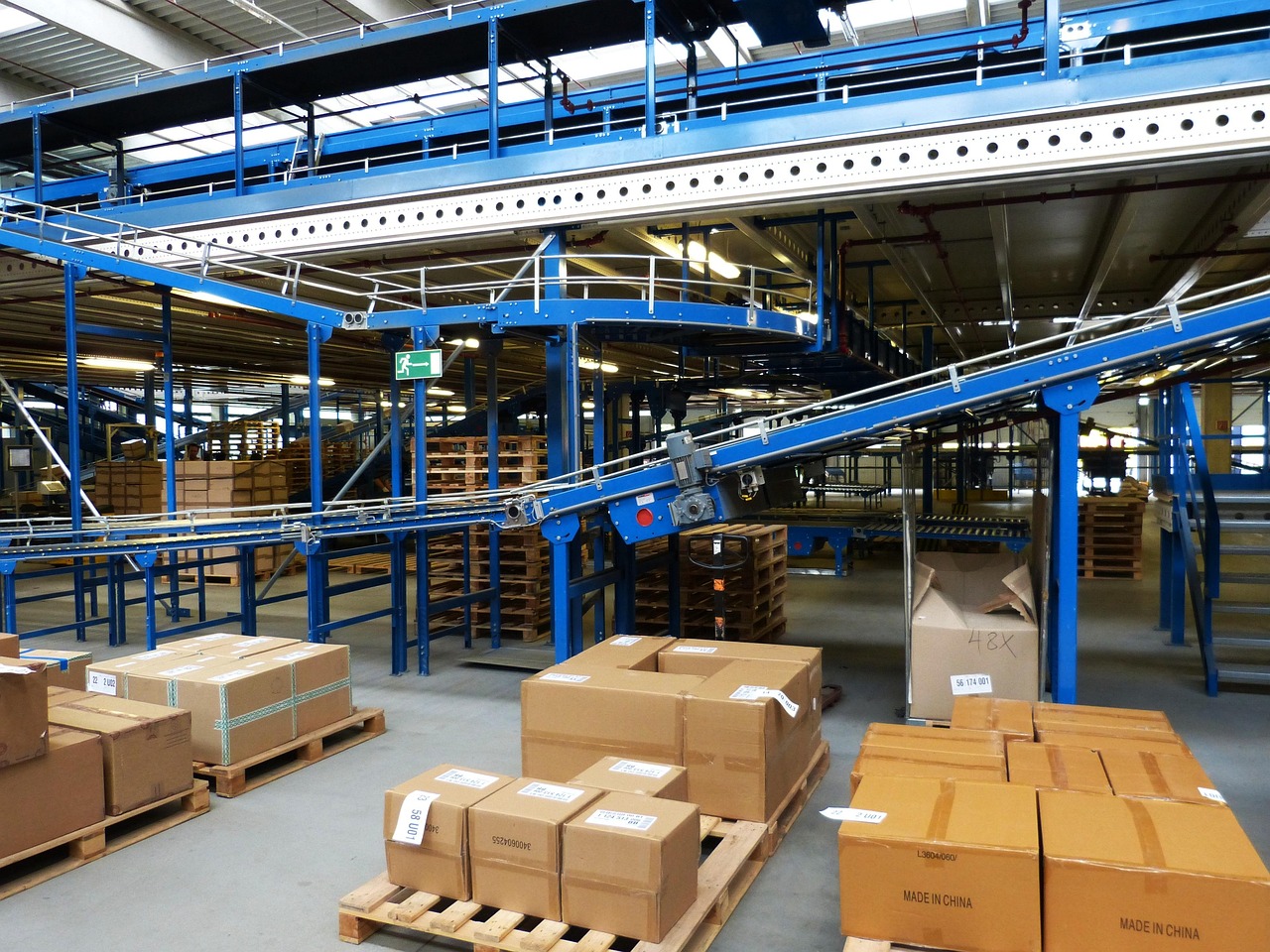
Why warehouse automation demand is still rising
Several current industry signals point in the same direction. MHI and Deloitte’s 2026 Annual Industry Report, based on a survey of more than 500 supply chain professionals, reported that 56% of supply chain leaders were increasing technology and innovation investment. The same report said 52% planned to spend more than $1 million, while 17% planned to spend more than $10 million. Those figures cover broader supply chain technology, but they help explain why warehouse automation remains a board-level topic rather than a narrow engineering project.
Robotics data also helps explain why material movement is attracting investment. The International Federation of Robotics’ World Robotics 2026 Service Robots report reported nearly 250,000 professional service robot shipments in 2025, up 24% from the previous year. Transportation and logistics accounted for 117,500 units, or about 47% of professional service robot shipments in that supplier survey. IFR also cautions that service robot figures are based on a supplier sample and should not be treated as a complete measure of the entire market, an important limitation for buyers comparing market claims.
Workforce pressure is another driver. Zebra Technologies’ 2025 Warehousing Vision Study reported that many frontline associates were concerned about time spent on tasks that could be automated, safety on busy warehouse floors and shortages of qualified staff. OSHA’s warehousing guidance identifies common hazards including powered industrial trucks, ergonomics, material handling, slips, trips, falls and robotics. These sources do not mean automation automatically improves safety. They do show why many warehouses are evaluating technology as part of a broader risk-control and capacity strategy.
What to automate first in a warehouse
The first automation target should usually be a process with a clear baseline. If a warehouse cannot measure travel time, pick rates, mis-picks, dock dwell time, replenishment delays or labor hours by activity, it will struggle to prove whether automation helped. A practical automation warehouse roadmap starts with repeatable pain points, not with a preferred machine category.
| Automation area | Where it often fits | Key watch-outs |
|---|---|---|
| Automated storage and retrieval systems | High-density storage, predictable SKU profiles, space-constrained facilities and operations that need controlled inventory flow. | Requires careful slotting, building height assessment, fire and safety review, and strong software integration. |
| Conveyors and sortation | Stable routes, consistent carton or tote flow, packing lines, shipping lanes and high-volume parcel movement. | Can create bottlenecks if upstream picking, labeling or exception handling is unstable. |
| AMRs and AGVs | Repetitive transport, goods-to-person support, replenishment, line-side delivery and long walking-distance reduction. | Needs traffic planning, fleet management, charging strategy and human-robot safety controls. |
| Robotic palletizing and depalletizing | End-of-line handling, repetitive case movement and ergonomic risk reduction for heavy or frequent lifting. | Mixed-SKU handling, unstable loads and damaged packaging can reduce performance. |
| Vision, scanning and sensor systems | Inventory checks, quality verification, dimensioning, traceability and automated exception detection. | Data quality, lighting conditions and label standards can determine accuracy. |
For many facilities, the most valuable first project is not the most advanced robot. It may be a scan-confirmed receiving process, a better pick-to-light zone, automated carton movement from packing to shipping, or mobile robots that reduce non-value-added walking. The right choice depends on where labor hours, errors, congestion and safety exposure actually occur.
Design choices that decide whether automation scales
Scalable automation depends on process discipline before mechanical installation. A warehouse with inconsistent packaging, unclear location rules, frequent emergency replenishment and poor master data will push those problems into the automated system. The result may be a faster bottleneck instead of a faster operation.
Three design choices matter early. First, decide whether the facility needs fixed automation, flexible automation or a hybrid. Fixed systems such as conveyors and AS/RS can be efficient in stable, high-volume flows, but they are less forgiving when order profiles change. Flexible systems such as AMRs can be easier to redeploy, but they still require disciplined traffic rules, suitable floor conditions and software orchestration.
Second, define the software architecture. Warehouse management systems typically control inventory, orders and labor tasks. Warehouse execution systems or fleet management tools may coordinate equipment, balance work and release tasks in real time. If these layers are poorly defined, operators can end up with duplicate task queues, manual workarounds and weak exception visibility.
Third, protect maintainability. Automation projects often focus heavily on throughput models but give too little attention to spare parts, preventive maintenance, technician access, cleaning routines and recovery from downtime. A practical design asks simple questions early: how will the system fail, who will diagnose it, what can continue manually, and what inventory or shipping commitments are affected during recovery?
Safety and workforce planning cannot be added at the end
Warehouse automation changes risk rather than removing it. OSHA identifies musculoskeletal disorders, overexertion, powered industrial trucks and material-handling equipment as major warehousing concerns. Automation can reduce some lifting, walking and forklift exposure, but it can also introduce robot traffic, pinch points, unexpected start-up, conveyor interaction, maintenance lockout needs and software-driven work pace issues.
Recognized standards provide useful guardrails. ANSI/A3 R15.08-1-2020 was reaffirmed in 2026 for industrial mobile robot requirements, ANSI/A3 R15.08-2-2023 addresses industrial mobile robot systems and applications, and ANSI/A3 R15.08-3-2026 focuses on safe use of industrial mobile robot applications. ISO 3691-4:2020 covers safety requirements for driverless industrial trucks and their systems, including equipment commonly described as AGVs, AMRs, bots and automated guided carts. These standards do not replace a site-specific risk assessment, but they help frame responsibilities for manufacturers, integrators and end users. See also: production equipment.
Workforce planning is just as important as equipment selection. Strong projects usually redesign tasks with employees, supervisors, maintenance teams and safety leaders before go-live. Operators need to understand how to interact with machines, when to stop the system, how to report near misses and how exception work will change. Maintenance teams need training on diagnostics, controls, batteries, sensors, guarding and lockout procedures. Supervisors need metrics that reward stable flow and safe recovery, not speed alone.
A practical rollout model for warehouse automation
A disciplined rollout reduces risk and improves the chance that automation can scale beyond a pilot. The following sequence is useful for many industrial warehouses and distribution centers.
- Map the operation. Document receiving, putaway, replenishment, picking, packing, staging and shipping flows. Separate normal work from exceptions.
- Build a baseline. Measure throughput, labor hours, travel distance, errors, congestion, injury risks, downtime and order profile variability.
- Choose a narrow use case. Start with one process where the value case is clear and where success can be measured within weeks or months.
- Validate data and layout. Check SKU dimensions, pallet quality, barcode consistency, floor conditions, Wi-Fi coverage, charging locations and aisle clearance.
- Run a controlled pilot. Define go-live criteria, rollback triggers, safety observations, training records and exception-handling procedures.
- Scale by zone or function. Expand only after the pilot proves operational stability, not just technical movement.
- Review lifecycle costs. Include maintenance, software subscriptions, support, spare parts, battery replacement, upgrades and internal labor.
This model helps avoid a common mistake: treating automation as a one-time capital project. In practice, an automation warehouse system is an operating model that must be tuned as order profiles, labor availability, product mix and customer expectations change.
How to judge return on investment without oversimplifying it
ROI should include more than direct labor reduction. Labor savings may be important, but a complete business case should also consider throughput stability, floor-space utilization, order accuracy, safety exposure, overtime control, service-level compliance, inventory visibility and resilience during peak demand. Some benefits are easy to calculate; others require careful assumptions.
Budget discipline matters because industry surveys show that cost and business-case clarity remain barriers. The 2026 MHI and Deloitte report noted that budget constraints were a leading hurdle for robotics and automation adoption, while building a clear business case was a major issue for AI adoption. The lesson for warehouse teams is straightforward: start with operational evidence, not technology enthusiasm.
A credible business case should also state what will not be automated. This is especially important for low-volume exceptions, damaged goods, unusual dimensions, hazardous materials, seasonal processes or customer-specific handling. Keeping certain tasks manual can be the right decision when automation would add cost without improving flow.
Frequently asked questions
Is a fully automated warehouse realistic for most operators?
Fully automated warehouses exist, but they are not the default answer for most facilities. Many warehouses benefit more from partial automation that targets transport, storage, picking assistance, sortation or data capture while keeping people in flexible exception-handling roles.
What is the difference between AMRs and AGVs in warehouse automation?
AGVs have traditionally followed fixed paths or guidance systems, while AMRs are generally associated with more flexible navigation and onboard perception. In practice, buyers should focus less on the label and more on payload, safety certification, navigation method, fleet software, integration needs and support model.
Does automation reduce warehouse labor needs?
Automation can reduce labor hours in specific tasks, especially walking, transport, lifting or scanning. It can also shift labor toward monitoring, exception handling, maintenance, inventory control and systems support. Workforce impact depends on project scope, volume growth and how management redesigns roles.
What should be checked before buying warehouse automation equipment?
Before buying equipment, verify process data, SKU characteristics, packaging quality, floor and rack conditions, software integration requirements, safety standards, maintenance skills, vendor support and the financial assumptions behind the project. A site that cannot support the equipment operationally may not capture the expected value.