How automation is reshaping industrial equipment operations in 2026
Automation is becoming an operating system for the factory
In 2026, industrial equipment automation is better viewed as a connected operating capability than as a single machine upgrade. Robots, programmable logic controllers, drives, sensors, machine vision, SCADA, MES, analytics and secure networking now need to work together as one production system. Labor savings and faster cycle times still matter, but they are no longer the full business case. Manufacturers are using automation to stabilize output, reduce quality variation, improve changeovers, capture production data and keep equipment running under volatile supply, labor and cost conditions.
Reports and guidance from the International Federation of Robotics, Deloitte, NIST, ISA and CISA point in the same direction: automation value depends as much on integration, data quality and cybersecurity as it does on the equipment itself.
That matters for equipment buyers, plant engineers and operations leaders because many factories still operate with a mix of legacy machinery, semi-automated lines and newer connected assets. The opportunity is significant, but so is the risk of creating isolated automation islands that are hard to maintain, difficult to secure and unable to share useful production information.
For more context on control platforms, sensors and plant-level integration, see our automation systems coverage.
What changed in industrial automation
For decades, factory automation was often justified against a narrow production target: reduce direct labor, improve repeatability, speed up one operation or remove people from hazardous tasks. Those goals remain valid, especially in welding, packaging, material handling, inspection and machine tending. The difference in 2026 is that automation is increasingly measured against broader operating resilience.
A modern automation project may need to answer several questions at the same time. Can the line recover quickly after a stoppage? Can supervisors see bottlenecks before missed shipments occur? Can quality teams trace a defect to a batch, tool, recipe or station? Can maintenance teams diagnose a drive, robot, sensor or valve without waiting for a specialist to travel to the site? Can the system be patched and segmented without interrupting critical production?
This is why automation planning now overlaps with data architecture, cybersecurity, workforce training and lifecycle support. A robot cell that improves takt time but cannot share status data with the rest of the plant may still be useful. A robot cell that also feeds maintenance alerts, quality records and production scheduling data into the plant’s operating model is more valuable.
The equipment stack is becoming more connected
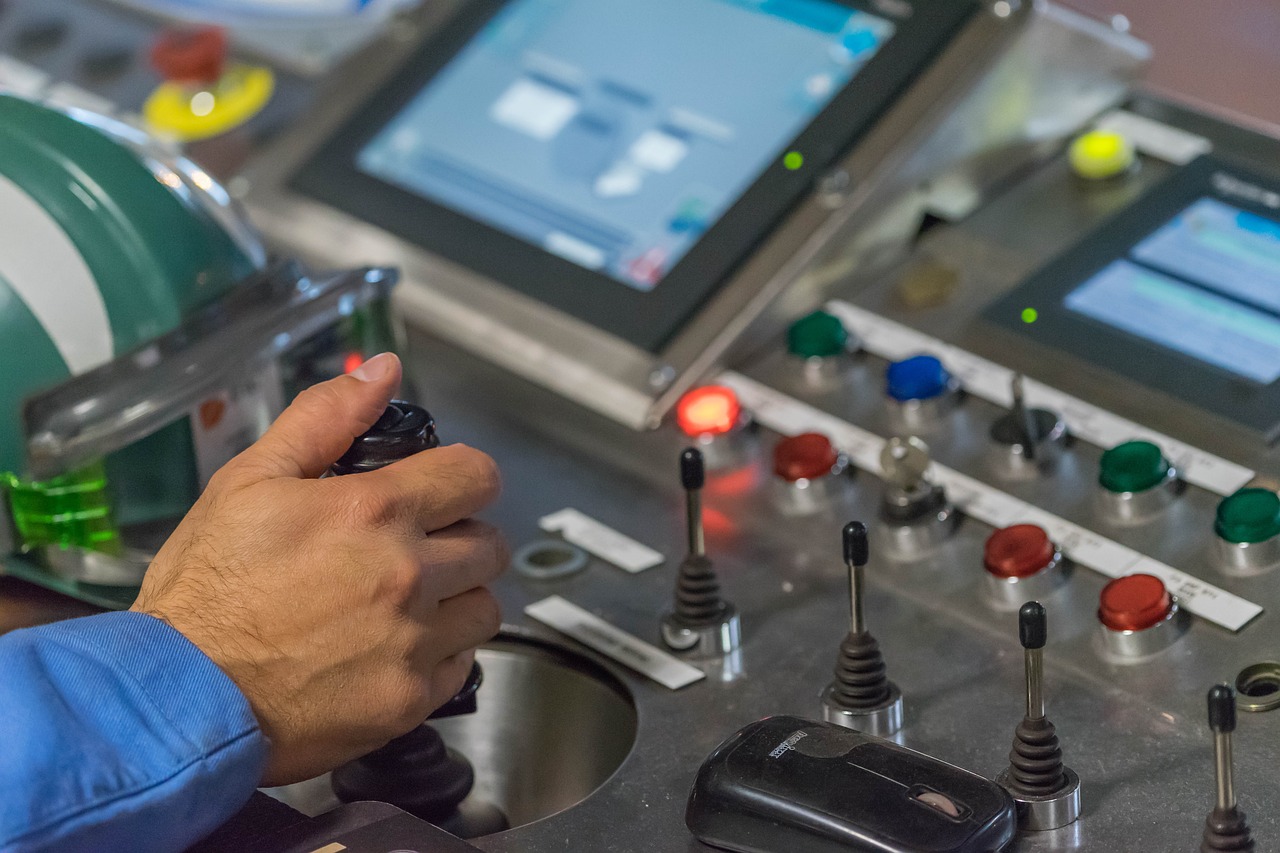
Industrial automation systems are usually built across several layers. At the field level, sensors, encoders, actuators, motors, valves, safety devices and instruments detect and change physical conditions. At the control level, PLCs, motion controllers, robot controllers and distributed control systems execute logic. At the supervisory level, HMI and SCADA systems visualize status, alarms and process trends. Above that, MES, quality systems, maintenance platforms and ERP systems connect production with business decisions.
The ISA-95 framework, also known as IEC 62264, remains a useful way to think about the relationship between enterprise systems and control systems. Its value is not that every plant must copy a reference diagram exactly. Its value is that it gives engineers, integrators, IT teams and managers a shared vocabulary for where data is created, controlled, stored and used.
In practical terms, connected automation does not always require replacing every older machine. Many plants start by adding sensors, edge gateways, machine vision, improved HMIs, network segmentation and standardized data tags around existing assets. This can be a lower-risk path than a full line replacement, especially when the mechanical equipment still has useful life.
Robot data shows both scale and limits
Robotics is one of the clearest indicators of automation momentum, but the data also shows why automation strategy should be specific to each sector and process. The International Federation of Robotics reported in its World Robotics 2025 executive summary that 542,076 industrial robots were installed globally in 2024. That was the second-highest installation count in history, only slightly below the 2022 record of 552,946 units. IFR also reported the global operational stock of industrial robots at 4,663,698 units in 2024, up 9% from the prior year.
| Indicator | Reported figure | What it suggests for equipment teams |
|---|---|---|
| Global industrial robot installations in 2024 | 542,076 units | Automation demand remains structurally high even when macroeconomic conditions are difficult. |
| Global operational stock in 2024 | 4,663,698 industrial robots | Robot maintenance, spare parts, programming skills and lifecycle support are becoming strategic plant capabilities. |
| Asia installations in 2024 | 401,665 units, or 74% of newly deployed robots | Automation supply chains and technical know-how are increasingly shaped by Asian manufacturing scale. |
| Americas installations in 2024 | 50,077 units, including 34,164 in the United States | Adoption remains significant, but project selection and ROI discipline are especially important in slower regions. |
| Largest customer industries in 2024 | Electrical and electronics at 128,899 units, automotive at 126,088 units, metal and machinery at 88,777 units | Automation is spreading beyond traditional automotive dominance into electronics, machinery and general industry. |
| Average robot density in manufacturing in 2024 | 177 robots per 10,000 employees | Robot density is rising, but many processes and companies remain only partially automated. |
The main lesson is that robot adoption is not evenly distributed. High-volume electronics and automotive operations can justify sophisticated cells. Many smaller manufacturers need modular, flexible systems that are easier to support with limited engineering resources. IFR also noted that lack of knowledge, engineering capability, peripherals such as vision, and access to system integrators can be barriers, especially for small and medium-sized manufacturers.
For industrial equipment decisions, the robot arm is only one part of the investment. End-of-arm tooling, fixture design, safety guarding, conveyors, vision lighting, part presentation, programming standards, spare parts and maintenance access often determine whether the system performs well after commissioning.
Smart manufacturing changes the return calculation
Deloitte’s 2026 Manufacturing Industry Outlook describes continued investment in smart manufacturing, including automation hardware, data analytics, sensors and cloud computing. It also cites a 2025 survey of 600 manufacturing executives in which most respondents planned to put 20% or more of their improvement budgets into smart manufacturing initiatives. That does not mean every manufacturer is spending 20% of total capital expenditure on automation. It does show that improvement programs are increasingly tied to connected factory capabilities.
The return calculation is therefore broader than machine speed alone. A well-designed automation project may create value through:
- Higher throughput from stable cycle times and fewer manual delays.
- Lower scrap through controlled recipes, machine vision and process monitoring.
- Improved uptime through condition monitoring and faster fault diagnosis.
- Better labor allocation by moving people from repetitive handling into supervision, maintenance and quality roles.
- Shorter changeovers through recipe management, servo positioning and guided procedures.
- Energy and material savings through tighter control of motors, compressed air, heating, cooling and process variables.
- Traceability for regulated, safety-critical or high-value products.
Industrial AI and advanced analytics can support these goals, but only when the underlying data is reliable. A predictive maintenance model is weak if equipment states are not tagged consistently. A production dashboard is misleading if downtime categories are entered differently by each shift. A digital twin has limited operational value if the physical line changes but the model is not updated. Automation maturity starts with disciplined signals, naming conventions, asset hierarchy and operating procedures.
Cybersecurity is now part of the automation specification
As industrial equipment becomes more connected, cybersecurity can no longer be treated as an IT add-on after commissioning. NIST SP 800-82 Rev. 3, Guide to Operational Technology (OT) Security, published in September 2023, emphasizes that OT systems interact with the physical environment and must be protected while preserving performance, reliability and safety requirements. This is a different risk profile from many office IT systems because a control system incident can affect production continuity, equipment integrity and worker safety. See also: production equipment.
The ISA/IEC 62443 series also reinforces the idea of shared responsibility. Asset owners, product suppliers, system integrators and service providers all influence the security of an industrial automation and control system across its lifecycle. A secure automation system is not created by one firewall or one password policy. It depends on requirements, architecture, product design, configuration, access control, patch planning, backup strategy, monitoring and incident response.
CISA and international partners reinforced this procurement view in Secure by Demand guidance released on January 13, 2025. The guidance urges OT owners and operators to consider security features when selecting digital products, especially industrial automation and control system products. Practical procurement questions include whether a product supports strong authentication, secure default settings, useful logging, secure communications, vulnerability management, patch tooling and configuration management.
For buyers, the implication is clear: cybersecurity requirements should appear in the automation specification before vendors quote the system. They should also be tested before acceptance. A factory acceptance test that proves cycle time but ignores user roles, backups, network segmentation, remote access and recovery procedures is incomplete for a connected system.
A practical roadmap for automation upgrades
Automation projects are easier to justify and maintain when they start with operational constraints rather than a preferred technology. The following roadmap can help teams avoid overbuying, under-integrating or creating unnecessary risk.
- Define the production problem in measurable terms. Specify the bottleneck, scrap rate, downtime mode, labor constraint, safety exposure or traceability gap. Avoid starting with a technology label such as robot, AI or digital twin before the operating target is clear.
- Map the current equipment and data baseline. List controllers, networks, sensors, drives, HMIs, software versions, maintenance history, spare parts and available signals. This reveals whether the first investment should be a new machine, a retrofit, better instrumentation or improved data collection.
- Design the architecture before buying devices. Decide how machines will communicate, how alarms will be handled, where production data will be stored, and how the system will interact with MES, maintenance and quality platforms.
- Use modular automation where product mix is uncertain. Flexible fixtures, reusable robot programs, standard electrical panels, common HMI objects and scalable safety concepts can reduce the cost of future changes.
- Build cybersecurity and safety into acceptance testing. Test user access, backup restoration, emergency stops, safe states, network behavior, logging and recovery procedures. Do not leave these checks until after production launch.
- Prepare operators and maintenance teams early. Training should cover normal operation, abnormal conditions, basic troubleshooting, changeover, cleaning, lockout procedures and escalation paths. Automation that only the integrator understands is fragile.
The best automation plan is usually phased. A plant may begin with one high-value cell, learn from commissioning, standardize the controls and data model, then replicate the design across similar assets. This approach builds internal capability instead of one-time dependence on outside expertise.
What to watch through 2026 and beyond
Automation demand will likely remain tied to regional supply chain strategy, labor availability, production flexibility and the cost of capital. IFR’s World Robotics 2025 outlook expected global robot installations to grow 6% to 575,000 units in 2025 and to surpass 700,000 units by 2028. Because that statement is a forecast from a 2025 publication, it should be treated as an outlook rather than a confirmed outcome for later years.
Several trends are worth watching. First, low-cost and easier-to-program robotics may open more applications for smaller manufacturers, but integration skills will still matter. Second, AI-enabled automation will be most useful where it improves concrete workflows such as inspection, scheduling, maintenance diagnosis and operator guidance. Third, regionalization and tariff uncertainty may encourage manufacturers to automate closer to end markets, but regional economics will vary. Fourth, security requirements will become more visible in procurement as plants connect more assets to networks and remote support channels.
The central point is not that every factory must automate everything. The better conclusion is that industrial equipment decisions now need to account for the full system: machine capability, controls architecture, data flow, security, maintainability and people.
Frequently asked questions
What is industrial automation?
Industrial automation is the use of control systems, sensors, software, robotics and related equipment to operate production processes with less manual intervention. It can range from a single automated machine to a connected plant-wide system that links production, quality, maintenance and business data.
Is automation only about robots?
No. Robots are an important part of automation, but they are only one category. Automation also includes PLCs, drives, motion control, instrumentation, safety systems, machine vision, SCADA, MES, data analytics and networked control architecture. Many valuable projects improve existing machines without adding a robot.
How should a manufacturer choose an automation project?
The starting point should be a measurable operational problem, such as downtime, scrap, labor exposure, inconsistent quality, slow changeovers or missing traceability. Once the constraint is clear, the team can compare options such as retrofitting sensors, upgrading controls, adding a robot cell, improving software integration or redesigning the process.
Why is OT cybersecurity important for automation?
Automation systems often control physical equipment, so a cybersecurity issue can affect production, safety and asset integrity. Connected equipment should be specified with strong authentication, secure defaults, logging, patch planning, backups, network segmentation and clear remote access rules.
Will automation replace factory workers?
Automation changes work more often than it eliminates all work. Repetitive handling, inspection and hazardous tasks may be reduced, while demand grows for operators, maintenance technicians, controls engineers, data specialists and supervisors who can run, improve and troubleshoot automated systems.