Industrial automation systems explained for factories and plants
What industrial automation systems include
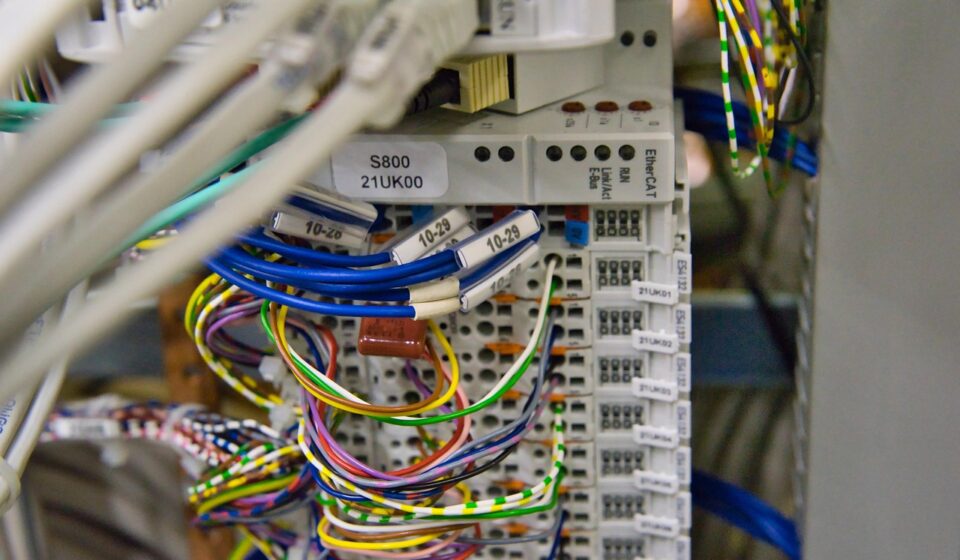
Industrial automation systems combine connected hardware, control software, sensors, networks and safety functions to operate production equipment with reduced manual intervention. In a modern factory or processing plant, automation is rarely just a robot arm, a PLC cabinet or a conveyor. It is a coordinated environment that links physical motion, process variables, operator input and production data. The practical question is usually not simply whether to automate, but what level of integration, safety, cybersecurity and flexibility the process requires.
For readers tracking automation technology, the broader automation systems category is a useful place to follow related developments across controls, robotics, sensing and industrial software.
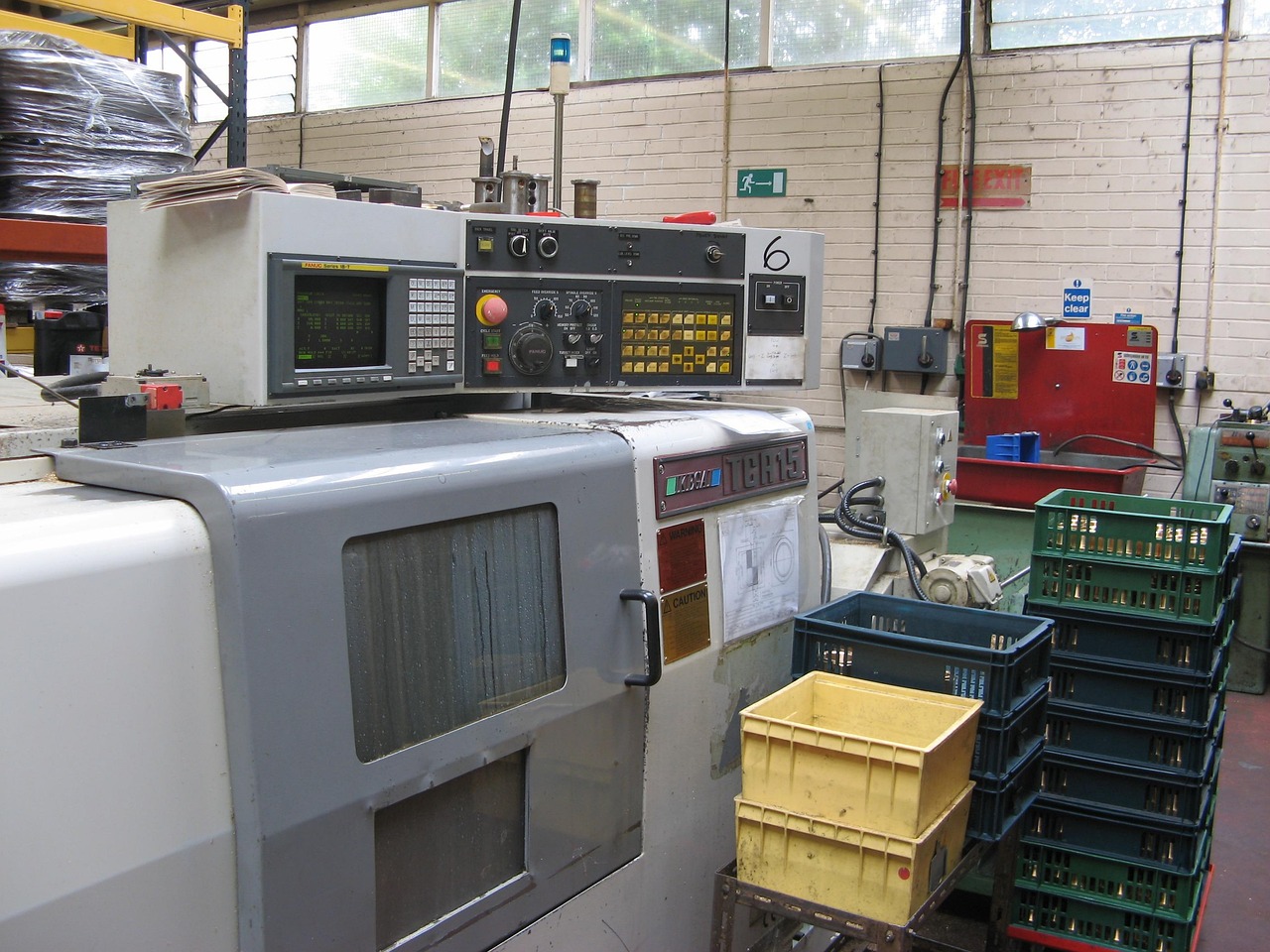
The term can apply to discrete manufacturing, process industries, packaging lines, warehouse interfaces, utilities, building services and hybrid production environments. A small automated cell may include a programmable logic controller, sensors, actuators, safety interlocks and a human-machine interface. A larger plant may add distributed control systems, SCADA software, industrial networks, historians, manufacturing execution software, robots, autonomous transport, edge computing and enterprise data links.
The usual goals are repeatable quality, safer machine operation, higher throughput, lower downtime, better energy control, traceable production data and a more predictable operating model. Each benefit also brings design responsibilities. A system that controls physical equipment must be engineered for failure modes, maintenance access, cybersecurity, operator training and long-term support.
Core layers of a modern automation system
Most industrial automation systems can be understood as a stack of layers. The exact architecture varies by industry and site, but the same categories appear repeatedly in factories and plants.
Field devices and instrumentation
The field level includes sensors, transmitters, switches, encoders, machine vision cameras, barcode readers, valves, motors, drives, relays and actuators. These devices convert real-world conditions into electrical or digital signals, then turn control commands back into physical action. In manufacturing, that may mean detecting part position, measuring torque, checking temperature, regulating flow or confirming that a guard door is closed.
Control layer
The control layer makes real-time decisions. PLCs are common in machine control and discrete production. Distributed control systems are widely used in continuous and batch process environments. Motion controllers, robot controllers and safety controllers may operate alongside them. This is where ladder logic, function blocks, sequential control, safety logic and closed-loop control strategies are executed.
Supervisory and operator interface layer
Operators and supervisors need clear visibility into the process. Human-machine interfaces show machine status, alarms, setpoints and manual controls. SCADA systems supervise larger assets, collect data and help operators manage alarms or remote equipment. In a well-designed system, the interface does more than display data; it helps people recognize abnormal conditions quickly and respond safely.
Information and integration layer
The information layer connects production activity to business and engineering decisions. Historians store time-series process data. Manufacturing execution systems support scheduling, work orders, quality records and traceability. Edge devices may process data close to machines before sending selected information to plant servers or cloud platforms. At this layer, automation begins to support continuous improvement as well as direct machine operation.
Why adoption keeps expanding
The clearest measurable signal is the growth of industrial robotics. The International Federation of Robotics reported in its World Robotics 2025 statistics that 542,000 industrial robots were installed globally in 2024, the second-highest annual installation count on record. The same report put the worldwide operational stock of industrial robots at about 4.66 million units in 2024, up 9% year over year. These figures do not represent all automation spending, but they show how deeply automated equipment has become part of global production planning.
Several forces explain the continued interest. Manufacturers face skilled labor shortages in maintenance, welding, machine tending, inspection and process operations. Customers expect tighter quality and shorter lead times. Supply chains require better traceability. Energy costs push plants to monitor utilities more closely. At the same time, sensors, drives, industrial PCs, machine vision, robotics and analytics tools have become more capable and easier to integrate than earlier generations of isolated equipment.
Adoption is not uniform. Automotive and electronics plants often automate at high levels because volumes, precision needs and repeatability justify large investments. Food, beverage, pharmaceuticals, metals, chemicals and logistics operations may automate different functions for sanitation, safety, compliance, batching, packaging or material flow. Smaller manufacturers may start with bottleneck machines, inspection, data collection or repetitive handling rather than full-line automation.
| Automation driver | Typical system response | Important limitation |
|---|---|---|
| Labor availability | Robotic tending, automated handling, guided workflows | Maintenance and programming skills still matter |
| Quality consistency | Closed-loop control, machine vision, recipe management | Poor incoming material can still disrupt output |
| Safety improvement | Guarding, safety PLCs, interlocks, remote operation | Requires risk assessment and validation |
| Traceability | MES, barcode/RFID, historians, batch records | Data quality depends on disciplined process design |
| Energy and uptime | Monitoring, predictive alerts, optimized drives | Benefits depend on baseline measurement and follow-up |
Benefits and limits by function
Industrial automation systems are often sold around productivity, but the strongest business cases usually combine several functions. A machine that runs faster is valuable only if it produces acceptable quality, can be maintained, does not create unsafe conditions and fits upstream and downstream operations.
In production control, automation improves repeatability. PLCs and DCS platforms can execute the same sequence consistently, reduce manual variation and capture process data. In quality control, machine vision, measurement systems and digital records can identify defects earlier than end-of-line inspection alone. In maintenance, condition monitoring can highlight vibration, temperature, current draw or cycle changes before a failure stops production.
Safety can be a major benefit, but it must be handled carefully. Automation can move operators away from hazardous motion, heat, pressure, chemicals or repetitive strain. It can also introduce new hazards if robots, conveyors, stored energy or automatic restarts are not properly controlled. Functional safety standards such as IEC 61508 focus on electrical, electronic and programmable electronic systems used to carry out safety functions. In practical terms, safety-related automation requires risk assessment, defined safety functions, appropriate hardware, validation and management of changes after commissioning.
The limits are just as important. Automation does not fix an unstable process by itself. If material specifications vary, tooling wears quickly, operators do not trust the system, or maintenance teams lack access to spares and documentation, automation can make problems faster rather than smaller. Plants should avoid treating automation as a one-time purchase. It is a lifecycle commitment that includes design, integration, training, cybersecurity, spare parts, calibration, backups and periodic review.
Cybersecurity and reliability are now design issues
Automation systems increasingly connect operational technology with enterprise networks, vendor support tools and remote monitoring. That connectivity can improve visibility and maintenance, but it also changes the risk profile. A production line that once operated as an isolated machine may now depend on network segmentation, identity management, secure remote access, patch planning and backup recovery.
NIST Special Publication 800-82 Revision 3, published in September 2023, is one of the most useful references for operational technology security because it focuses on systems that monitor or control physical processes. Its central message for plant environments is that cybersecurity decisions must account for safety, availability, engineering constraints and real-time operation. In other words, an IT practice cannot simply be copied into OT without considering production consequences. See also: production equipment.
The ISA/IEC 62443 series is another key reference for industrial automation and control system cybersecurity. It addresses cybersecurity across the IACS lifecycle, including risk assessment, system design, secure development, operations and maintenance. For manufacturers, the value of the series is that it frames security as an engineering and lifecycle discipline rather than a single firewall purchase.
Reliability should be evaluated in the same integrated way. A high-performance automation platform can still fail to deliver if the network architecture is fragile, alarms are poorly designed, backups are not tested or operators cannot recover safely from abnormal conditions. Practical resilience includes a spare parts strategy, documented restore procedures, version control for controller programs, segmented networks, secure engineering workstations and clear ownership between production, maintenance, engineering and IT teams.
How to evaluate an automation project before deployment
A useful automation evaluation starts with the process, not the technology. The first step is to define the production problem clearly. Is the constraint labor, throughput, scrap, traceability, ergonomic risk, downtime, energy use or regulatory documentation? A project built around a specific constraint is easier to justify and verify than a project built around a broad desire to be more automated.
Next, map the current process. Measure cycle time, downtime causes, defect types, changeover time, manual interventions, safety incidents, energy use and data gaps. This baseline becomes the evidence used later to judge whether the system worked. Without a baseline, teams may argue from impressions rather than results.
The third step is to define integration boundaries. A machine cell may need only local control and a simple HMI. A plant-wide system may require MES integration, historian tags, alarm management, cybersecurity zoning, remote support rules and data governance. Over-integration increases cost and complexity. Under-integration creates manual workarounds that reduce the value of automation.
- Clarify the process objective: Define the measurable problem before selecting robots, PLCs, drives or software.
- Review safety early: Identify hazards, safety functions, stopping behavior, access needs and validation requirements before layout is frozen.
- Plan cybersecurity architecture: Decide network zones, remote access methods, account management and backup responsibilities during design, not after commissioning.
- Check maintainability: Confirm spare parts, diagnostics, documentation, training and local support.
- Protect data quality: Decide which data is needed, who owns it, how it is named and how it will be used.
- Start with scalable standards: Use naming conventions, reusable code libraries and consistent HMI patterns so later projects do not become isolated islands.
For many plants, phased deployment is the most practical path. A pilot cell, packaging line or data collection project can prove the architecture before the plant standardizes it. The goal is not to automate everything at once; it is to create a repeatable model that engineering, maintenance and operations teams can support.
What to watch as systems become more connected
The next stage of industrial automation will be shaped by a combination of robotics, software-defined control, edge analytics, machine vision, digital twins and stronger OT cybersecurity expectations. Some of these tools are mature in specific applications, while others still need careful validation before they can be trusted in safety-critical or high-availability environments.
Artificial intelligence and machine learning are increasingly discussed in inspection, predictive maintenance, scheduling and anomaly detection. In industrial settings, the key issue is not whether an algorithm looks impressive in a demonstration. The issue is whether it can be validated, maintained, explained to operators and integrated safely with existing control logic. For this reason, many near-term applications will support human decisions or non-safety analytics rather than directly controlling hazardous machine motion.
Another trend is the convergence of IT and OT governance. Plants need the data visibility expected by modern operations, but they also need deterministic control, safety and uptime. This creates demand for people who understand both production engineering and cybersecurity. It also increases the importance of documentation, standards-based architectures and vendor transparency.
Manufacturers should expect automation projects to be judged less by the novelty of individual devices and more by lifecycle performance. The systems that deliver lasting value will be those that can be operated safely, updated responsibly, maintained by real teams and adapted as products, regulations and supply chains change.
Frequently asked questions
What is the difference between industrial automation and industrial automation systems?
Industrial automation is the broad practice of using control technologies to operate equipment or processes with reduced manual intervention. Industrial automation systems are the actual connected combination of controllers, sensors, actuators, software, networks, safety devices and data tools that make automation work in a plant.
Are robots required in an industrial automation system?
No. Robots are important in many factories, but an automation system can exist without them. A pumping station, furnace control system, packaging line, batch process or inspection station may be automated through sensors, PLCs, drives, valves, HMI screens and supervisory software rather than robotic arms.
Why is cybersecurity important for automation systems?
Automation systems control physical processes. A cybersecurity problem can therefore affect uptime, product quality, safety, environmental controls or equipment reliability. As plants connect machines to networks and remote services, cybersecurity becomes part of engineering design and lifecycle maintenance.
How should a manufacturer start with automation?
The safest starting point is a measurable production problem. Identify a bottleneck, safety concern, quality issue or data gap, then build a focused project around it. A well-scoped pilot with clear baseline data often creates more long-term value than a large project with unclear objectives.
What makes an automation system successful after commissioning?
Success depends on more than installation. A strong system has trained operators, maintainable equipment, accurate documentation, tested backups, clear cybersecurity ownership, available spare parts, reliable data and a plan for future changes. These lifecycle details often determine whether automation keeps delivering value years after startup.