Robots automation in manufacturing and the practical steps before deployment
Why robots automation deserves a process-first plan
Robots automation in manufacturing is not simply a matter of buying a six-axis arm and placing it beside a machine. A working cell usually combines a programmable robot, end-of-arm tooling, fixtures, safety controls, sensors, software and maintenance routines to perform a defined task repeatedly and safely. The strongest business cases are often found in tasks that are dull, hazardous, quality-sensitive or difficult to staff. Even then, the technical plan should begin with the process, not with the robot model.
Public 2025 data from the International Federation of Robotics reports that 542,076 industrial robots were installed worldwide in 2024, the second-highest annual count recorded, while operational stock reached about 4.66 million units. Those figures confirm broad adoption, but they do not reduce the need for careful application selection, risk assessment and integration planning.
For manufacturers, integrators and equipment teams following automation systems, the practical question is not whether robots are widely used. It is where a robot can create a stable, measurable improvement without adding new bottlenecks, safety exposure or maintenance complexity.
What robot automation includes in a factory
A robot cell is a system, not a single machine. The robot arm or mobile platform is only the most visible part of the automation package. A complete industrial robot application may include the robot, controller, end effector, guarding or presence sensing, part presentation equipment, fixtures, conveyors, machine interfaces, operator stations and maintenance access. If any of these elements is weak, the robot may run below its theoretical cycle time or require frequent manual intervention.
The mechanical layer
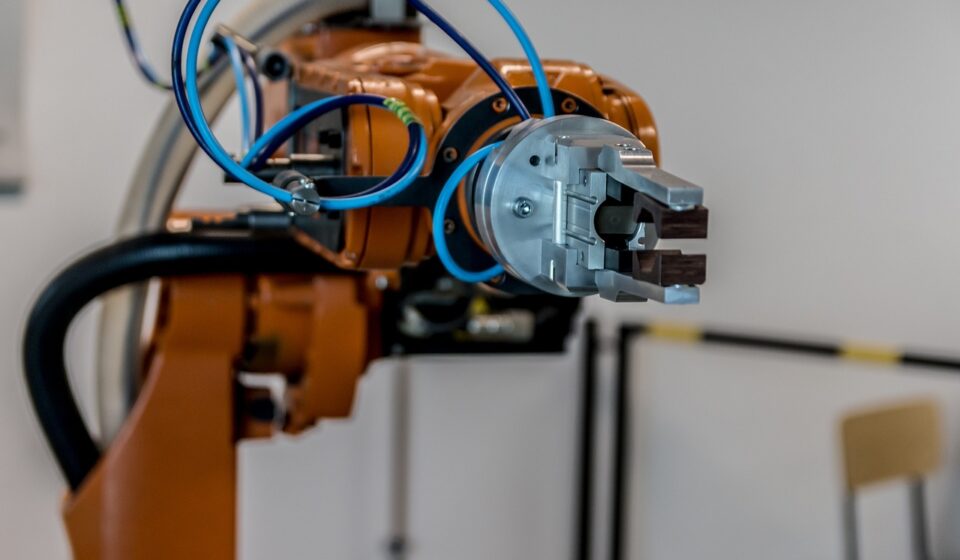
The mechanical layer determines whether the robot can handle the part and the normal variation in the process. Payload, reach and repeatability matter, but so do gripper design, tool weight, cable routing, part orientation, fixture wear, changeover method and access for cleaning or replacement. A robot that is technically large enough can still fail in production if the end-of-arm tool cannot manage oily parts, flexible packaging, inconsistent castings or stacked products that shift position.
The control and data layer
Most factory robot cells interact with programmable logic controllers, safety controllers, vision systems, servo drives, machine tools, barcode readers, industrial networks and production software. This layer defines how the cell starts, stops, recovers from faults, reports status and exchanges recipes. A strong control architecture makes abnormal conditions visible. A weak one turns every jam, missed pick or downstream stop into a manual troubleshooting event.
The safety layer
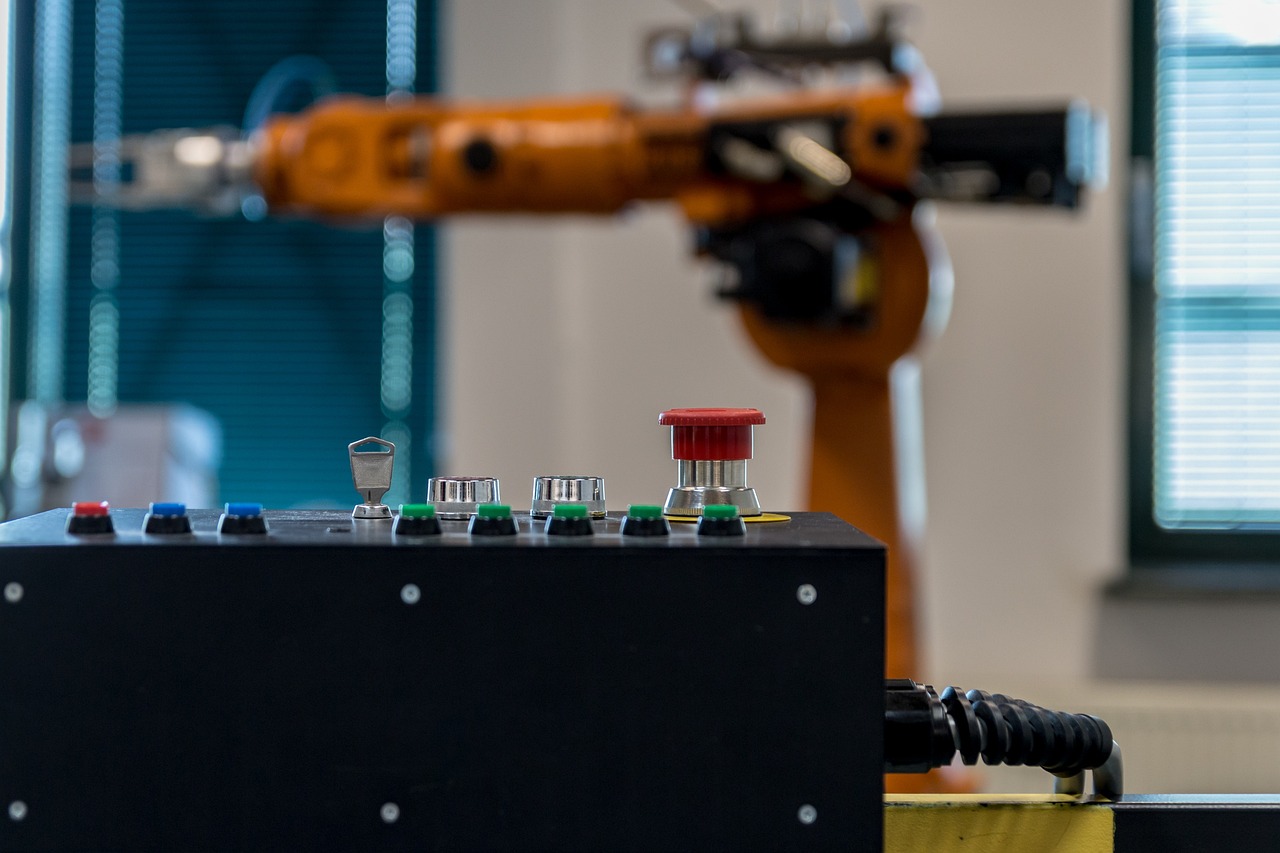
Robot safety is not limited to a fence. It includes risk assessment, safe access, interlocks, emergency stops, monitored standstill, speed and separation monitoring where applicable, lockout procedures, safe recovery from faults and training for operators, programmers and maintenance personnel. The safety layer must reflect the actual task, payload, tooling, stored energy and human access patterns.
What recent adoption data says about demand
The latest public IFR figures describe a robotics market that is large, global and uneven by sector. Installations stayed above the 500,000-unit mark in 2024, but demand shifted across industries. Electronics became the largest customer industry again, while automotive demand contracted. For industrial equipment readers, the metal and machinery sector is especially relevant because it reached a new peak in robot installations in the 2024 data.
| Data point | Reported figure | Why it matters for deployment planning |
|---|---|---|
| Global industrial robot installations in 2024 | 542,076 units | Robot adoption is no longer experimental, but strong market demand can also lengthen integration and support lead times. |
| Operational stock at year-end 2024 | 4,663,698 units | A large installed base increases the need for maintenance skills, spare parts planning and lifecycle management. |
| Electrical and electronics industry | 128,899 installations, 24% share | High-volume, precision-oriented production remains a major driver of robot automation. |
| Automotive industry | 126,088 installations, down 7% | Automotive remains central, but it is no longer the only signal for the robotics market. |
| Metal and machinery industry | 88,777 installations, up 16% | Machining, fabrication and equipment manufacturing are increasingly important robot use cases. |
| Average manufacturing robot density in 2024 | 177 robots per 10,000 employees | Density data shows automation maturity at a macro level, but individual factories still need task-level justification. |
These figures should be treated as market context, not as a reason to automate every process. The useful point is that robot deployment is spreading beyond traditional automotive welding lines into electronics, machine tending, metalworking, logistics and mixed production environments. That makes integration discipline more important, because many newer users do not have decades of in-house robotics experience.
Applications where robot automation is easiest to justify
The best first project is usually not the most advanced one. It is a process with stable inputs, measurable output, known safety boundaries and clear pain points. A good candidate has enough repetition to benefit from automation, but not so much product variation that the cell becomes a new engineering project for every order.
- Machine tending: Robots can load and unload CNC machines, presses, injection molding machines and test stations when parts can be presented consistently and the machine interface is reliable.
- Palletizing and depalletizing: These applications often have clear ergonomic benefits, but mixed case sizes, unstable packaging and high-speed requirements may require vision, conveyors and careful gripper design.
- Welding, cutting and dispensing: Robots can improve repeatability when fixtures, path programming, material preparation and process parameters are controlled.
- Inspection and measurement support: Robots can present parts to cameras, gauges or sensors, but the quality system must define what happens when results are borderline or when the robot cannot locate a feature.
- Material movement: Mobile robots and automated carts can reduce manual transport, but traffic rules, charging, floor condition, fleet software and interaction with forklifts must be addressed.
A practical rule is to automate the process window before automating the motion. If part dimensions, operator decisions, upstream timing or downstream capacity are unstable, the robot will inherit that instability. In many factories, the first improvement is better part presentation, tooling, sensing or work sequencing rather than a faster robot.
Planning steps before choosing a robot model
Robot selection should come after the process requirements are clear. Buying hardware too early can lock a project into the wrong payload, reach, controller ecosystem or safety concept. A more reliable planning sequence starts with the work itself.
- Define the task boundary. Identify the exact start and end point of the automated task, including part arrival, orientation, inspection, loading, unloading, rejection and recovery.
- Measure the real cycle. Capture current cycle time, variation, downtime causes, scrap, manual assists and changeover. Average time is not enough; the robot must handle the process range.
- Map human access. Document who enters the area, why they enter, how often they enter and what stored energy or moving equipment is present during routine and non-routine work.
- Stabilize part presentation. Use trays, nests, conveyors, feeders or vision only after confirming the variation that must be handled.
- Select the control architecture. Decide how the robot will communicate with PLCs, safety devices, upstream machines, downstream equipment and production reporting systems.
- Validate with acceptance tests. Define cycle time, uptime, recovery procedures, safe access states, reject handling, documentation and training requirements before final sign-off.
This workflow helps prevent a common mismatch: a robot that performs well in a demonstration but struggles in production because the cell was not designed around jams, tool wear, product changes, shift handovers or maintenance access.
Safety standards and cybersecurity now shape the design
Robot automation planning must follow applicable regulations and consensus standards in the country where the system is installed. The 2025 editions of ISO 10218-1 and ISO 10218-2 are important because they address industrial robots and industrial robot applications, including integration, commissioning, operation, maintenance and decommissioning. In the United States, ANSI and the Association for Advancing Automation announced ANSI/A3 R15.06-2025 as the updated national industrial robot safety standard adapted from the 2025 ISO 10218 parts. See also: production equipment.
One practical change in current safety discussion is the move away from treating collaboration as a robot type. A lighter robot arm does not automatically make an application safe. The complete application must be assessed, including speed, force, tooling, workpiece shape, access frequency and the distance between people and moving equipment. A power-and-force-limited robot holding a sharp tool, hot part or heavy payload may still require additional safeguarding.
OSHA’s robotics materials also emphasize that many robot incidents occur during non-routine conditions such as programming, maintenance, testing, setup or adjustment. That point is critical for cell design. Safe production mode is only one condition. The project must also define safe teaching, manual recovery, tool changes, cleaning, fault reset, restart after an emergency stop and lockout for maintenance.
Cybersecurity is now part of the automation conversation because robot controllers, vision systems, engineering workstations and remote support tools are connected to plant networks. NIST guidance for smart manufacturing cybersecurity highlights the need to design, monitor and measure cybersecurity controls without undermining safety, reliability or real-time performance. For a robot cell, this means controlling user access, remote connections, backups, software changes and network segmentation as part of the lifecycle plan.
How to evaluate results after installation
A robot project should be judged against the operating problem it was meant to solve. Payback calculations are useful, but they can hide weak performance if they ignore downtime, engineering support, scrap during changeover or time spent recovering from minor faults. Better evaluation uses both financial and operational indicators.
- Throughput: Compare planned cycle time with sustained production performance across shifts and product variants.
- Quality: Track first-pass yield, rework, scrap and inspection escapes before and after automation.
- Availability: Measure uptime, fault frequency, mean time to recover and causes of stoppage.
- Labor impact: Record how operators are redeployed, what new skills are required and whether manual assists still occur.
- Safety performance: Review near misses, bypass attempts, access frequency, training completion and maintenance feedback.
- Maintainability: Check spare parts availability, backup procedures, tooling wear and the clarity of documentation.
The most valuable robot cells are not always the fastest. They are the ones that run predictably, recover safely, maintain quality and fit the factory’s real production mix. A slightly slower cell with better fault recovery and maintainability may outperform a faster cell that stops whenever conditions are imperfect.
Frequently asked questions
Is robot automation only for large manufacturers?
No. Smaller manufacturers can use robots, especially for machine tending, palletizing, welding support and repetitive handling. The limiting factors are often process stability, integration resources, maintenance skills and budget discipline rather than company size alone.
What is the difference between a robot and a cobot?
A cobot is commonly understood as a robot designed for collaborative applications, but safety depends on the complete application. The robot, tool, workpiece, speed, force, sensing, access pattern and risk reduction measures all determine whether people can work near it safely.
Does every robot cell need a fence?
Not every application uses traditional fencing, but every application needs a validated safeguarding concept. Depending on the risk assessment, this may include fixed guards, interlocked doors, light curtains, scanners, monitored standstill, speed and separation monitoring or other measures.
What should be automated first?
Start with a task that is repetitive, measurable and constrained by safety, ergonomics, quality or labor availability. Avoid starting with a highly variable process unless the project also includes the fixtures, sensing, software and process changes needed to manage that variation.
How should a manufacturer compare robot proposals?
Compare proposals by application fit, safety concept, cycle-time evidence, recovery method, controls compatibility, tooling design, service support, documentation, training and lifecycle cost. The lowest hardware price may not deliver the lowest installed cost.
Robot automation is most effective when it is treated as an engineered production system. Current adoption data shows that robots are becoming a normal part of manufacturing, but successful deployment still depends on disciplined process analysis, safety design, integration planning and long-term support.