What Are the Best Grass Maintenance Tips for Safer Industrial Sites?
Why Do Grass Maintenance Tips Matter Around Industrial Sites?
If you look after grass near workshops, storage yards, machine paths, loading zones, or a small office lawn, the right grass maintenance tips can stop small site issues from turning into daily problems. A clean grass area is not only for appearance. It keeps mud away from entrances, cuts down loose debris near equipment, and makes routine site checks easier. For more practical upkeep ideas, you can also browse the maintenance tips section.
Grass often gets ignored until it causes trouble. One wet week, a few forklift ruts, and a mower with dull blades can turn a green strip into bare ground. For commercial and industrial properties, the target is simple enough: keep turf strong enough for traffic, weather, and regular cutting without wasting labor or water.
Turf Protects Soil and Access Routes
Healthy turf works like a cover over the soil. It cuts dust in dry weather and helps reduce mud after rain. Around industrial equipment, this makes a real difference because mud sticks to tires, gets carried indoors, and can cover small hazards such as wire, pallet splinters, or loose fasteners. Grass also slows surface runoff on light slopes and around drainage channels, so water has a better chance to soak in instead of moving soil away.
Small Errors Grow Into Costly Repairs
Most grass failures start with small mistakes. Cutting too short weakens roots, and watering every day keeps the surface wet while roots stay shallow. Compacted soil is another common issue because seed has trouble taking hold. These problems may not look serious in the first week, but after a hot month, bare patches show up. Then the site is paying for seed, soil, labor, and sometimes erosion repair.
Good Records Make Care Repeatable
Keep a short log for mowing dates, mower height, fertilizer use, irrigation repairs, and bare spot repairs. It can be a spreadsheet, a clipboard sheet in the equipment room, or a note in a maintenance app. The format does not matter as much as using it each time. When grass starts thinning near a gate or fuel area, the log helps you check whether the cause was traffic, mowing height, drought, or poor drainage.
How Should You Mow for Thicker and Safer Grass?
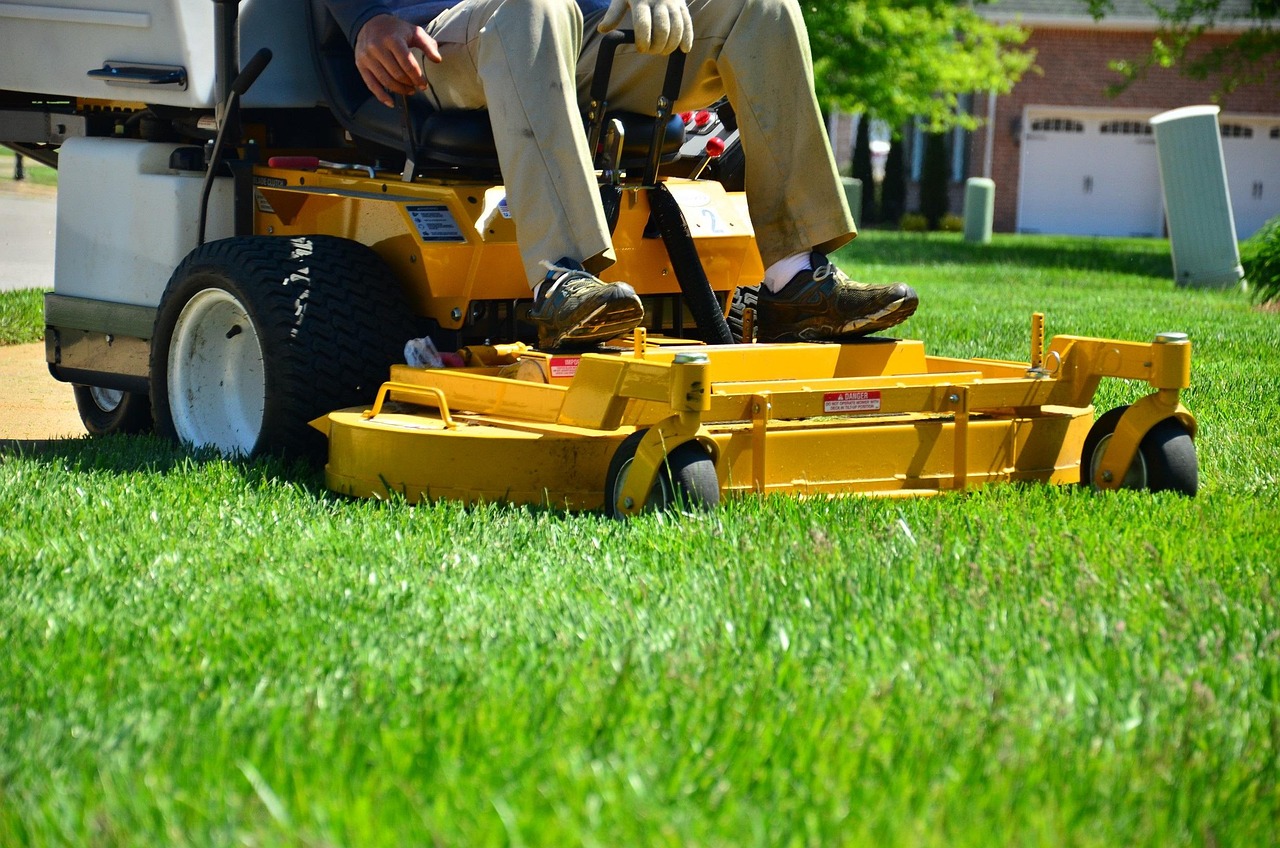
Mowing is the grass job crews do most often, so it has the strongest long-term effect. A mower can help grass fill in, or it can stress the plant week after week. For teams using walk-behind mowers, riding mowers, or compact tractors, a good mowing plan starts with height, timing, and blade condition.
Set the Cutting Height by Grass Type
Do not set every machine at the lowest notch just because the area looks cleaner for one day. Purdue Extension notes that mowing below the proper range restricts root growth and makes turf more prone to insects, disease, drought, and traffic wear. Its lawn mowing guidance lists common cool-season grasses such as Kentucky bluegrass, perennial ryegrass, and fine fescue at about 2.0 to 3.5 inches, tall fescue at about 2.5 to 4.0 inches, and zoysiagrass at about 1.0 to 2.0 inches. (ag.purdue.edu)
Follow the One Third Rule
A safe routine is to remove no more than one third of the grass blade in one mowing. If your target height is 3 inches, mow before the grass grows much past 4.5 inches. If rain holds up the work and the grass gets too tall, raise the deck first and make one cut. Then lower it step by step over the next few cuts. It takes a little more time, but it helps avoid scalping and brown streaks.
Keep Blades Sharp and Clippings Light
Dull blades tear grass instead of cutting it cleanly. The grass tips turn gray-white, dry out fast, and make the lawn look rough from the driveway or yard entrance. Check blade edges often during fast spring growth, especially if the mower has hit sand, gravel, or small sticks. Leave fine clippings when they spread evenly, but remove heavy clumps. Penn State Extension reports that recycled Kentucky bluegrass clippings contained 46 to 59 percent of the nitrogen applied as fertilizer over a three-year period, which shows why light clipping return has real nutrient value. (extension.psu.edu)
When Should You Water and Feed Grass?
Water and fertilizer can help turf recover, but using more does not always give a better result. Too much water wastes money and can bring disease pressure. Too much fertilizer can burn grass, feed weeds, or move toward drains. The better approach is to match water and nutrients with soil condition, season, and visible grass stress.
Water by Soil Need Rather Than Habit
Automatic timers help, but they should not run on the same setting all year. U.S. EPA WaterSense reports that outdoor water use accounts for about 30 percent of household use nationwide and can be much higher in dry regions; its outdoor guidance also says residential outdoor water use reaches nearly 8 billion gallons per day in the United States, mainly for landscape irrigation. The same lesson applies on site: irrigation needs regular checks, not guesswork. (epa.gov)
- Water early in the morning when wind and evaporation are lower.
- Check sprinkler heads for overspray onto pavement, walls, and equipment pads.
- Use a screwdriver or soil probe; if it will not push into the root zone, the soil is too dry.
- Skip watering after real rainfall, even if the timer says it is watering day.
Use Soil Tests Before Fertilizer
A soil test tells you whether the lawn needs lime, phosphorus, potassium, or a pH correction. Without that information, fertilizer choice is mostly a guess. On industrial properties, this matters even more near paved edges and storm drains. Apply only what the soil and grass type need. Keep fertilizer off concrete, sweep spills back into the turf, and avoid spreading before heavy rain.
Match Feeding to the Growing Season
Feed grass when it can use the nutrients. Cool-season grasses usually respond well in fall, while warm-season grasses do better during active warm-weather growth. Avoid strong fertilizer during heat stress because weak turf will not handle it well. If grass is brown from drought dormancy, nitrogen will not fix it by itself. Water recovery and weather come first, and a modest feed at the right time often works better than one heavy application.
How Can You Reduce Weeds, Compaction, and Bare Spots?
Weed control starts before any herbicide is used. Thick grass shades the soil and leaves fewer open spots for weed seeds. Compaction, thin turf, poor mowing, and bare soil all give weeds a chance. If a site has trucks, foot traffic, trailers, or short-term storage, those wear patterns need to be part of the grass plan.
Dense Turf Blocks Many Weed Seeds
Grass cut at the right height creates shade at soil level. That makes it harder for many weed seeds to sprout. You should still remove aggressive weeds before they spread, but spot treatment alone is not enough. Fix the reason the weeds showed up. In many yards, the cause is short mowing, weak soil, poor drainage, or repeated wheel traffic.
Core Aeration Relieves Heavy Traffic
Compacted soil has fewer air spaces, so roots struggle to grow. Water may run off the surface instead of soaking into the root zone. University of Maryland Extension says aeration frequency depends on how fast soil compacts and how much use the lawn gets; it suggests annual autumn aeration for areas with regular foot traffic, while every two to three years may suit lower-traffic lawns. (extension.umd.edu)
Overseeding Repairs Wear Before Winter
Seed thin areas before they turn into dirt patches. For cool-season lawns, late summer to early fall is often the best window because the soil is still warm while air temperatures start to drop. Rake loose debris, open the soil surface, spread seed evenly, and keep the seedbed lightly moist until germination. It is not fancy work, but a 20-minute repair in September can prevent a muddy mess in February. See also: buying guides.
What Equipment Checks Make Grass Work Safer?
Industrial sites already manage forklifts, compressors, pumps, cutting tools, and moving vehicles. Mowers and trimmers need the same level of care. A grass job is still equipment work. Before anyone starts mowing, the machine, the ground, and the people nearby should be ready.
Inspect Mowers Before Each Job
Walk around the mower before use. Check tire pressure, guards, discharge chute, belts, fuel lines, oil level, blade mounting, and safety switches. Pick up stones, scrap pieces, cable ties, metal strapping, and broken pallet wood before mowing. These objects can turn into high-speed projectiles, and they can also damage the blade spindle or deck.
Manage Slopes With Written Limits
Do not rely on confidence when mowing slopes. OSHA guidance for riding mowers says operators should follow manufacturer slope limits, and if that information is not available, avoid mowing slopes over 15 degrees. The same guidance also warns against operating riding mowers within 5 feet of unprotected drop-offs such as ditches, embankments, and retaining walls. Use a trimmer, push mower, or specialty slope equipment where the risk is higher. (osha.gov)
Clean Equipment Before Storage
Grass packed under a mower deck holds moisture and speeds corrosion. It also blocks airflow, so cutting quality drops on the next job. Let the machine cool, then remove the key or battery connection as the manual requires. Clean the deck according to the manual, store fuel safely, charge batteries in a suitable area, and keep blades covered or locked away during service. Basic housekeeping keeps machines ready for the next cut.
What Seasonal Schedule Keeps Grass Maintenance Simple?
A seasonal plan keeps grass care from turning into a random list of jobs. The exact timing depends on the region and grass type, but the work pattern is usually similar: recover in spring, protect during summer, repair in fall, and reduce traffic damage in winter or dormancy.
Spring Recovery Tasks
Start by walking the whole site. Mark ruts, washouts, low spots, dead areas, and irrigation damage. Service mowers before the first heavy growth. Raise the deck if spring grass is lush and wet. Avoid mowing saturated ground because one mower pass can leave tracks for weeks. If winter debris collected along fences or loading areas, clear it before the first cut.
Summer Heat Rules
Summer calls for patience. Mow higher during heat, keep blades sharp, and avoid mowing during the hottest part of the day when grass is dry and stressed. Water only when the root zone needs it. If the lawn goes dormant during drought and local rules limit watering, accept some brown color. That is better than shallow watering every evening and dealing with disease later.
Fall Renovation Priorities
Fall is repair season for many sites with cool-season turf. Aerate compacted zones, overseed thin spots, test soil, and feed according to the test and local rules. Repair irrigation leaks before freezing weather arrives. Clean and service mowers after the final cut. The work is plain and not very exciting, but planned maintenance usually costs less than emergency repair.
FAQ
Q1: What Are the Most Important Grass Maintenance Tips for a Busy Site? A: Set the right mowing height, follow the one third rule, water by soil need, test soil before fertilizing, repair bare spots early, and inspect mowing equipment before each job.
Q2: How Often Should You Mow Industrial Grass Areas? A: Mow based on growth, not a fixed calendar. During fast spring growth, some areas may need weekly mowing. During heat or drought, mowing may slow down. Never remove more than one third of the blade at one time.
Q3: Should Grass Clippings Stay on the Lawn? A: Yes, if they are short and spread evenly. Fine clippings return nutrients and organic matter. Remove clumps because they block light, trap moisture, and leave yellow patches.
Q4: When Is the Best Time to Aerate Compacted Grass? A: For cool-season grass, early fall is often best because the lawn can recover and seed can establish. High-traffic areas may need yearly aeration, while lighter-use areas may need it less often.
Q5: How Can You Make Mowing Safer Near Equipment and Slopes? A: Clear debris first, inspect the mower, wear proper protection, follow the machine manual, respect slope limits, and use trimmers or specialty equipment where riding mowers are not safe.