How to evaluate material handling suppliers for safe and scalable operations

Choosing the right supplier starts with the operating problem
Material handling suppliers help facilities move, store, protect, control, and track materials across manufacturing, warehousing, distribution, and service operations. The right choice is not always the lowest bidder or the company with the widest catalog. It is the supplier whose equipment, engineering support, installation process, documentation, and service model fit the way the operation actually runs.
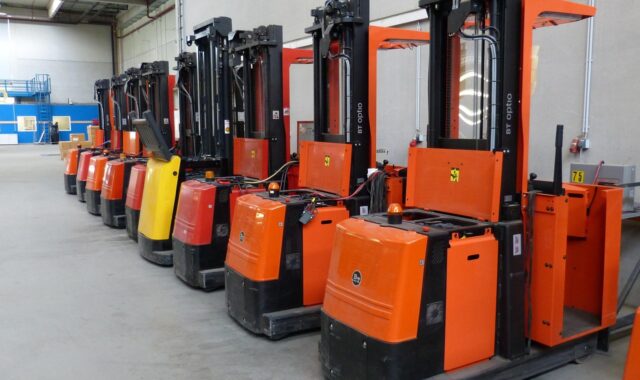
In a warehouse, that may involve rack design, lift trucks, conveyors, pallet flow, dock equipment, or warehouse automation. In a plant, it may involve cranes, carts, hoists, lift tables, work positioners, or custom fixtures. Buyers comparing options in the material handling category should start with load data, workflow, safety exposure, available space, maintenance capacity, and likely future changes—not with a price list.

What material handling suppliers actually provide
The term “material handling suppliers” covers several business models. That distinction matters because each model carries a different level of responsibility for design, integration, installation, commissioning, and after-sale support.
Industry associations such as MHEDA commonly group the market around storage and handling distributors, industrial truck distributors, systems integrators, manufacturers, and related product or service suppliers. In practice, a buyer may receive proposals from several of these companies for the same project, even though the scope behind each proposal is very different.
| Supplier type | Best suited for | Key strength | Common limitation |
|---|---|---|---|
| Original equipment manufacturer | Defined equipment purchases, replacement units, standardized systems | Deep product knowledge and factory documentation | May focus mainly on its own product line |
| Distributor or dealer | Forklifts, racking, shelving, dock equipment, parts, rentals, regional service | Local support, multiple product options, practical application knowledge | Integration depth varies by company |
| Systems integrator | Conveyors, AS/RS, robotics, AMRs, sortation, controls, software-connected systems | Turns multiple technologies into one operating system | Requires clearer specifications and stronger project governance |
| Aftermarket and service provider | Maintenance, inspections, retrofits, parts, repairs, battery or charger support | Lifecycle support and uptime protection | May not be responsible for original system design |
| Custom fabricator | Special carts, fixtures, lifting devices, platforms, guards, handling aids | Adapts equipment to unusual loads or workflows | Requires careful engineering review and documentation |
A stronger sourcing question is not simply, “Who sells this equipment?” It is, “Who can take responsibility for making this equipment work safely in this facility?”
Build the specification before asking for pricing
Many poor supplier decisions begin with a vague request for quote. A buyer may ask for “pallet rack,” “conveyor,” “forklift,” or “lift table” pricing without defining load behavior, travel paths, throughput targets, floor condition, clear height, dock flow, operator training needs, or maintenance expectations. Suppliers then quote against different assumptions, which makes the bids difficult to compare.
Document the load and movement profile
Start with the material itself. Record the maximum and typical weight, dimensions, center of gravity, packaging condition, pallet type, fragility, temperature sensitivity, stacking limits, and handling frequency. A 2,000-pound uniform pallet, a tall unstable load, a drum, a coil, and an irregular welded assembly can require very different handling methods, even when the total weight looks similar.
Then map the movement. Identify where the material starts, where it ends, how often it moves, what equipment touches it, where congestion occurs, and which moves create ergonomic or collision risk. A supplier that asks for this information before quoting is usually showing a more serious engineering mindset.
Define the facility constraints
Facility conditions often decide whether a solution is practical. Important constraints include aisle width, column spacing, slab condition, floor flatness, dock layout, ceiling height, fire protection, sprinkler clearances, pedestrian routes, battery charging areas, traffic intersections, temperature, dust, washdown needs, and hazardous classifications where applicable.
For U.S. operations, OSHA’s warehousing guidance identifies hazards such as powered industrial trucks, ergonomics, slips, trips, falls, hazardous chemicals, material handling equipment, and robotics. OSHA’s powered industrial truck requirements are also a major consideration when forklifts or similar industrial trucks are part of the solution. These references do not replace a site-specific safety review, but they do show why supplier evaluation should include safety controls and documentation, not only equipment price.
Evaluate safety, standards, and documentation
Material handling equipment often operates near people, structures, stored loads, and moving vehicles. Documentation is therefore not an administrative extra. It is part of the product and part of the risk control plan.
For storage rack projects, buyers should ask how the supplier addresses applicable rack design and use standards. The Rack Manufacturers Institute identifies ANSI MH16.1 for industrial steel storage rack systems, ANSI MH16.3 for cantilever storage rack systems, and ANSI MH26.2 for industrial storage rack decking. For lifting devices, cranes, hoists, and below-the-hook equipment, buyers commonly need to consider applicable ASME B30 series requirements and other relevant engineering standards. For industrial trucks, OSHA rules and recognized truck safety standards should be part of the review.
At minimum, ask the supplier for:
- Rated capacities, load limits, and assumptions behind those ratings.
- Layout drawings, clearances, guarding, and traffic-flow assumptions.
- Installation, operation, inspection, and maintenance instructions.
- Training requirements for operators and maintenance personnel.
- Applicable standards used in design or selection.
- Warranty terms, exclusions, and procedures for claims.
- Spare-parts information and recommended inspection intervals.
If a proposal cannot explain the standard, design basis, or safety assumption it uses, treat that as a risk signal. The issue is not whether every purchase needs a long engineering package. The issue is whether the supplier can document the basis for safe use.
Compare suppliers by lifecycle value, not unit price
Unit price is easy to compare. Lifecycle value is harder, but it is usually where the financial difference appears. A low-cost equipment quote can become expensive if it creates downtime, requires frequent repairs, lacks local service, fails to integrate with existing systems, or cannot adapt when SKU mix, order profile, or production volume changes.
A practical supplier scorecard should include at least seven categories:
- Application fit: Does the proposal address the actual load, workflow, and environment?
- Engineering competence: Can the supplier explain capacities, controls, safety devices, and layout assumptions?
- Integration ability: Can the equipment connect with conveyors, WMS, ERP, robotics, charging systems, traffic management, or building constraints where required?
- Installation plan: Does the supplier define site preparation, downtime, staging, permits, testing, and handover?
- Service coverage: Are technicians, parts, rentals, preventive maintenance, and emergency response available where the facility operates?
- Training and documentation: Are operators and maintenance teams supported after commissioning?
- Total cost: Does the evaluation include energy, consumables, maintenance, spare parts, downtime, training, and expected life?
The lowest bid may still be the right bid if the equipment is standard, the scope is narrow, and the buyer has internal expertise. For projects involving automation, storage density, vehicle-pedestrian interaction, or production-critical handling, the cheapest proposal often leaves important work outside the scope.
The 2026 buying context favors scalable suppliers
Current industry research points to a more technology-driven buying environment. The 2026 MHI Annual Industry Report, produced with Deloitte and released at MODEX 2026, was based on responses from more than 500 supply chain leaders. MHI reported that 56% of organizations expected to increase spending on supply chain innovation, 52% planned to spend more than $1 million, and 17% planned to spend more than $10 million. The same reporting identified AI, robotics, automation, real-time analytics, workforce challenges, and economic uncertainty as major issues shaping supply chain decisions. See also: production equipment.
For buyers of material handling equipment, this does not mean every facility should automate immediately. The more useful takeaway is that supplier selection should account for future scalability. A rack project may later need pick modules or automated replenishment. A conveyor project may later require scanning, sortation, or warehouse execution software. A lift-truck fleet may later need telematics, lithium battery support, opportunity charging, or pedestrian-detection systems. A supplier that understands only the first purchase may not be the right partner for the second phase.
Scalability also applies to labor. If a facility struggles to hire or retain operators, solutions that reduce touches, improve ergonomics, simplify training, or make maintenance easier may create value even before full automation becomes realistic.
Questions to ask before shortlisting material handling suppliers
Use supplier conversations to test depth, not just responsiveness. Good suppliers often ask difficult questions early because they want to avoid unsafe or under-scoped solutions.
- What information do you need before you can provide a reliable quote?
- Which standards, regulations, or industry practices affect this application?
- What assumptions are included in your capacity, throughput, and safety recommendations?
- What parts of the project are excluded from your scope?
- Who is responsible for permits, inspections, controls integration, and final acceptance testing?
- How will installation affect operations, docks, aisles, production, or shipping schedules?
- What documentation will be delivered at handover?
- What preventive maintenance is recommended, and what parts are normally stocked locally?
- Can the system be expanded, relocated, or modified if volume or product mix changes?
- What failure modes should we plan for, and how quickly can your team respond?
The answers should be specific. Claims such as “industry standard,” “heavy duty,” or “easy to integrate” are not enough unless the supplier can define what those phrases mean in the project context.
Common red flags in supplier selection
Several warning signs appear repeatedly in material handling purchases. The first is a proposal that prices equipment but ignores the process. If the supplier does not ask about throughput, load condition, traffic flow, operators, or facility constraints, it may be quoting a product rather than solving a handling problem.
The second red flag is missing or weak documentation. Rated capacity, maintenance guidance, inspection requirements, and installation assumptions should not be difficult to obtain for industrial equipment.
The third is unclear responsibility. In multi-vendor projects, one party may supply conveyors, another controls, another guarding, another lift trucks, and another software. Without a defined integrator or project owner, gaps often appear at commissioning. Buyers should identify who is responsible for making the complete system function safely.
The fourth is poor service fit. A supplier may have strong equipment but limited regional support. For production-critical or shipping-critical operations, response time, parts access, rental backup, and technician capability can be as important as the original equipment specification.
Frequently asked questions
What is the difference between a material handling supplier and an integrator?
A supplier may sell equipment, parts, or services within a material handling category. An integrator is responsible for making multiple pieces of equipment, controls, software, safety systems, and workflows operate together. Some companies do both, but buyers should confirm the actual project scope.
Should I buy directly from an OEM or through a distributor?
Buy direct from an OEM when the specification is fixed, the product is specialized, or factory engineering support is critical. Use a distributor or dealer when local support, multiple product options, rentals, service, and practical facility knowledge are more important. For complex systems, consider an integrator.
How many supplier quotes should I compare?
Three comparable quotes are often enough for a defined purchase, but only if every supplier is quoting the same scope and assumptions. For complex projects, it can be more useful to compare one OEM, one distributor, and one integrator to understand different approaches before narrowing the scope.
What information should I prepare before contacting suppliers?
Prepare load data, movement frequency, facility drawings, photos, aisle and height constraints, current pain points, throughput goals, safety concerns, existing equipment lists, utility availability, and expected project timing. Better input usually produces better proposals.
Is automation always the best material handling investment?
No. Automation can be valuable when volume, labor constraints, accuracy needs, or safety risks justify it. However, many facilities should first improve layout, storage discipline, manual handling aids, traffic separation, maintenance practices, and data visibility. A credible supplier should be willing to recommend the simpler option when it fits the problem.
Final takeaway
The best material handling suppliers are not just equipment vendors. They reduce operating risk by helping buyers define the load, understand the workflow, select equipment that fits the facility, document safety assumptions, plan installation, train users, and support the system through its working life. For straightforward purchases, a focused OEM or local dealer may be enough. For connected or automated systems, a capable integrator may be essential. The buyer’s job is to match supplier responsibility to operational risk before price becomes the deciding factor.