Rotating equipment in industrial plants explained for reliability and energy performance
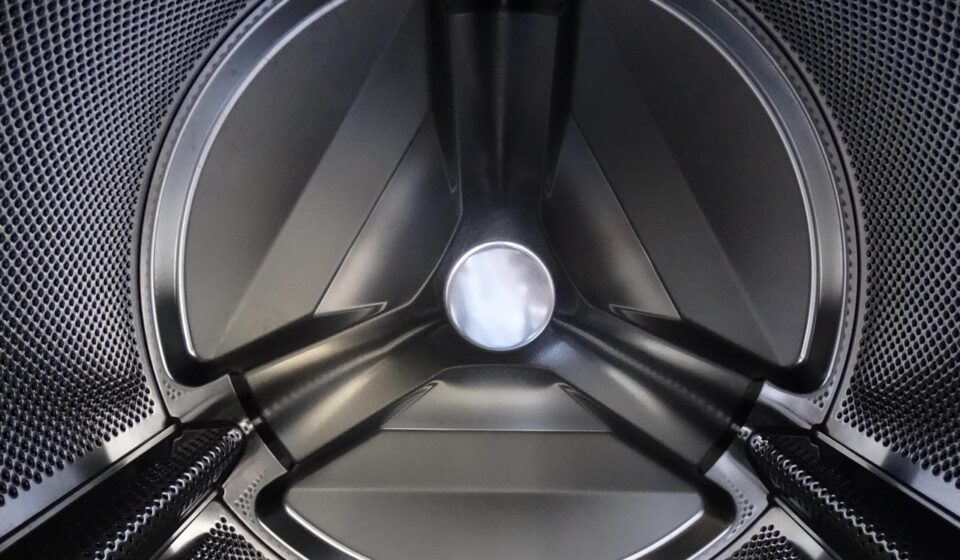
Rotating equipment refers to production assets that transfer energy through a rotating shaft, impeller, rotor, screw, fan wheel, gear set or motor. In industrial plants, the term commonly covers pumps, compressors, turbines, fans, blowers, mixers, gearboxes and electric motors. These machines determine whether a process line can move fluids, compress gases, ventilate spaces, mix materials or convert electrical power into useful mechanical work. The practical question is not simply whether a machine can run. It is whether it can run safely, efficiently and predictably under actual process conditions. For operators, engineers and purchasing teams, rotating equipment is best managed as part of a production system, not as a group of stand-alone machines.
What rotating equipment includes in production environments
In a plant, rotating equipment sits at the point where energy becomes motion. A motor may drive a pump, a coupling may transfer torque, a gearbox may change speed, and an impeller or rotor may create flow, pressure or mixing action. Because these components work as a chain, a problem in one area can appear somewhere else. A poorly aligned motor-pump set, for example, may first show up as higher bearing temperature, seal leakage, vibration or rising power consumption.

For readers comparing machinery categories across factories, utilities and process plants, rotating machines are a major part of broader production equipment planning because they connect mechanical reliability, process availability, energy cost and safety.
| Equipment type | Typical rotating element | Main production function | Common risk area |
|---|---|---|---|
| Centrifugal pump | Impeller and shaft | Moves liquids through a process or utility system | Cavitation, seal failure, bearing wear |
| Compressor | Rotor, screw, impeller or crank-driven parts | Raises gas pressure for process or instrument use | Surge, lubrication issues, vibration |
| Fan or blower | Fan wheel or impeller | Moves air or gas for ventilation, combustion or cooling | Imbalance, fouling, belt or bearing problems |
| Electric motor | Rotor and shaft | Converts electrical power to mechanical rotation | Overheating, insulation degradation, bearing currents |
| Gearbox | Gears, shafts and bearings | Changes torque, speed or direction | Lubricant contamination, tooth wear, misalignment |
Why system thinking matters more than machine labels
A common mistake is to classify a rotating asset only by its nameplate. In practice, the surrounding system often decides how well the machine performs. A pump selected for the wrong operating point can run outside its best efficiency region even if the pump itself is well built. A fan may waste power when dampers are used to throttle flow in an application where variable-speed control would be more suitable. A compressor may trip repeatedly if upstream and downstream process conditions were not included in the operating envelope.
The U.S. Department of Energy has emphasized that electric motors used for machine drives such as pumps, conveyors, compressors, fans, mixers and grinders account for about 54% of industrial electricity consumption in U.S. manufacturing. That figure matters because it moves the discussion beyond component efficiency. A premium-efficiency motor can still sit inside an inefficient installation if the driven equipment, controls, piping, ducting or operating schedule is poorly matched to actual demand.
For plant teams, rotating equipment decisions should cover three layers. The machine layer includes bearings, seals, rotors, casings and tolerances. The drive layer includes motor efficiency, variable-speed drive suitability, couplings and alignment. The process layer includes flow demand, pressure drop, control method, duty cycle and maintenance access. Reliability gains are usually strongest when all three layers are reviewed together.
Reliability risks that should shape inspection priorities
Rotating equipment failure is rarely random. Most problems develop through recognizable patterns: imbalance, misalignment, looseness, lubrication breakdown, contamination, resonance, electrical stress, seal distress or process instability. The difficulty is that different machines reveal those patterns in different ways. A pump may show vibration and seal leakage, while a motor may show rising winding temperature, current imbalance or bearing noise.
Pumps, fans and compressors
For pumps, the operating point is critical. If the process forces the pump far from the intended region of the performance curve, the machine may experience high vibration, radial loading, recirculation or cavitation. Cavitation is especially damaging because vapor bubble collapse can erode hydraulic surfaces and accelerate mechanical wear. For fans and blowers, fouling or buildup on blades can cause imbalance, while duct restrictions can move the machine into less stable operating conditions. For compressors, the consequences can be more severe because pressure ratio, temperature, lubrication and surge control all interact.
Motors, couplings and gearboxes
Motors and power transmission components deserve the same attention as the driven equipment. A motor operating in a hot, dusty or overloaded environment may lose insulation life more quickly. A coupling can hide small installation errors until vibration increases. A gearbox with contaminated or degraded lubricant can develop bearing and gear tooth damage long before visible failure. These risks support a maintenance strategy based on operating context, not fixed calendar checks alone.
Standards and regulations that influence rotating equipment specifications
Standards do not replace engineering judgment, but they give teams a common language for acceptance, testing, procurement and monitoring. ISO 20816-1:2016 establishes general conditions and procedures for measuring and evaluating vibration on complete machines, including rotating and non-rotating parts. ISO 17359:2018 provides general guidelines for setting up condition monitoring and diagnostics programs for machines, and ISO lists that edition as confirmed in 2023. These documents are useful references when a plant needs consistent vibration limits, alarm logic or monitoring procedures across multiple asset classes.
For pump procurement in petroleum, petrochemical and natural gas applications, API Standard 610 is a widely used reference for centrifugal pumps. The IOGP JIP33 S-615 specification refers to API 610 12th edition, January 2021, as the basis for a common set of minimum procurement requirements for centrifugal pumps in those industries. Plants outside oil and gas may still use API-style requirements for severe-duty service, but the correct standard should be selected according to service, risk level, fluid, pressure, temperature and owner requirements.
Motor efficiency is another area where specifications are changing. IEC 60034-30-1:2025 covers efficiency classes for line-operated AC motors and replaces the 2014 edition. In the United States, Department of Energy electric motor rules list June 1, 2027 as a compliance date for new standards established by the 2023 direct final rule, with separate expanded-scope motor requirements scheduled for later compliance for affected categories. Buyers should verify the applicable motor category, market and date before adding efficiency language to a purchase specification.
A practical maintenance framework for rotating equipment
A useful maintenance program starts with criticality. Not every rotating machine justifies continuous online monitoring, but every important machine should have a defined failure mode, inspection method and response plan. A small non-critical fan may be suitable for route-based vibration checks. A process-critical compressor may require continuous vibration, temperature, pressure, oil and control-system data. The monitoring intensity should match the production risk. See also: automation systems.
| Monitoring activity | What it helps detect | Best use case |
|---|---|---|
| Vibration measurement | Imbalance, misalignment, looseness, bearing defects, resonance | Pumps, motors, fans, gearboxes and compressors |
| Oil analysis | Wear particles, contamination, lubricant degradation | Gearboxes, turbines, compressors and large bearing systems |
| Temperature tracking | Overload, cooling problems, friction, electrical stress | Motors, bearings, gearboxes and seal systems |
| Electrical current analysis | Load variation, rotor issues, supply imbalance, drive problems | Motor-driven systems with changing duty cycles |
| Process data review | Off-design operation, flow restriction, pressure instability | Pumps, compressors, fans and variable-speed systems |
The framework should also define what happens after an alarm. A vibration limit is not useful if it only creates a notification that no one owns. Good programs define alarm priority, confirmation steps, shutdown criteria, spare-parts needs and post-repair acceptance checks. They also keep records of baseline vibration, alignment values, lubricant type, overhaul history and operating conditions. Without that context, teams may replace components repeatedly while missing the system cause.
Maintenance planning should include human factors as well. Access to bearings, seals, guards, oil sampling points and lifting points affects whether inspections are actually performed. Equipment that is difficult to isolate or unsafe to inspect will tend to receive less attention, even when it is critical. Reliability should therefore be considered during layout and procurement, not only after commissioning.
How to make better procurement and upgrade decisions
When buying or upgrading rotating equipment, the lowest purchase price is often a weak decision metric. Lifecycle cost includes energy, installation, downtime, spares, maintainability, instrumentation, repair complexity and the cost of operating away from design conditions. For motor-driven systems, energy can dominate lifecycle cost where equipment runs many hours per year. For intermittent or standby equipment, reliability, start readiness and maintainability may be more important than small efficiency differences.
A stronger specification should include the expected operating range, not only the rated point. For pumps, this means flow, head, fluid properties, temperature, net positive suction head conditions and control method. For fans, it includes system resistance, gas density, fouling expectations and noise constraints. For compressors, it includes suction and discharge conditions, gas composition, turndown requirements and control philosophy. For motors, it includes supply conditions, enclosure, duty cycle, efficiency class, drive compatibility, ambient conditions and service factor assumptions.
Upgrade decisions should also separate confirmed facts from assumptions. If a plant wants to add a variable-speed drive, the team should confirm that the motor insulation, bearing protection, cooling and driven-equipment speed range are suitable. If a pump is repeatedly failing, the team should confirm the actual operating point before selecting a stronger seal or bearing. If a gearbox runs hot, lubricant condition and loading should be checked before assuming the gearbox is undersized. This disciplined approach reduces expensive trial-and-error maintenance.
Frequently asked questions
Is rotating equipment the same as mechanical equipment?
No. Rotating equipment is a subset of mechanical equipment. Mechanical equipment can include static assets such as vessels, tanks, heat exchangers and piping components, while rotating equipment specifically contains parts that rotate during operation, such as shafts, rotors, gears, impellers or fan wheels.
What is the most important condition monitoring method for rotating equipment?
Vibration monitoring is often the primary method because many rotating faults create measurable vibration patterns. However, it should not be used alone. Oil analysis, temperature tracking, electrical measurements and process data can reveal problems that vibration alone may miss or identify too late.
When should a plant use continuous monitoring instead of periodic inspection?
Continuous monitoring is most appropriate when failure would create high safety risk, major production loss, long repair time or secondary damage. Periodic inspection may be adequate for lower-criticality machines, especially when failures are easy to detect, spare parts are available and downtime consequences are limited.
Does a high-efficiency motor guarantee an efficient rotating equipment system?
No. Motor efficiency matters, but system efficiency also depends on the driven equipment, controls, loading, piping or duct design, maintenance condition and operating schedule. A high-efficiency motor installed in a poorly controlled or oversized system can still waste energy.
What should be checked before replacing recurring failed components?
Before replacing another bearing, seal, coupling or belt, the team should review alignment, balance, lubrication, contamination, process operating point, foundation condition and recent changes in duty. Repeated component failure is often a symptom of a wider system problem rather than a defective part alone.