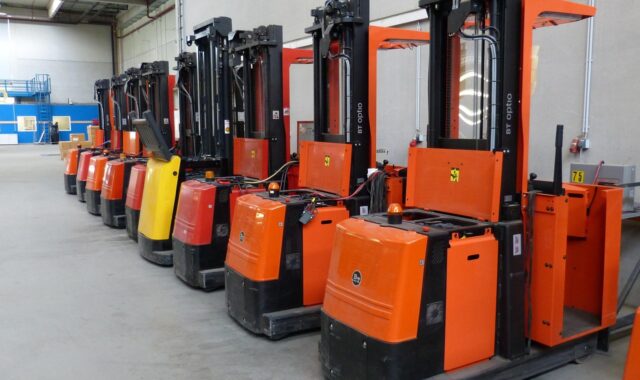
Crown material handling equipment and technology for warehouse operations

Crown material handling refers to the lift trucks, warehouse technologies, power systems, automation options, fleet tools, and support network associated with Crown Equipment Corporation. For warehouse managers and industrial buyers, the practical question is not simply whether Crown makes forklifts. It is where Crown equipment fits in receiving, internal transport, storage, picking, replenishment, and dock work. According to Crown’s 2025 corporate announcement, the company was founded in New Bremen, Ohio, in 1945 and marked 80 years in business with more than 19,600 employees worldwide and service through retail locations and independent dealers in more than 80 countries. That scale is relevant, but equipment selection still needs to start with application requirements, safety duties, energy strategy, and total operating cost.
What Crown material handling means in practice
In everyday warehouse language, Crown material handling usually means Crown forklifts and related warehouse equipment. In a broader planning discussion, it also includes operator-focused truck design, connected fleet management, motive power products, warehouse layout support, training programs, and automation pathways. That wider view matters because modern material handling decisions are rarely about one machine in isolation.

A pallet jack that works well for short dock moves may be inefficient over long travel distances. A reach truck that increases rack density may also require changes to aisle layout, floor condition, battery and charger planning, and operator training. A fleet management platform can identify underused trucks, but it only creates value if managers review the data and act on it. Crown’s product and solutions material presents this as a systems issue: equipment, power, data, operators, and workflow all affect the same operating environment.
For more coverage of equipment categories and warehouse handling topics, visit our material handling section.
Equipment roles across the warehouse workflow
Crown’s lift truck range can support many common warehouse tasks, but the right choice depends on the movement pattern. A useful starting point is to match the truck category with the job it is expected to perform.
| Warehouse task | Typical Crown equipment category | Selection focus |
|---|---|---|
| Loading, unloading, and short pallet moves | Manual, walkie, and rider pallet trucks | Dock congestion, travel distance, pallet weight, ramp or lift-gate use |
| Light stacking and backroom storage | Walkie stackers and straddle stackers | Lift height, aisle width, floor condition, operator visibility |
| Indoor pallet handling | Electric counterbalance forklifts | Battery runtime, turning radius, attachment needs, dock-to-rack workflow |
| Outdoor or heavy-duty handling | Internal combustion forklifts | Surface condition, ventilation, fuel choice, load weight, tire type |
| Narrow aisle storage | Reach trucks and turret trucks | Rack height, aisle design, lift height, pallet type, floor flatness |
| Piece picking and order fulfillment | Order pickers and low-level picking equipment | Pick height, SKU velocity, operator travel, fall protection requirements |
| Cart movement and route-based transport | Tow tractors and automated or dual-mode options | Route consistency, traffic rules, cart design, automation readiness |
Crown’s official pallet truck information, for example, lists models ranging from manual pallet jacks to electric rider pallet trucks. Capacities vary by series, and listed applications include loading, unloading, dock work, transport, bulk storage, and order picking. That variety is useful, but it can also create a planning trap: the least expensive truck that can move a pallet may not be the most economical truck for a high-frequency process.
Fleet planners should first define load data, travel distance, lift height, shift length, aisle width, floor condition, battery or fuel infrastructure, and maintenance access. Brand, model, lease structure, and accessories should be compared after those basics are clear.
Why technology and data now matter
Crown’s material handling positioning increasingly combines equipment with technology. Its public solution pages describe automation, connected solutions, energy solutions, fleet management, operator assist technologies, and warehouse design support. This reflects a broader shift in warehousing: productivity is no longer measured only by truck speed or rated capacity. Managers also look at utilization, impacts, idle time, battery performance, operator behavior, maintenance events, and how equipment interacts with warehouse management processes.
Crown InfoLink is the company’s operator and fleet management system. Crown describes it as a way to gain insight into connected equipment, people, and processes, with modules related to areas such as compliance, impacts, productivity, utilization, energy, and service. The practical value is not simply data collection. It is using the information to ask better operating questions:
- Are too many trucks assigned to one department while another area is waiting?
- Are impact events concentrated near a dock, rack end, or traffic intersection?
- Are some operators consistently using equipment outside expected patterns?
- Are batteries being charged, changed, or opportunity-charged in a way that reduces uptime?
- Can maintenance be scheduled before a small issue becomes an unplanned shutdown?
Technology should be evaluated as an operating discipline, not as a dashboard purchase. If a warehouse has no process for reviewing reports, coaching operators, maintaining equipment, and adjusting traffic rules, fleet software can become another unused system. If supervisors are trained and accountable, the same data can support safer habits, better equipment allocation, and more predictable maintenance planning.
Energy and uptime considerations
Power strategy is one of the most important parts of Crown material handling decisions. Crown’s V-Force energy materials describe batteries, chargers, battery monitoring, watering systems, charging accessories, lithium-ion options, lead-acid options, and energy analysis support. The central issue for a warehouse is not which battery technology sounds newer. It is which energy approach fits the duty cycle.
Lead-acid batteries can remain practical in many operations, especially where charging rooms, watering procedures, and shift patterns are already established. Lithium-ion batteries can reduce some maintenance steps and support different charging habits, but they require a review of charger compatibility, electrical infrastructure, heat, usage intensity, and lifecycle economics. Internal combustion forklifts may still be relevant for outdoor, heavy-duty, or long-shift applications, but fuel storage, emissions, ventilation, and maintenance planning must be considered.
Before selecting Crown equipment or any comparable fleet, operations teams should answer several power questions:
- How many operating hours are required per truck per shift?
- Are there natural charging windows during breaks, staging, or shift changes?
- Does the facility have enough electrical capacity for the proposed chargers?
- Will battery changes interrupt production or create additional handling risks?
- How will power performance be tracked after deployment?
Uptime is also affected by service response, parts availability, preventive maintenance discipline, operator behavior, and application severity. A truck used lightly in retail backroom work has a different maintenance profile from a truck used continuously on a busy dock or in a cold-storage environment. A realistic total cost discussion should therefore include maintenance, tires, batteries, chargers, attachments, training, damage, downtime, and resale or lease-end terms, not just the acquisition price.
Safety and compliance cannot be separated from selection
Forklifts and powered industrial trucks are regulated equipment, not ordinary workplace vehicles. In the United States, OSHA standard 29 CFR 1910.178 covers powered industrial trucks, including requirements related to design, fire protection, maintenance, and the use of fork trucks, tractors, platform lift trucks, motorized hand trucks, and other specialized industrial trucks. The same standard also addresses operator training, truck operation, battery charging, nameplates, modifications, hazardous locations, and related safety topics.
Several points are especially relevant when evaluating Crown material handling equipment: See also: production equipment.
- Operators must be trained and evaluated for the types of powered industrial trucks they use.
- Attachments or modifications that affect capacity and safe operation require proper approval and updated markings.
- Nameplates and capacity information must remain legible and reflect the equipment configuration.
- Battery charging and fuel handling require appropriate areas, procedures, and protective measures.
- Truck type must match the operating environment, especially where hazardous atmospheres or combustible materials may be present.
The safety case is reinforced by labor data. The U.S. Bureau of Labor Statistics reported on February 19, 2026, that there were 5,070 fatal work injuries in the United States in 2024, and transportation and material moving occupations had the highest fatality count among occupational groups. That does not mean all such incidents involve forklifts, but it does show why industrial movement, traffic control, training, and equipment condition deserve management attention.
For buyers, safety should influence specification. A narrow-aisle truck with excellent storage density may still be a poor fit if aisle discipline, floor quality, rack protection, lighting, and operator training are weak. A fleet monitoring tool may support safety efforts, but it does not replace supervision, documented training, pre-use inspections, speed rules, pedestrian separation, and maintenance follow-through.
How to evaluate Crown against alternatives
Crown is one of the major names in lift trucks and warehouse equipment, but a responsible buying process should still compare options. The right comparison is not simply Crown versus another brand. It is the full operating package against the facility’s actual work.
Start with the application profile. Measure pallet weights, fork dimensions, travel distances, lift heights, rack openings, doorway clearances, slope, floor condition, dock plate use, trailer entry frequency, temperature, dust, moisture, and traffic interaction with pedestrians. Then compare equipment by capability, ergonomics, serviceability, support coverage, battery or fuel strategy, operator acceptance, data needs, and lifecycle cost.
Market context also matters. A 2026 MHEDA article summarizing Industrial Truck Association data reported that North American retail forklift orders reached 185,000 through November 2025, with electric trucks representing 72 percent of year-to-date sales and internal combustion trucks representing 28 percent. That snapshot points to strong electric demand, but it should not be read as a rule that every application should be electric. Outdoor surfaces, heavy loads, long shifts, infrastructure constraints, and cost structure can still point to other choices.
A practical evaluation checklist should include:
- Fit for task: Does the truck match the load, height, distance, aisle, and duty cycle?
- Operator environment: Are controls, visibility, vibration, entry, and fatigue factors appropriate for the shift?
- Energy plan: Are batteries, chargers, fuel, and electrical infrastructure aligned with production needs?
- Data value: Will fleet management information actually be reviewed and used?
- Service model: Is local support available, and are maintenance responsibilities clear?
- Compliance: Are training, inspections, nameplates, attachments, and operating rules documented?
- Total cost: Does the analysis include downtime, maintenance, power, damage, and end-of-term costs?
The best outcome is not the largest fleet or the most advanced technology package. It is a stable handling system in which each truck has a clear job, operators are trained for that job, energy is planned around real usage, data is used for decisions, and equipment condition is actively managed.
Frequently asked questions
Is Crown material handling only about forklifts?
No. Forklifts are central to Crown’s product identity, but Crown material handling also includes pallet trucks, stackers, reach trucks, order pickers, tow tractors, automation options, fleet management systems, operator assist tools, batteries, chargers, and warehouse support services.
What Crown equipment is usually used for pallet movement?
For basic pallet movement, Crown offers manual pallet jacks, walkie pallet trucks, rider pallet trucks, and related pallet handling equipment. The right choice depends on travel distance, pallet weight, dock conditions, operating hours, and whether vertical stacking is required.
Does choosing Crown remove the need for OSHA forklift training?
No. Brand choice does not remove employer responsibilities. In the United States, powered industrial truck operators must be trained and evaluated under applicable OSHA requirements for the equipment and workplace conditions involved.
Is electric equipment always the right choice for warehouse material handling?
Electric equipment is widely used in indoor warehouses and has strong market momentum, but it is not automatically right for every operation. The decision should consider duty cycle, charging infrastructure, ventilation, surface conditions, load weight, shift pattern, and lifecycle cost.
What should buyers review before requesting a Crown forklift quote?
Buyers should document load weights, lift heights, aisle widths, travel distances, floor conditions, dock requirements, shift hours, energy constraints, attachment needs, operator training requirements, and service expectations. That information helps prevent under-specifying or overbuying equipment.