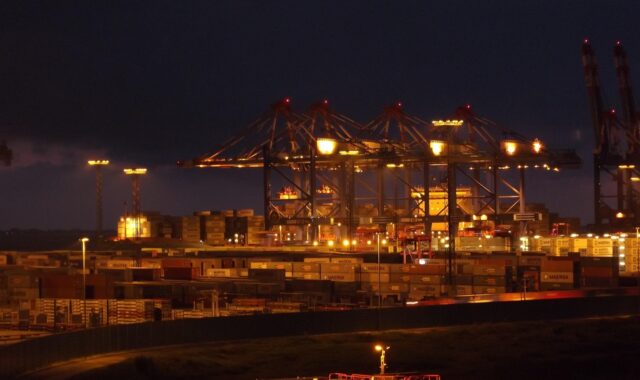
Electromech material handling systems for modern warehouses and factories

What electromech material handling means now
Electromech material handling refers to equipment that moves, lifts, positions, sorts or stores goods by combining mechanical structures with electric motors, drives, controls and sensors. In warehouses and factories, that can include powered conveyors, sorters, hoists, lift tables, transfer carts, automated storage and retrieval equipment, palletizers and electromechanical actuators. The practical value is not automation for its own sake. It is controlled movement: predictable speed, repeatable positioning, safer load transfer, better uptime data and smoother integration with warehouse or production software. For broader industry context, see the material handling category.
For most facilities, the question is not simply whether a process can be automated. It is whether a movement can be controlled well enough to improve throughput, safety, reliability or visibility. Electromech systems are most useful where repeatable movement, load control, energy management and data visibility matter as much as raw lifting capacity.

Where electromechanical motion fits in material flow
Material handling is not a single machine category. It is a sequence of movements: receiving, putaway, replenishment, work-in-process transfer, picking, packing, staging and shipping. Electromechanical technology can support many points in that sequence, but the right application depends on the load, route, duty cycle, environment and required level of control.
Conveyors and sortation equipment
Conveyors are among the most familiar electromechanical handling systems because they move goods along a fixed path with controlled speed and predictable accumulation. Belt conveyors, roller conveyors, chain conveyors, vertical lifts, merges, diverts and sorters all rely on mechanical frames and moving elements driven by electric motors or motorized rollers. The electromechanical advantage is consistency. Once the layout, controls and guarding are correct, the system can move cartons, totes, components or pallets at repeatable rates while supporting scanners, weighing equipment and downstream processes.
Conveyors are strongest when flow is frequent and routing is reasonably stable. They are less suitable when the product mix changes rapidly, routes shift every week or the facility cannot dedicate floor space to fixed infrastructure. In those cases, hybrid layouts may combine short conveyor islands with forklifts, tuggers, automated guided vehicles or manual workstations.
Hoists, cranes and lifting devices
Electromechanical hoists, bridge cranes, jib cranes and workstation cranes convert electrical power into controlled vertical and horizontal movement. Compared with purely manual lifting, powered hoists can reduce physical strain and make heavy or awkward loads easier to position. Compared with hydraulic lifting in some applications, electromechanical motion can simplify leak control, improve position feedback and support cleaner operation in indoor environments.
Standards matter in these applications. ASME B30.16-2022 covers overhead underhung and stationary hoists, including electric-powered chain and wire rope hoists used for vertical lifting and lowering of freely suspended loads. That does not replace site-specific engineering, training or inspection, but it shows why hoists should be treated as engineered load-handling systems rather than simple accessories.
Lift tables, actuators and positioning equipment
Lift tables, tilters, turntables, ball-screw actuators and servo-driven positioning axes are common in assembly, packaging and ergonomic work cells. They are not always the headline equipment in a facility, yet they often determine whether operators can present parts at the right height, angle or orientation. In a manufacturing line, a small electromechanical actuator may control a stop, clamp, pusher, diverter or lift. In a warehouse, similar motion may be used for carton handling, dimensioning, pallet positioning or goods-to-person interfaces.
The key selection issue is not only maximum force. Engineers should also compare stroke length, cycle rate, stopping accuracy, duty cycle, shock loading, environmental exposure, access for maintenance and the consequences of failure. A device that performs well in a low-cycle workstation may be unsuitable for continuous sortation or cold-storage use.
Why facilities are modernizing electromech handling
The modernization case is being shaped by labor constraints, service-level pressure, reliability expectations and the need for more operational data. MHI and Deloitte’s 2026 Annual Industry Report, released on April 15, 2026, identified workforce and talent shortages, faster technology adoption, real-time data needs and supply chain visibility among the major trends affecting supply chains. The same report said 56% of surveyed organizations expected to increase supply chain innovation spending, while 52% planned to spend more than $1 million.
Warehouse automation data points to a mixed reality. The 2026 Automation Study from Modern Materials Handling and Peerless Research Group, published July 27, 2026, reported that conveyor and sortation systems were already used by 49% of respondents, with 51% planning implementation or upgrades within two years. However, the study also showed that full automation remains uneven across process areas. Picking, storage, conveyance and replenishment were still far from universally automated, meaning many facilities are not replacing people with fully autonomous buildings; they are creating hybrid human-plus-machine workflows.
That distinction matters. Electromech material handling projects often succeed when they remove bottlenecks, reduce touchpoints or stabilize a repetitive movement. They are more likely to disappoint when a facility automates an unstable process without first addressing slotting, packaging, pallet quality, master data, maintenance ownership and exception handling.
How to evaluate an electromech handling upgrade
A useful evaluation starts with material flow rather than equipment catalogs. The first question is not which machine to buy. It is which movement is creating cost, delay, damage, ergonomic risk or capacity limits. Once the constraint is clear, equipment options can be compared on measurable terms.
| Operational issue | Possible electromech option | Key evaluation question | Risk to check |
|---|---|---|---|
| Repeated carton movement between fixed points | Powered conveyor or conveyor zone | Is the route stable enough to justify fixed infrastructure? | Pinch points, jams, access and emergency stops |
| Heavy load positioning at a workstation | Hoist, lift table, balancer or actuator | What are the load range, cycle rate and required positioning accuracy? | Overload, suspended-load control and operator training |
| Variable pallet or tote transport | Transfer cart, AGV, AMR interface or tugger-assisted system | Does the facility need flexible routing or fixed repeatability? | Traffic control, pedestrian separation and battery management |
| High-density storage and retrieval | AS/RS, shuttle, vertical lift or stacker crane | Can inbound quality, SKU data and maintenance support the system? | Single-point failure, software integration and fire/life-safety coordination |
| End-of-line pallet handling | Palletizer, turntable, lift or wrapper interface | Are pallet patterns, packaging quality and throughput consistent? | Guarding, trapped-key access and restart procedures |
Total cost of ownership should include the obvious items, such as purchase price, installation and controls, but also the less visible costs: compressed-air removal or addition, power distribution, floor repairs, guarding, spare parts, training, downtime during installation, software interfaces and preventive maintenance. The 2026 Automation Study found that reliability and uptime, fast service response, total cost of ownership, parts availability and integration compatibility were major purchase considerations for respondents. Those priorities align with day-to-day operating reality: a handling system only adds value when it runs reliably during peak periods and can be serviced without excessive disruption.
Safety and standards should be designed in early
Electromechanical equipment creates motion, stored energy and interaction points between people, products and machines. Safety cannot be added at the end as a label package. It must be considered during layout, specification, controls design, installation, commissioning and training.
OSHA’s warehousing guidance calls attention to routine conveyor inspection, guarding of pinch points, lockout procedures when conveyors need to be cleared or serviced, adequate lighting around conveyors, and safe clearances for hoists and other mechanical handling equipment. OSHA’s general machine-guarding rule at 29 CFR 1910.212 requires guarding methods to protect operators and nearby employees from hazards such as point-of-operation areas, ingoing nip points and rotating parts. OSHA’s lockout/tagout standard at 29 CFR 1910.147 addresses control of hazardous energy during servicing and maintenance. See also: production equipment.
Consensus standards help translate those broad duties into equipment-specific expectations. ASME B20.1-2024 addresses conveyor and conveying-system safety in relation to design, construction, installation, maintenance, inspection and operation. ASME’s B30 series covers cranes, hoists, hooks, slings and related load-handling equipment, with different volumes applying to different equipment types. CEMA’s conveyor safety resources also emphasize that labels and guidance support, but do not replace, site-specific risk assessment, guarding, training and safe operating procedures.
For project teams, the practical lesson is straightforward: define the safety concept before the purchase order is locked. That includes safe access routes, emergency-stop locations, guarding strategy, restart behavior, energy-isolation points, maintenance clearances, signage, training responsibilities and documentation handover. If those topics are postponed until installation, changes become more expensive and operators may inherit avoidable risks.
Controls, data and integration are part of the system
Electromech material handling is increasingly judged by how well it communicates. A conveyor that moves cartons is useful; a conveyor that reports zone status, motor faults, jam frequency, photo-eye issues and throughput constraints is more useful. The same principle applies to hoists, lifts, palletizers and storage equipment. Drives, sensors, programmable controllers and software interfaces turn motion into operational information.
Integration should be scaled to the application. A small production cell may only need local controls, status lights and a maintenance log. A distribution center may need communication between programmable logic controllers, warehouse control systems, warehouse execution systems and warehouse management systems. The more complex the integration, the more important it becomes to define ownership: who maintains the PLC program, who responds to sensor faults, who manages spare drives, who approves software changes, and who validates performance after updates?
Cybersecurity also becomes relevant when equipment is networked. The 2026 MHI and Deloitte report listed cybersecurity and data security among key supply chain trends. For material handling projects, remote access, user permissions, backups, vendor connections and network segmentation should be discussed during design rather than after commissioning.
A practical roadmap for phased modernization
Many facilities do not need a single, large automation program. A phased approach can reduce risk and make electromechanical upgrades easier to justify. The following roadmap is often more realistic than trying to automate every material move at once:
- Map the movement. Document product types, load weights, route distances, dwell points, damage events, labor touches and downtime causes.
- Rank constraints. Separate chronic bottlenecks from occasional inconvenience. Focus first on movements that affect throughput, safety or customer service.
- Stabilize inputs. Review pallet quality, carton strength, labeling, master data, aisle discipline and maintenance access before adding automation.
- Choose the right level of control. Not every application needs servo precision or full software orchestration. Match controls complexity to business value.
- Design for maintenance. Include access space, spare parts, diagnostic screens, isolation points and training before the system goes live.
- Measure after launch. Track throughput, downtime, jams, damage, safety observations and maintenance hours against the original business case.
This phased method keeps the discussion grounded. Electromech handling equipment should not be evaluated only by how advanced it appears. It should be evaluated by whether it improves a defined flow in a measurable, maintainable and safe way.
Frequently asked questions
Is electromech material handling the same as automation?
No. Electromech material handling is the physical motion layer: motors, drives, structures, actuators, hoists, conveyors and controls. Automation may include that layer, but it also includes software logic, data systems, sensing, robotics and process rules. A powered conveyor is electromechanical; it becomes part of a larger automation system when it is coordinated with scanners, sort rules, WMS data and downstream equipment.
When is electromechanical equipment better than hydraulic equipment?
It depends on the load, environment and duty cycle. Electromechanical equipment can be attractive where clean operation, position feedback, energy control and software integration are priorities. Hydraulics may still be suitable for very high-force, harsh-duty or shock-loaded applications. The decision should be based on engineering requirements, maintenance capabilities and safety analysis, not on a general assumption that one technology is always superior.
What should be checked before installing a conveyor or hoist?
For conveyors, review product dimensions, weights, route stability, accumulation needs, guarding, emergency stops, jam-clearing procedures and maintenance access. For hoists, check rated capacity, duty cycle, lift height, load attachment, operator control, runway or support structure, inspection requirements and training. In both cases, applicable OSHA rules and relevant ASME or ANSI standards should be considered during design.
Can existing manual processes be upgraded gradually?
Yes. Many facilities start with targeted upgrades such as a lift-assist device at an ergonomic risk point, a conveyor segment between two fixed processes, a powered turntable at end-of-line packing, or improved controls on an existing handling machine. Gradual projects are easier to measure and can reveal data, layout or maintenance issues before a larger automation investment.
What is the main mistake to avoid?
The most common mistake is choosing equipment before defining the operating problem. A modern electromechanical system cannot compensate for unstable processes, poor packaging, unclear ownership or weak maintenance planning. The better starting point is a documented material-flow problem, followed by equipment selection, safety design, integration planning and performance measurement.