Material handling crane types and selection factors for industrial facilities
What a material handling crane does
A material handling crane is a lifting and positioning system used to move heavy, awkward or repetitive loads in a plant, warehouse, yard or process area. Unlike a truck or cart, it moves loads through an overhead or fixed path, helping free floor space and reduce manual handling. Capacity matters, but it is not enough to define the right crane. The load, duty cycle, building structure, travel path, controls, operating environment, inspection plan and fit with the wider material flow all affect the specification. In industrial facilities, a properly specified material handling crane can improve safety and throughput. A poorly matched crane can create bottlenecks, increase maintenance work and add compliance risk.
Material handling is commonly described by MHI as the movement, protection, storage and control of materials and products through manufacturing, warehousing, distribution, consumption and disposal. Cranes support that function when a load requires controlled vertical lifting, accurate placement or movement that would be inefficient or unsafe with floor-based equipment. For broader equipment and logistics topics, visit our material handling section.
Main types of material handling cranes
The term material handling crane covers several equipment families. They serve the same general purpose, but their structures, load paths and facility requirements differ. Selection should start with the movement problem, not with a preferred crane style.
Overhead bridge cranes
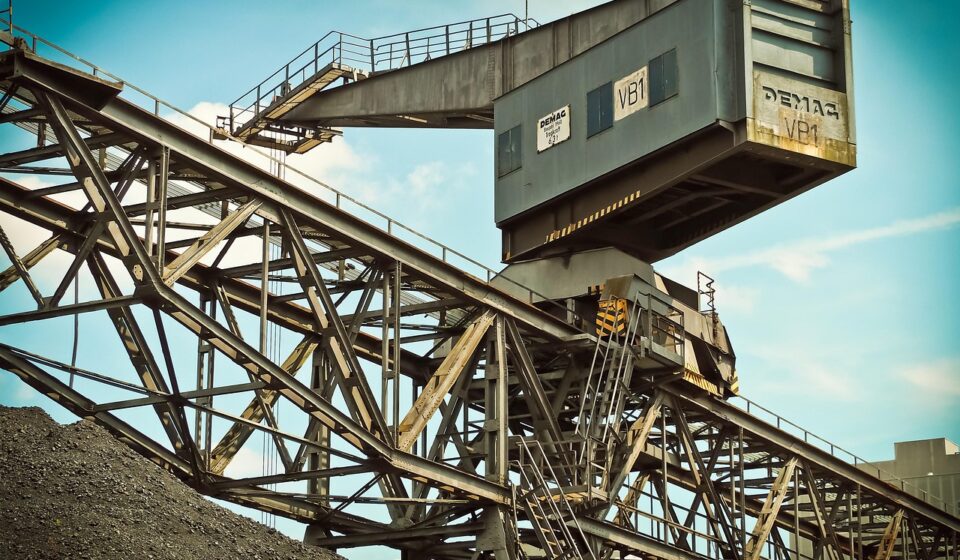
An overhead bridge crane uses a bridge beam or girder that travels along parallel runway beams. A trolley and hoist move across the bridge, giving the operator coverage across a rectangular bay. This design is common in fabrication shops, machine shops, steel service centers, maintenance bays and assembly lines where loads move repeatedly between workstations.
Bridge cranes can be top-running or under-running, single-girder or double-girder, and manually or electrically operated. Higher capacities, longer spans and heavier service typically point toward engineered bridge crane systems. ASME B30.2 is an important U.S. safety standard for many top-running overhead and gantry cranes, while OSHA 29 CFR 1910.179 addresses overhead and gantry cranes in general industry.
Gantry and semi-gantry cranes
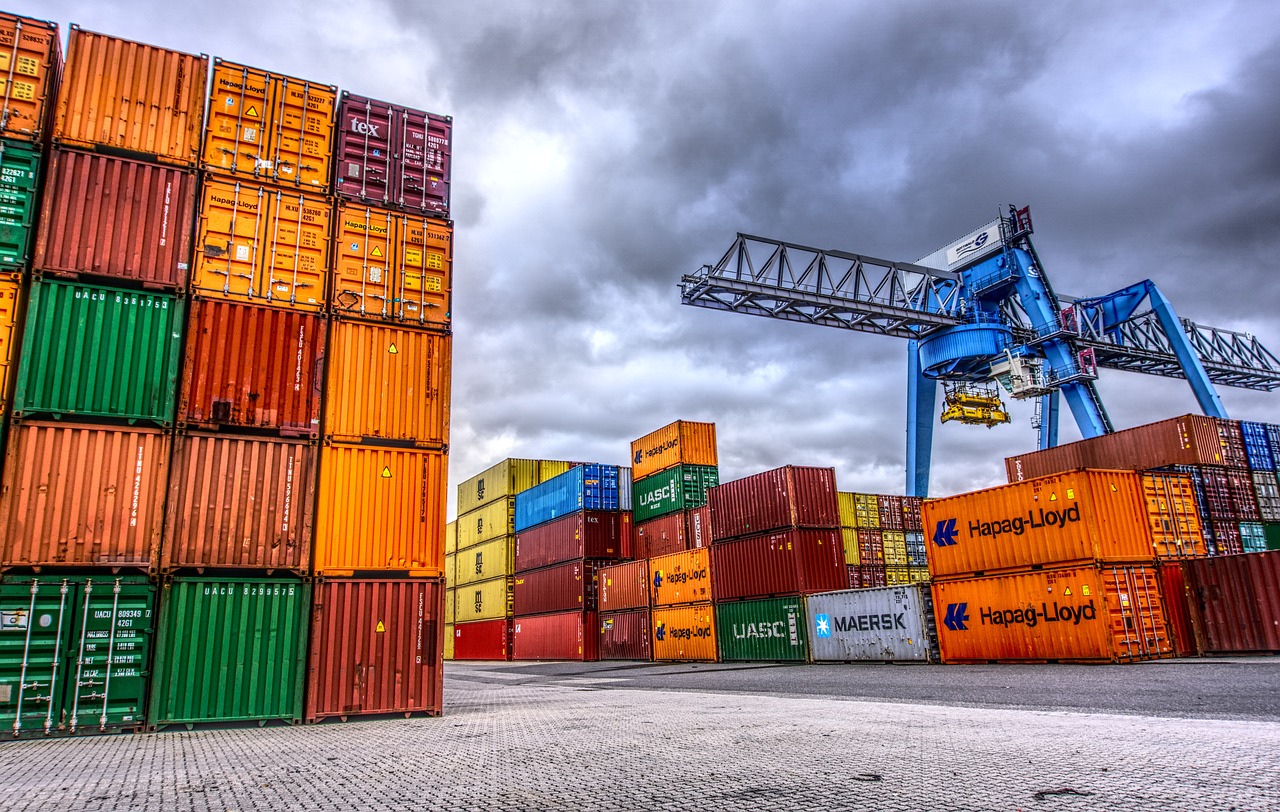
A gantry crane supports the bridge on legs that run on floor-mounted rails or wheels. This arrangement can be useful where the building structure cannot support runway beams, where outdoor coverage is required, or where the crane must serve a defined work area without modifying the roof structure. Portable gantries often handle maintenance or occasional lifting tasks, while large rail-mounted gantries can support production and yard operations.
A semi-gantry crane combines one elevated runway side with one floor-supported leg. It may suit a travel path where one side can attach to an existing structure and the other side needs independent support. The layout can save space, but it requires careful attention to floor condition, rail alignment, wheel loads and collision risks.
Jib, workstation and monorail cranes
Jib cranes rotate around a wall-mounted or freestanding mast and are often used for local workstation lifting. They work well when one operator needs to lift parts from a pallet, machine, fixture or bench within a circular or semi-circular area. Workstation cranes, often built with enclosed track, are designed for lighter, frequent ergonomic handling. Monorail systems move a hoist along a fixed route, which can be effective for paint lines, assembly cells, maintenance paths or process equipment access.
These smaller systems should not be treated as informal tools simply because they look less complex than a bridge crane. The same fundamentals apply: rated capacity, support structure, hoist duty, operator training, inspection and clear operating practices.
Selection factors that matter before capacity
Rated capacity is important, but it is only one part of the specification. Two cranes with the same capacity can perform very differently if one is used twice a week and the other runs near its limit throughout a shift. A complete specification should translate the facility’s material flow into mechanical, structural and control requirements.
| Selection factor | Why it matters | Questions to ask |
|---|---|---|
| Load characteristics | Weight, shape, center of gravity and fragility affect the hoist, below-the-hook device and operating method. | Is the load stable, hot, sharp, long, magnetic, liquid-filled or off-center? |
| Duty cycle | Frequent lifts, high starts per hour and near-capacity use increase component stress. | How many lifts occur per hour, shift and year? |
| Span and lift height | These define coverage, building clearance and hook approach. | Does the crane reach the full work area without wasting hook height? |
| Building structure | Runway loads, wheel loads and lateral forces must be supported safely. | Can the existing columns, floor or roof structure support the system? |
| Environment | Heat, dust, moisture, chemicals and outdoor exposure affect motors, brakes, wire rope, electrification and coatings. | Will the crane operate in corrosive, high-temperature or washdown conditions? |
| Controls | Pendants, radio controls, cab controls and automation change visibility, precision and risk. | Where should the operator stand to see the load path clearly? |
| Maintenance access | Safe access reduces downtime and improves inspection quality. | Can technicians reach the hoist, brakes, wheels and electrical components? |
CMAA service classifications are often used in North America to describe the severity of overhead crane service, ranging from standby or infrequent use to continuous severe service. The practical point is straightforward: do not size a crane only for the heaviest load. Size it for how often the load is moved, how close lifts are to rated capacity, and how much downtime the process can tolerate.
Safety and inspection considerations
Crane safety depends on design, installation, operation and maintenance working together. In the United States, OSHA 29 CFR 1910.179 requires new and altered overhead and gantry cranes to be inspected before initial use. For cranes in regular service, OSHA separates inspection into frequent inspections at daily to monthly intervals and periodic inspections at one- to twelve-month intervals, depending on activity, service severity and environment.
OSHA also identifies daily visual attention for items such as functional operating mechanisms, hooks and hoist chains, with monthly certification records required for certain hook, chain and rope inspections. These requirements should not be treated as a complete maintenance program. Manufacturers’ instructions, ASME standards, site conditions and qualified inspection judgment may call for more frequent checks, especially in heavy production, corrosive environments or applications involving critical lifts.
Common safety issues include side pulling, shock loading, lifting over people, unreadable capacity markings, damaged hooks, worn wire rope, poor pendant labeling, blocked aisles, weak floor or runway support, and unclear communication between operators and nearby workers. Many of these issues are operational, not purely mechanical. A new crane will not correct unsafe rigging habits or poor traffic control unless the work process changes as well.
How cranes compare with forklifts and conveyors
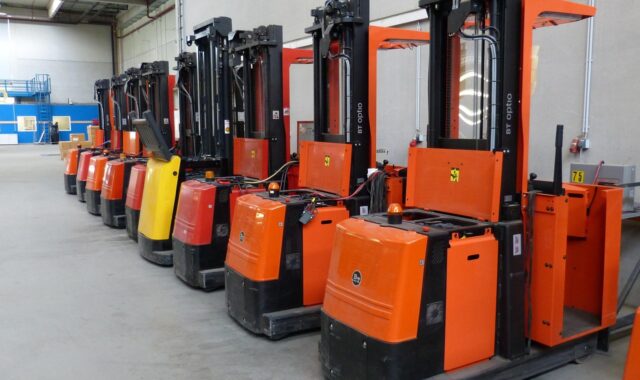
A material handling crane is not always the right answer. Forklifts, conveyors, automated guided vehicles, carts and manipulators may be better for certain flows. The decision should compare the type of movement, distance, repeatability and load behavior. See also: production equipment.
Forklifts are flexible and can travel between areas, but they require aisles, trained drivers, floor traffic control and stable loads. Conveyors are efficient for predictable, continuous flow, but they are less flexible when parts vary in size or route. Cranes are strongest when the facility needs vertical lifting, precise placement, floor-space savings or movement of heavy loads within a defined bay.
For example, a fabrication shop may use forklifts for incoming material, an overhead crane for moving plate or weldments between workstations, and jib cranes for local machine loading. A warehouse may use conveyors for cartons but cranes for dies, coils, engines, molds or maintenance components. The best system often combines equipment instead of forcing every movement through one method.
Trends shaping crane planning
Three trends are influencing how facilities plan crane systems. First, safety documentation is becoming more systematic. Digital inspection logs, maintenance histories and fault records make repeated issues easier to spot, but the record must still reflect real inspections by competent personnel.
Second, crane controls are becoming more integrated. Variable frequency drives, anti-sway functions, remote controls, load monitoring and positioning aids can improve repeatability and reduce operator burden. These features are useful when they match the task, but they do not replace proper rigging, rated capacity discipline or visibility of the load path.
Third, layout decisions are being tied more closely to life-cycle cost. A low-cost crane may become expensive if it slows production, requires frequent repairs or cannot adapt to future product sizes. Conversely, a highly engineered crane may be unnecessary for occasional maintenance lifting. The most useful planning question is not which crane is strongest, but which system provides safe, reliable movement over the expected life of the process.
A practical specification checklist
Before requesting a crane quotation or approving a design, facility teams should document the operating case in writing. A clear brief helps engineers, safety managers, maintenance teams and purchasing departments evaluate the same requirement.
- Maximum load weight, typical load weight and expected future load changes.
- Load dimensions, center of gravity, attachment points and below-the-hook tooling needs.
- Number of lifts per hour, shift pattern and annual usage.
- Required coverage area, travel distance, hook height and hook approach.
- Building drawings, runway support limits, floor condition and available headroom.
- Power supply, electrification method and control preference.
- Environmental conditions such as heat, dust, humidity, chemicals or outdoor exposure.
- Operator position, visibility, communication method and pedestrian interaction.
- Applicable OSHA, ASME, CMAA, local code and insurer requirements.
- Inspection access, spare parts strategy and planned maintenance intervals.
This checklist can also reveal when the issue is not the crane itself. In some cases, the better improvement is a redesigned workstation, a different pallet orientation, a lifting fixture, a shorter travel path or a clearer production sequence.
Frequently asked questions
What is the difference between a material handling crane and an overhead crane?
A material handling crane is a broad term for cranes used to move materials within industrial operations. An overhead crane is one common type, usually with a bridge, runway, trolley and hoist. Gantry cranes, jib cranes, workstation cranes and monorails may also be part of a material handling system.
How do I choose the right crane capacity?
Start with the heaviest load, then consider load handling devices, dynamic effects, duty cycle and future process changes. The rated capacity should not be treated as a routine target. If most lifts are near the limit, the crane may need a higher service classification or a different design.
Does every crane need the same inspection frequency?
No. OSHA sets general inspection categories for overhead and gantry cranes in U.S. general industry, but the actual program should reflect activity, service severity, environment, manufacturer instructions and applicable standards. A crane in heavy production may need more attention than a standby maintenance crane.
Can automation replace a trained crane operator?
Automation can assist with positioning, speed control, sway reduction and repeatable moves, but it does not remove the need for safe design, competent supervision, proper rigging and maintenance. Automated features should be validated for the specific load path and failure modes.
When is a crane better than a forklift?
A crane is often better when loads are very heavy, awkward, fragile, repetitive, or need precise vertical placement within a defined area. A forklift may be better for flexible transport between separated areas. Many facilities use both, assigning each to the movement it handles most safely and efficiently.